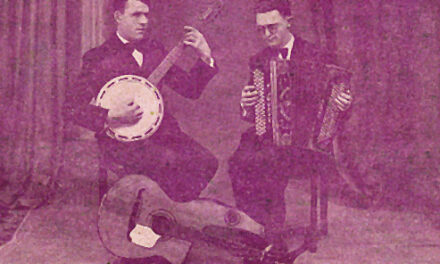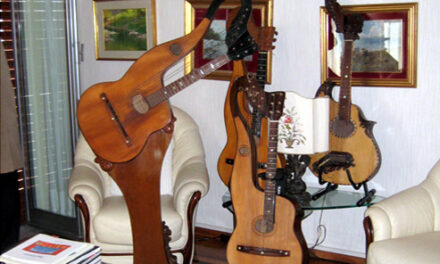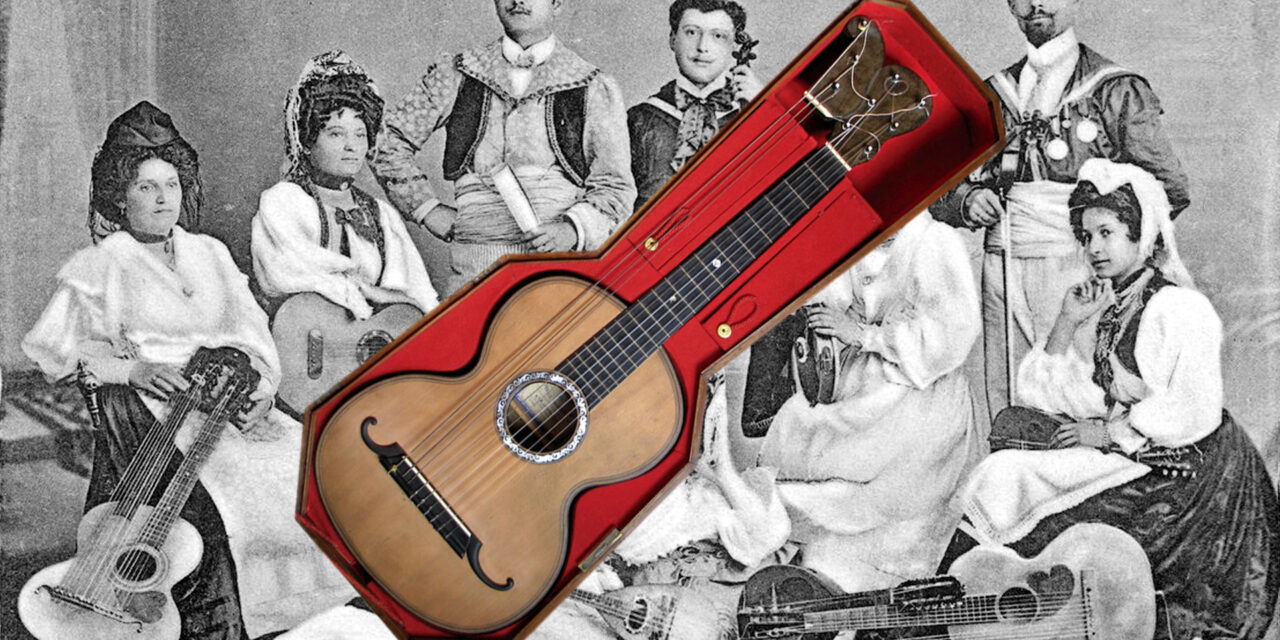
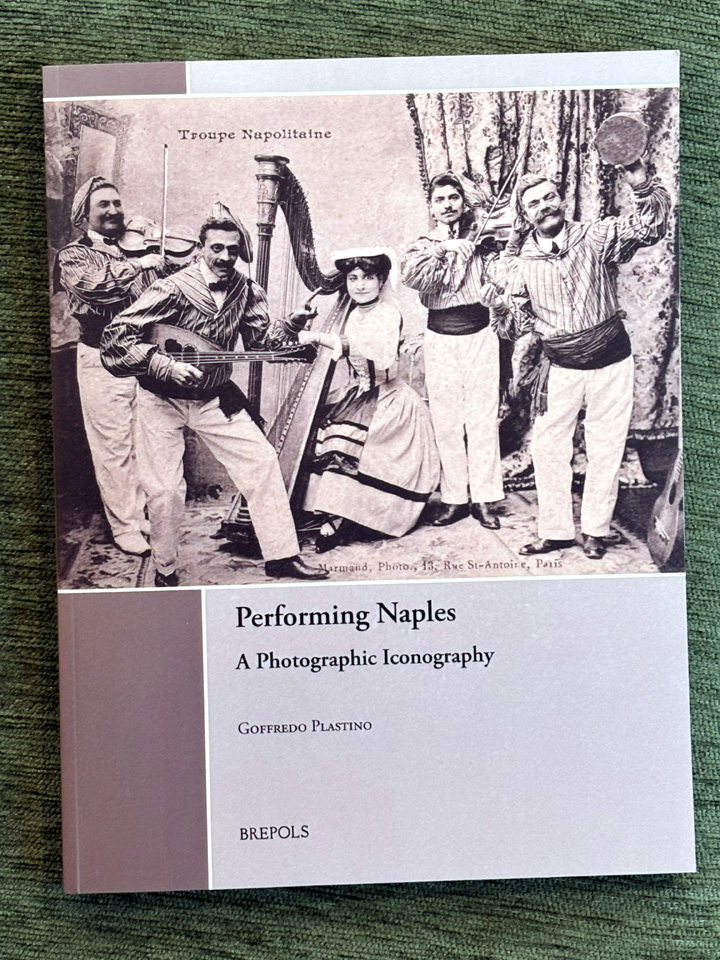
The above book was recently released by new colleague Goffredo Plastino, a musicologist at Newcastle University in London. In it, he shares postcards from his collection that feature “Neapolitan” bands – that word in quotes because this guise of romantic Naples – whether geographically or musically authentic – became quite the fad during the turn of the last century. Goffredo explores the groups, the costumes and instruments, along with where they might have originated from (usually unknown), along with the countries they toured (via postcards and news reports).
Pretty interesting. Several guitar experts helped him with instrument identification, and I gave my 2 cents on the harp guitars. I wasn’t much help, other than pointing him to a Vinaccia and a couple areas of my site. These were hard! I had asked my more knowledgeable friend Benoît Meulle-Stef about them, and did so again, after the book came out.
Goffredo kindly allowed me to share images of the many harp guitars from the postcards, which are shown below, along with the group’s name, postcard circa dates, and origin country and tour destinations where known. I put Ben’s best (and surprising) guesses about the instruments in as well.
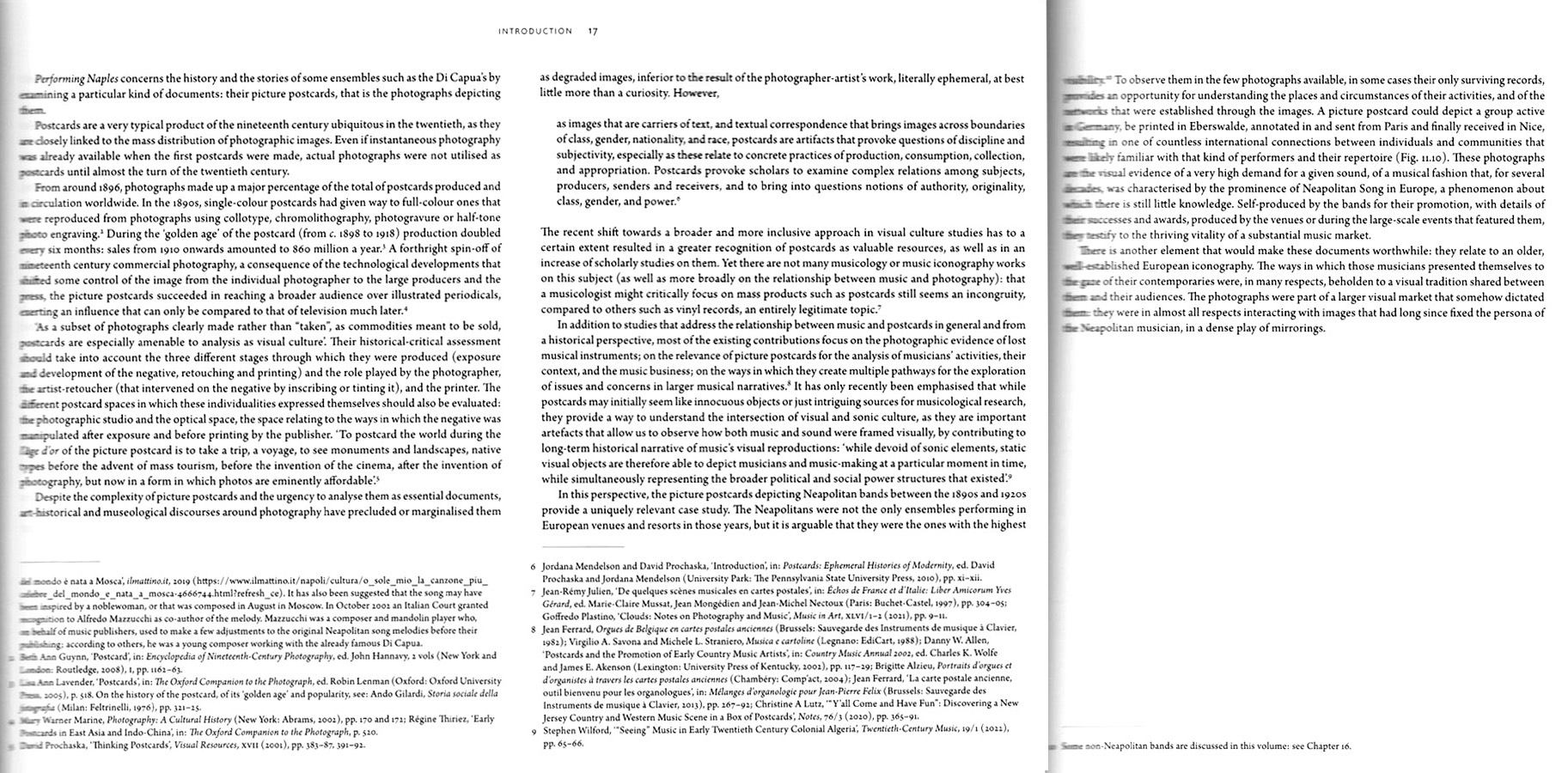
Below is an excerpt of Goffredo’s Introduction where I found both interesting and surprising his comments about the lack of scholars utilizing postcards. When one goes through Harpguitars.net, you’ll see dozens if not hundreds of instances where a single rare postcard serves as the only provenance of a player’s or an instrument’s existence. They not only add a rich visual component to the topic, but sometimes the sole historical evidence as well!
One thing that becomes clear after reading the book is that a lot of the pictured ensembles are dressed in “Neapolitan” or other exotic costumes as part of a “look” to go with the music they are offering, which itself may be an amalgam. In some cases, Goffredo has no idea where the group members hail from. The instruments are even more bizarre. Other than one possible instrument by Naples’ Pasquale Vinaccia and a couple others with “Italian influence,” many seem to have come from Markneukirchen in German, along with custom “hybrid” instruments possibly from America (New York), or even South America. How and why?!
Let’s take a look.
These first six instruments are seen in several postcards of the “Compagnia Bella Italia.” This is our first ensemble that dresses in Neapolitan attire, but whose origins remain unknown. They toured in Germany and France in the early 1900s:
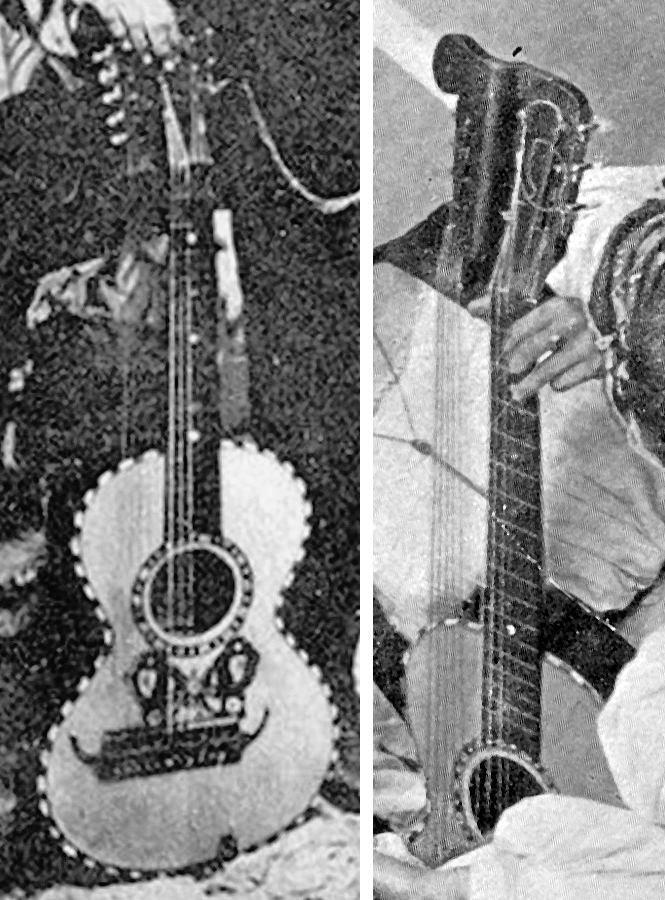
Benoît says “#1 with the butterfly is hard. The bridge seems changed (way too large). The rope binding and decoration suggest a hybrid influence (like an Italian maker in the USA). I’ve never seen a German-made instrument with rope binding. #2 is similar, looking like an American instrument with German and Italian influences.”
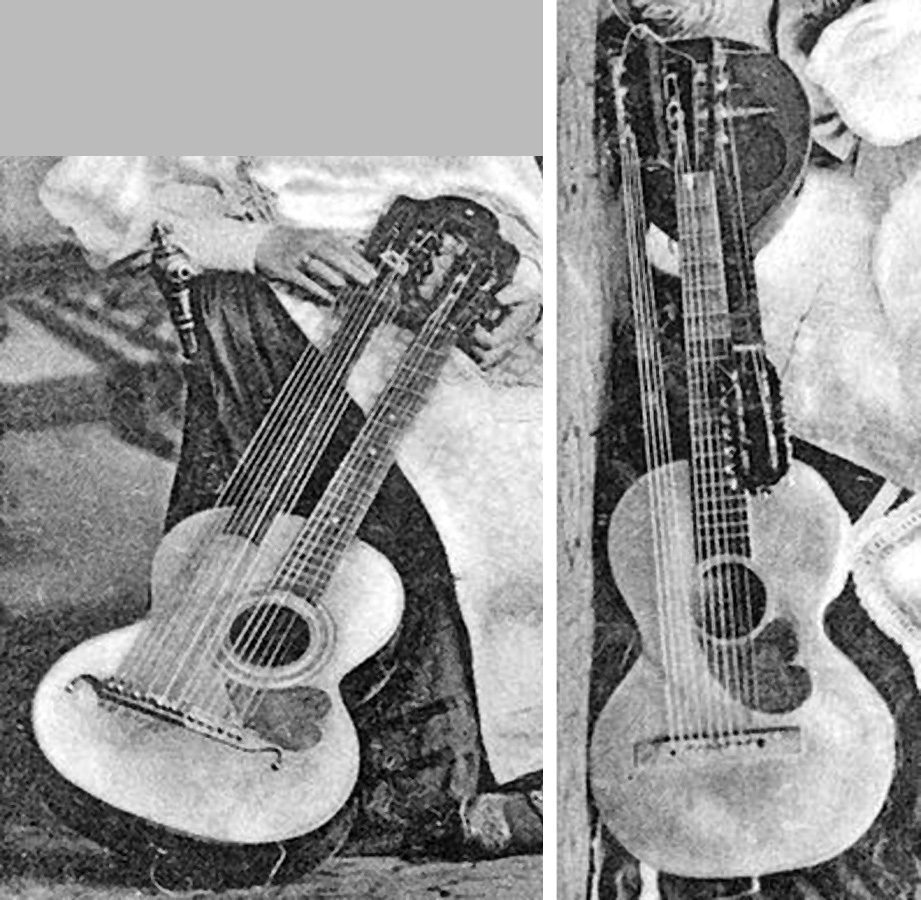
Benoît: “I suspect that the heart-shape pickguards were added later.” (Thus, we can discount that as a clue, the instruments otherwise having little similarity.) “#3 with ten basses and geared tuners is either American or German made. #4 is likely Markneukirchen.”
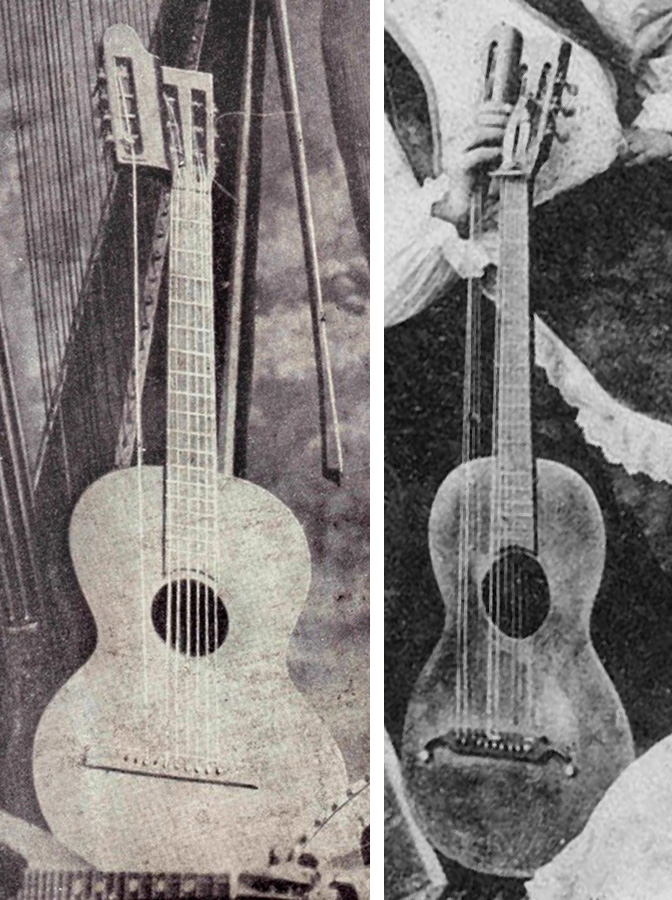
As Goffredo had surmised, Benoît said “#s 5 & 6 are both probably Markneukirchen.”
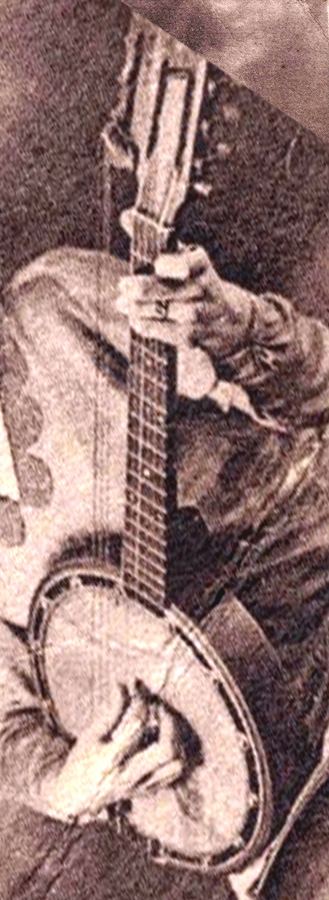
Two-plus decades later, the leader of Compagnia Bella Italia (Filippo Faccenda) plays accordion, fronting a jazz band with his (wife?) on harp-banjo. This seems to be a typical French guitar banjo; the theorboed extension for three floating basses could be original or an alteration.
The next instrument is from a 1907 postcard of the “Volcano Napolitan Band.” Again, they wore Neapolitan attire, but no one knows where they hailed from. They performed in England:
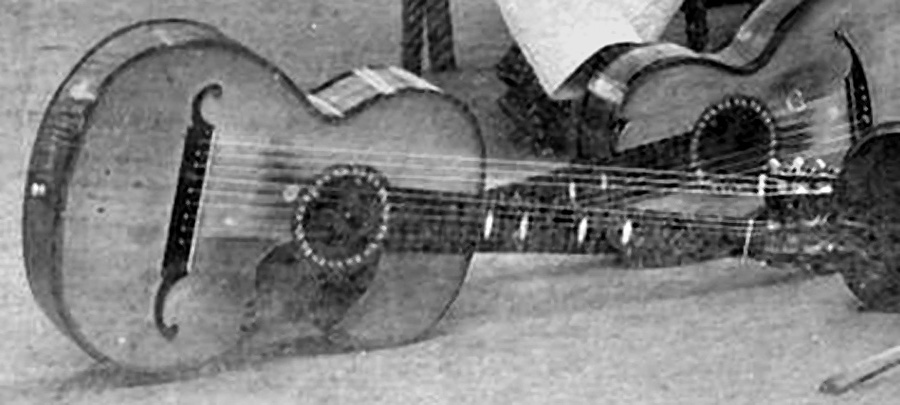
Goffredo guessed Vinaccia (the later Pasquale & Sons), after comparing it to the sole surviving all-original Vinaccia harp guitar that I am aware of (in the collection of Giovanni Accornero). Benoît and I agree that’s quite likely, with a probable added pickguard.

This Pasquale Vinaccia & Sons 9-string was built in 1883 in Naples (thus, likely built by the sons Gennaro and/or Achille, Pasquale’s death recorded as either c.1882 or 1885). Finally, a likely Naples match?!
Perhaps the second most common “Neapolitan” attire is the “Sailor & Fisherman” look. Here we have the Troupe Napolitaine “Aurora” in the late 1890s. Their origin locale and touring spots are unknown:
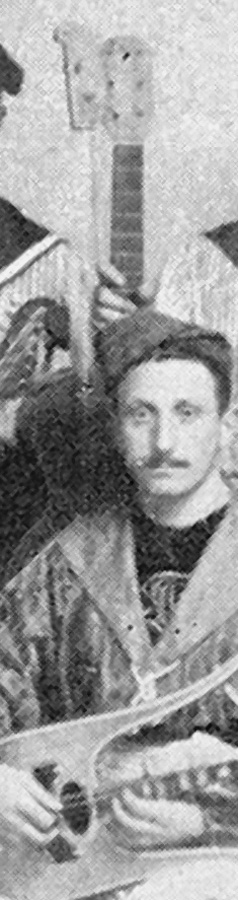
Despite their mystery, they seem to have easily identifiable Italian instruments, both the harp guitar with the theorbo-style headstock and the lyra-mandolin.
Next, the “Compagnia Grotta di Capri” (“of Neapel”) are seen in two postcards from c.1899-1904. They too wear “fishermen & folk attire.” They performed in Paris and German with cryptic instruments:
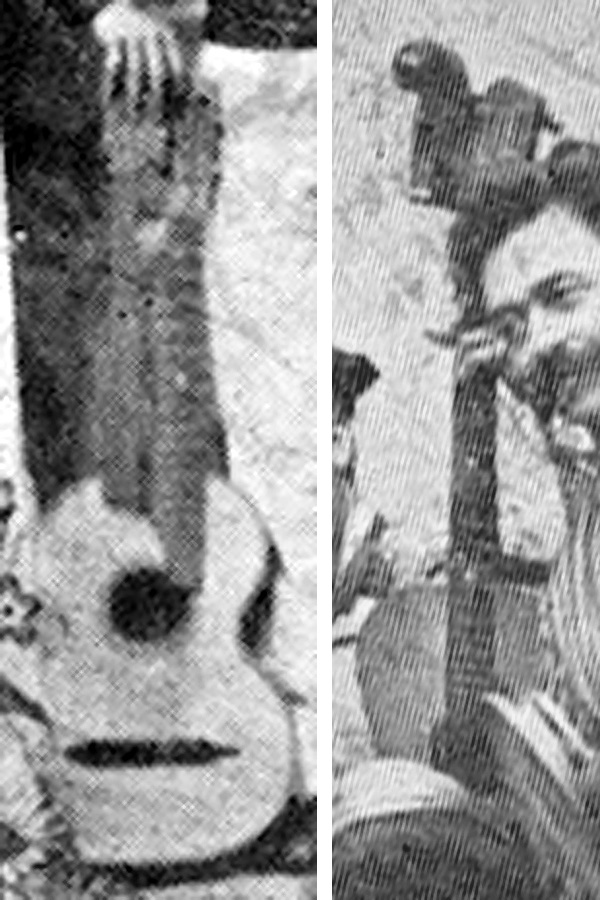
Benoît: “No way to tell, bad resolution.” I would guess German/Bavarian/Austrian for the doubleneck and probably Italian for the theorboed instrument.
Still another fisherman-attired act from regions unknown, “La Stella di Napoli” played Paris in the early 1900s:
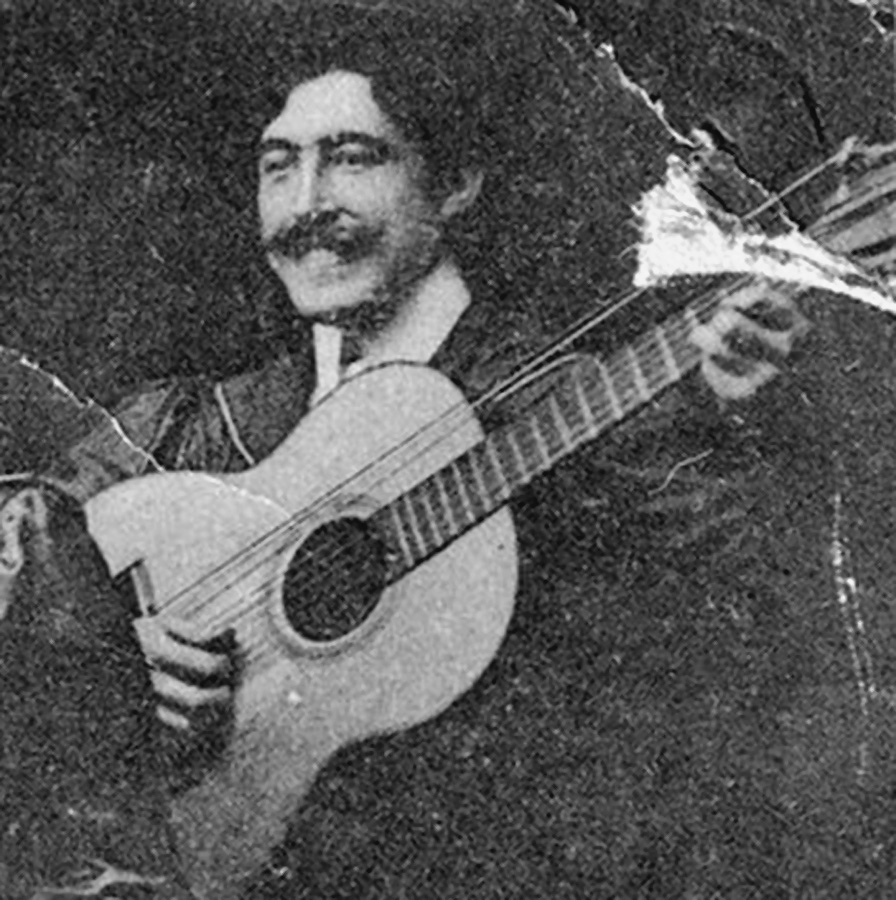
What a curious instrument. Benoît wonders “Spanish or South American?”
Next up, from Sicily, the Elite Compagnia “Bella Sicilia” in 1901. Though we finally know where one of these groups hails from, their harp guitar is not Sicilian (where one-offs were common), but German. Interestingly, the one country Goffredo has a record of them playing in is Germany:
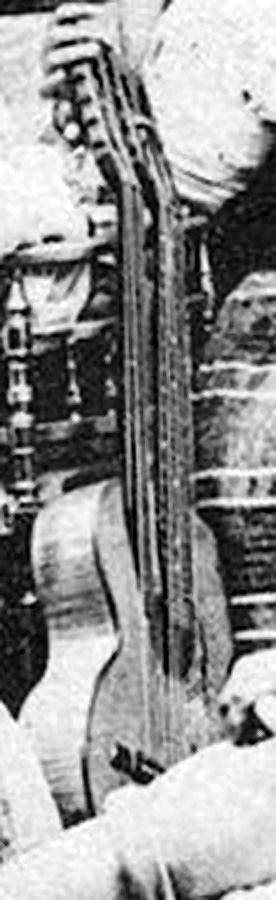
Per Benoît, “Flame maple = German.”
Similarly, the “Virtuosen-Familie Rogliano” from Rome performed in Germany in 1906:
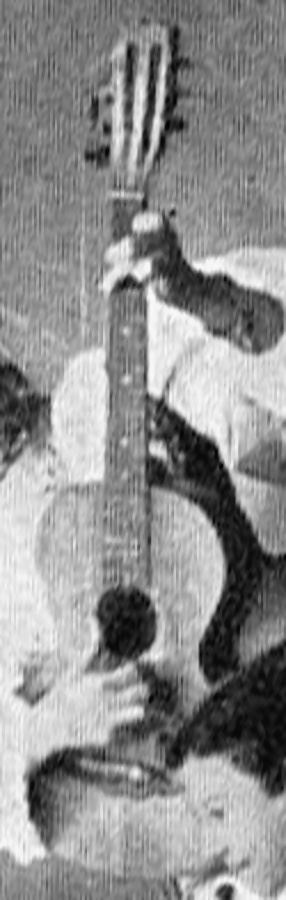
Theirs looks like a homemade harp guitar from an Italian 6-string.
Next, the “Compagnia Italiana Ideal” who performed in Copenhagen in 1908. One might think that a group from the fabled city known for its harp guitars would have something obvious:
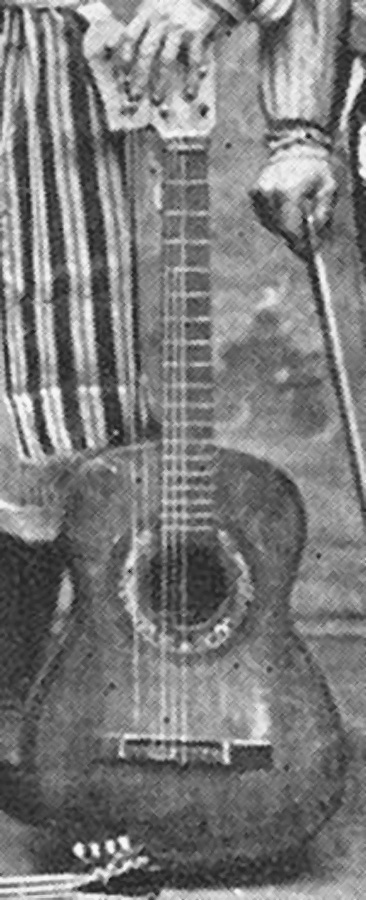
Well, that headstock extension could be Italian (or Viennese), but the guitar sure looks “Spanish or South American” to Benoît and I…
And finally, another unidentifiable instrument (“Poor resolution, impossible to tell”) from the exotic early 1900s ensemble, “Estudiantiina d’Orient.” Once again, where they originated from his unknown, but they had fun dressing up in (“Oriental-looking”) Greek and Neapolitan fishermen attire:
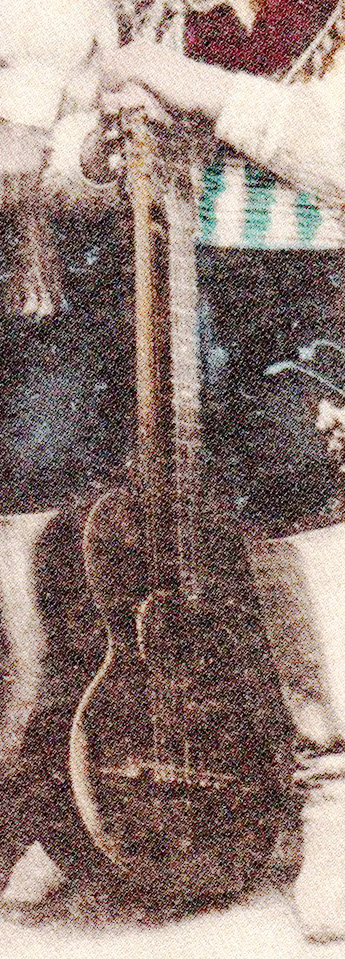
Wouldn’t you?
I welcome any thoughts as to provenance on these various instruments and how they might have ended up in the hands of these various bands.
Thanks to Goffredo for his wonderful book and Benoît for his expertise.