
Greetings, Musicians, Scholars, Collectors and Nerds!
Once again, I managed to capture enough photos to share my personal experience at the American Musical Instrument Society meeting this May 2026 in Vermillion, SD. This will be only a snapshot (tho still almost a hundred pics) and of course skewed toward my own interests – which continue to expand.
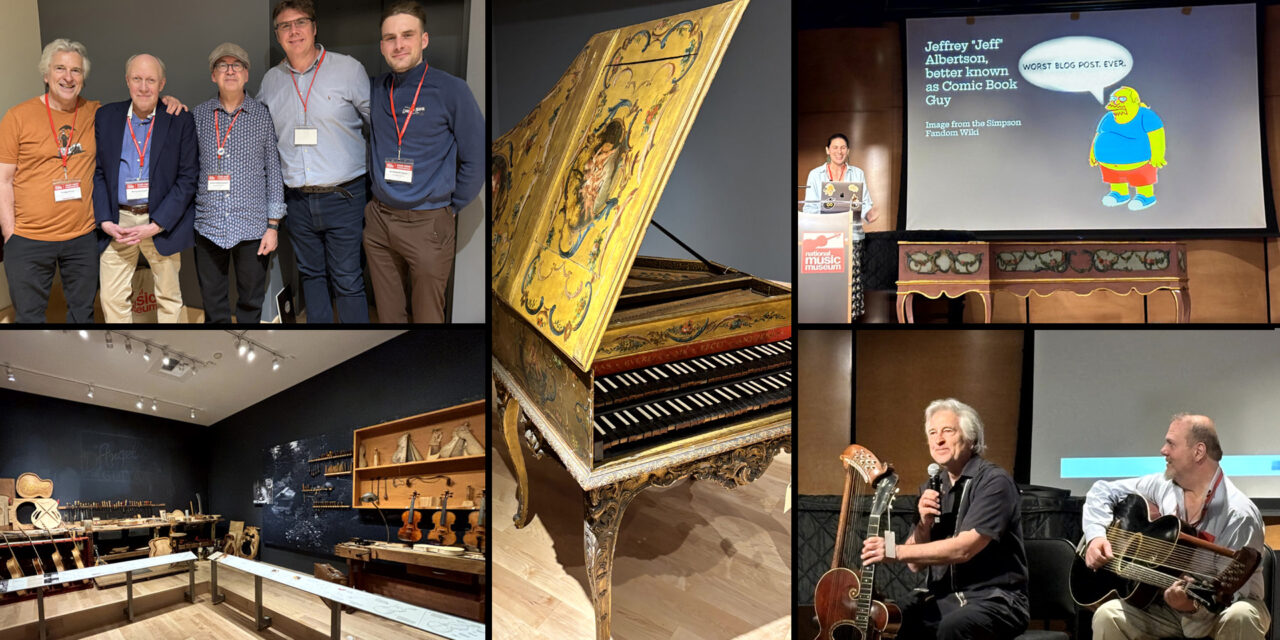
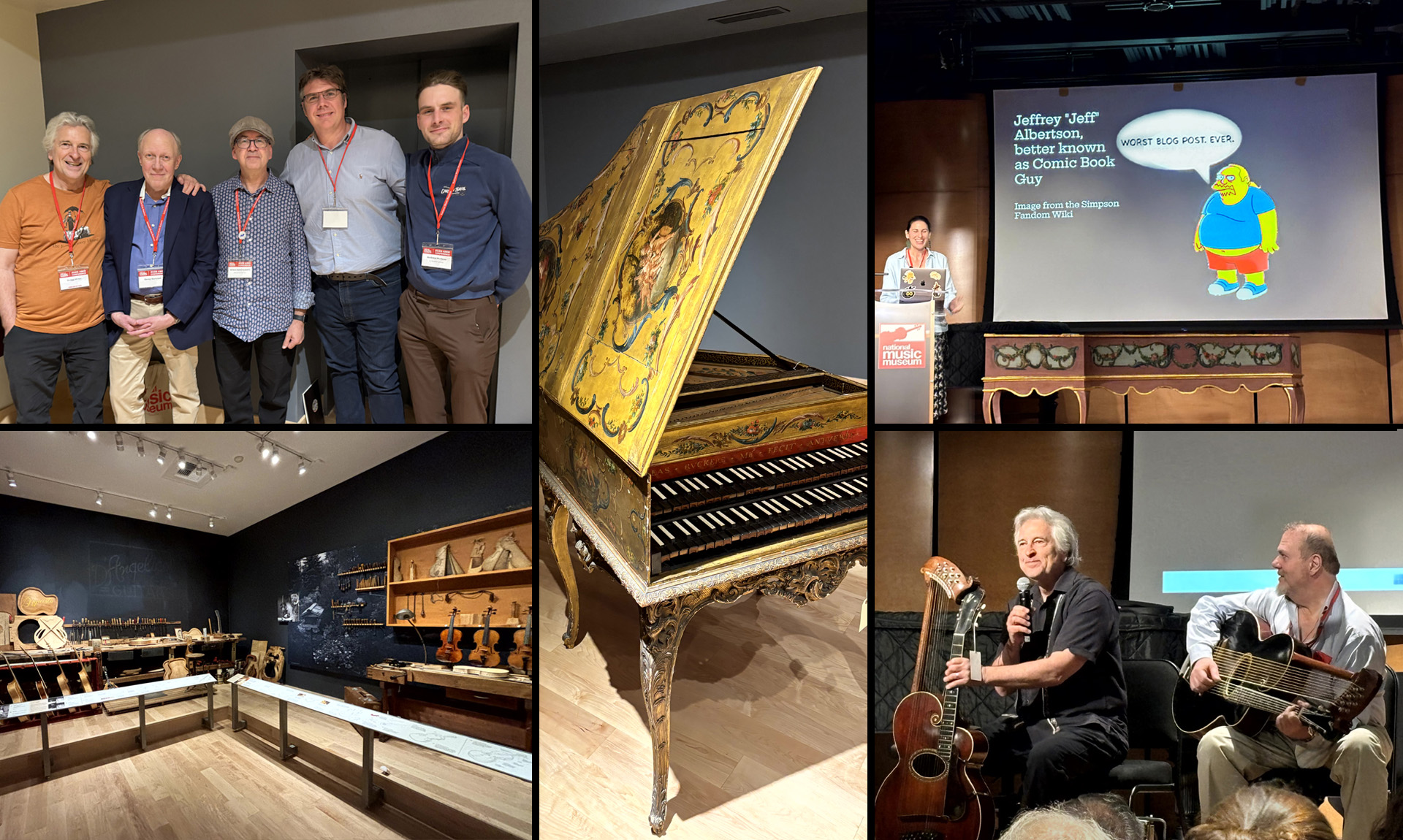
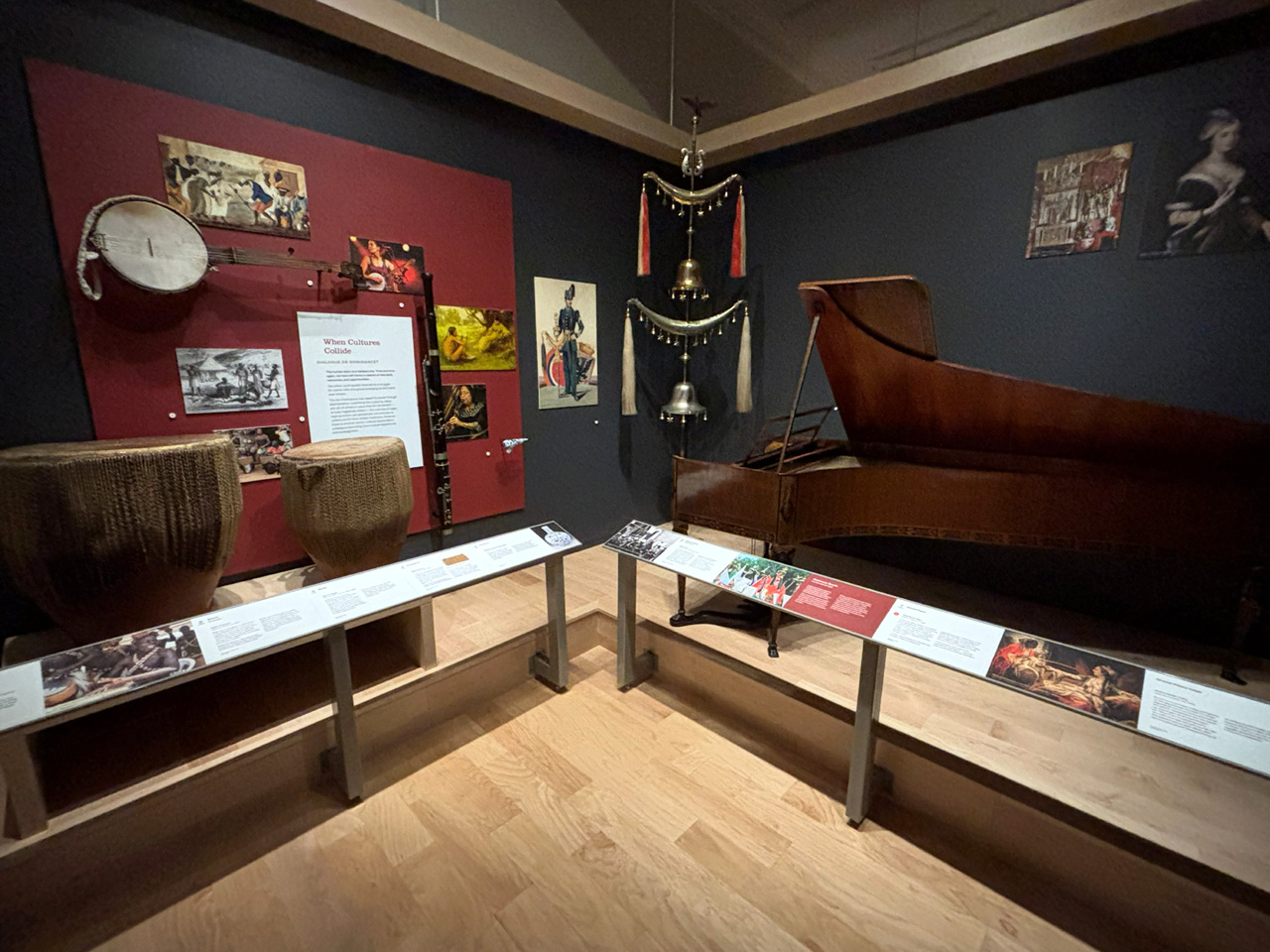
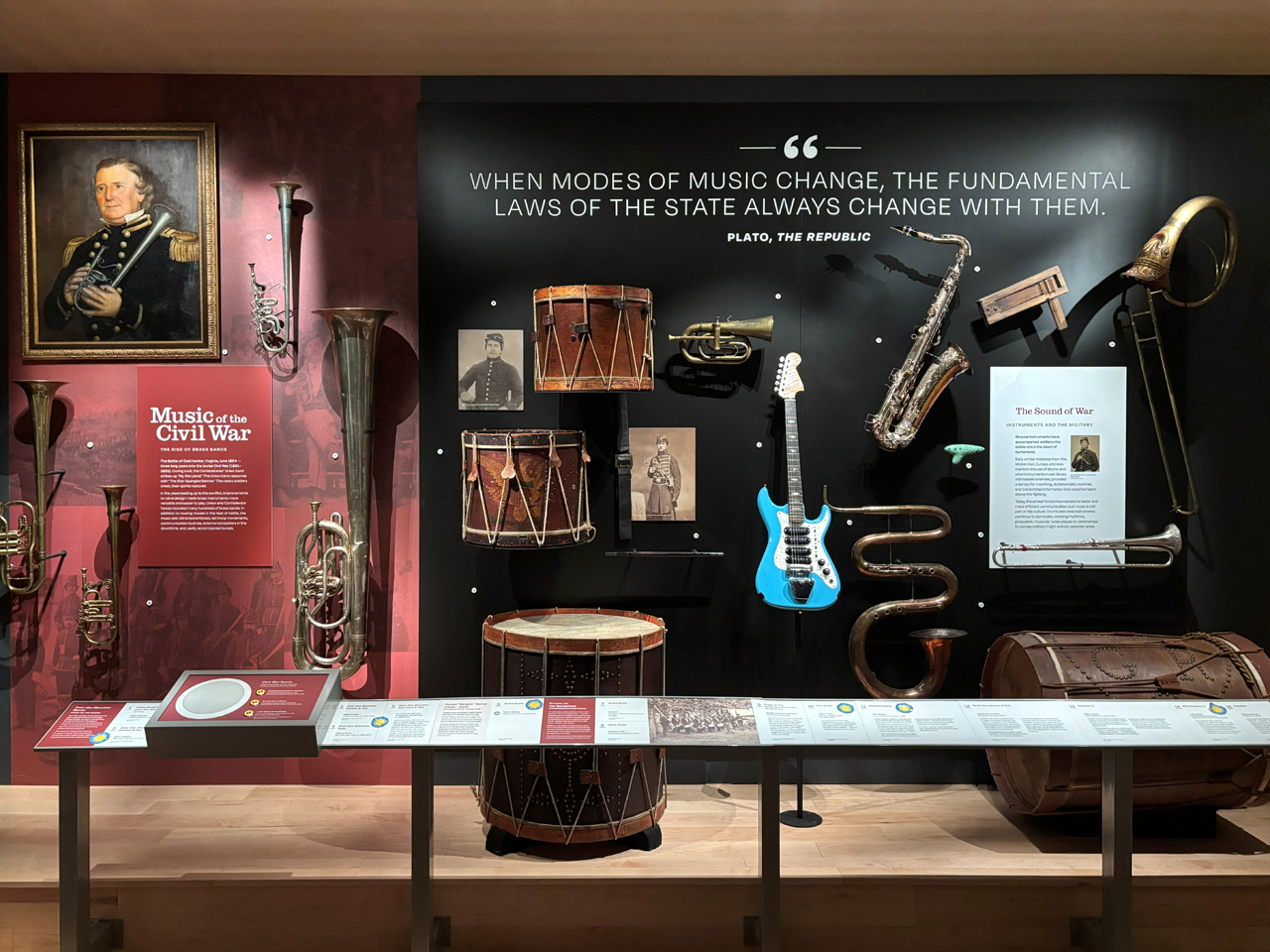
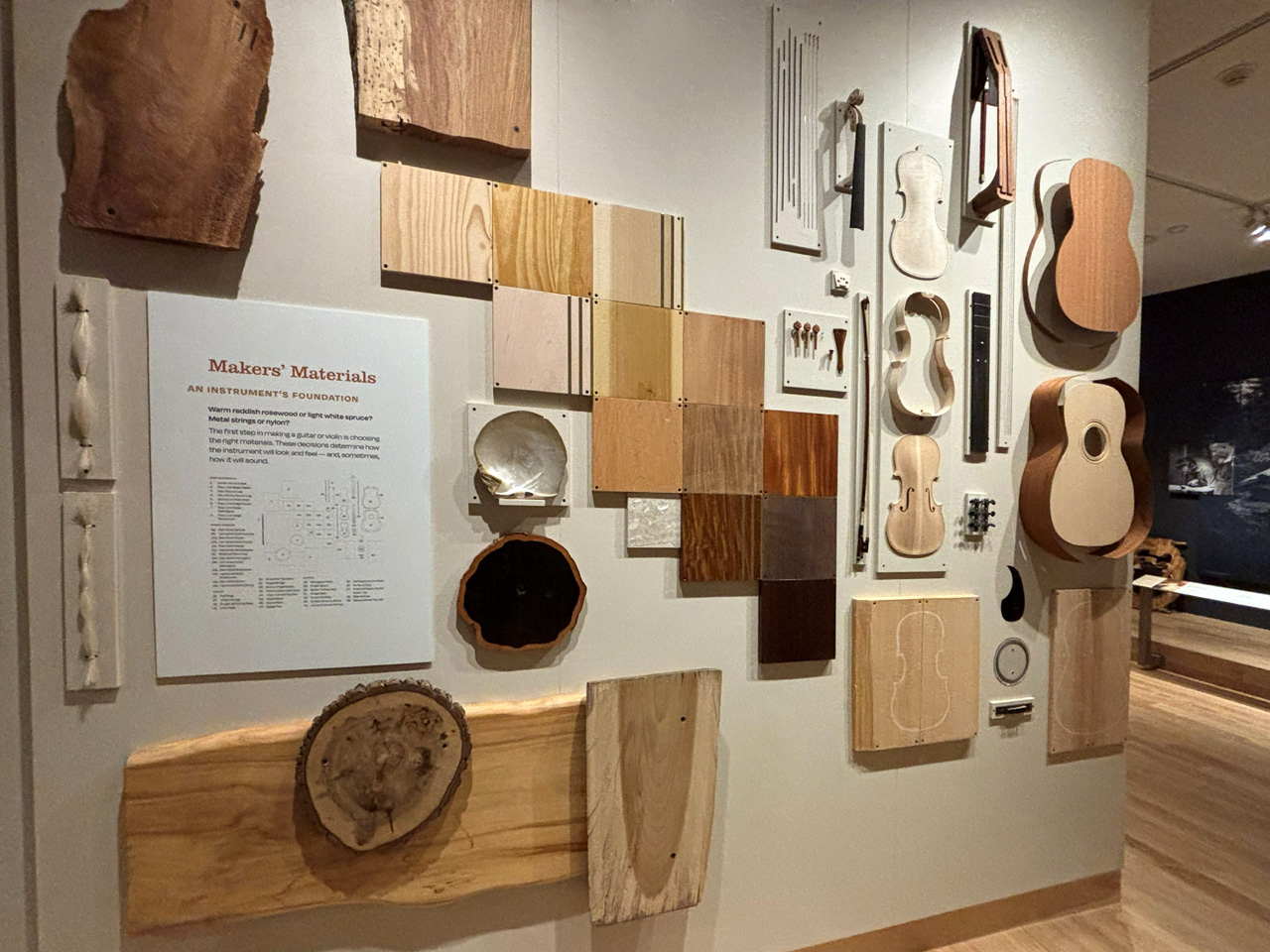
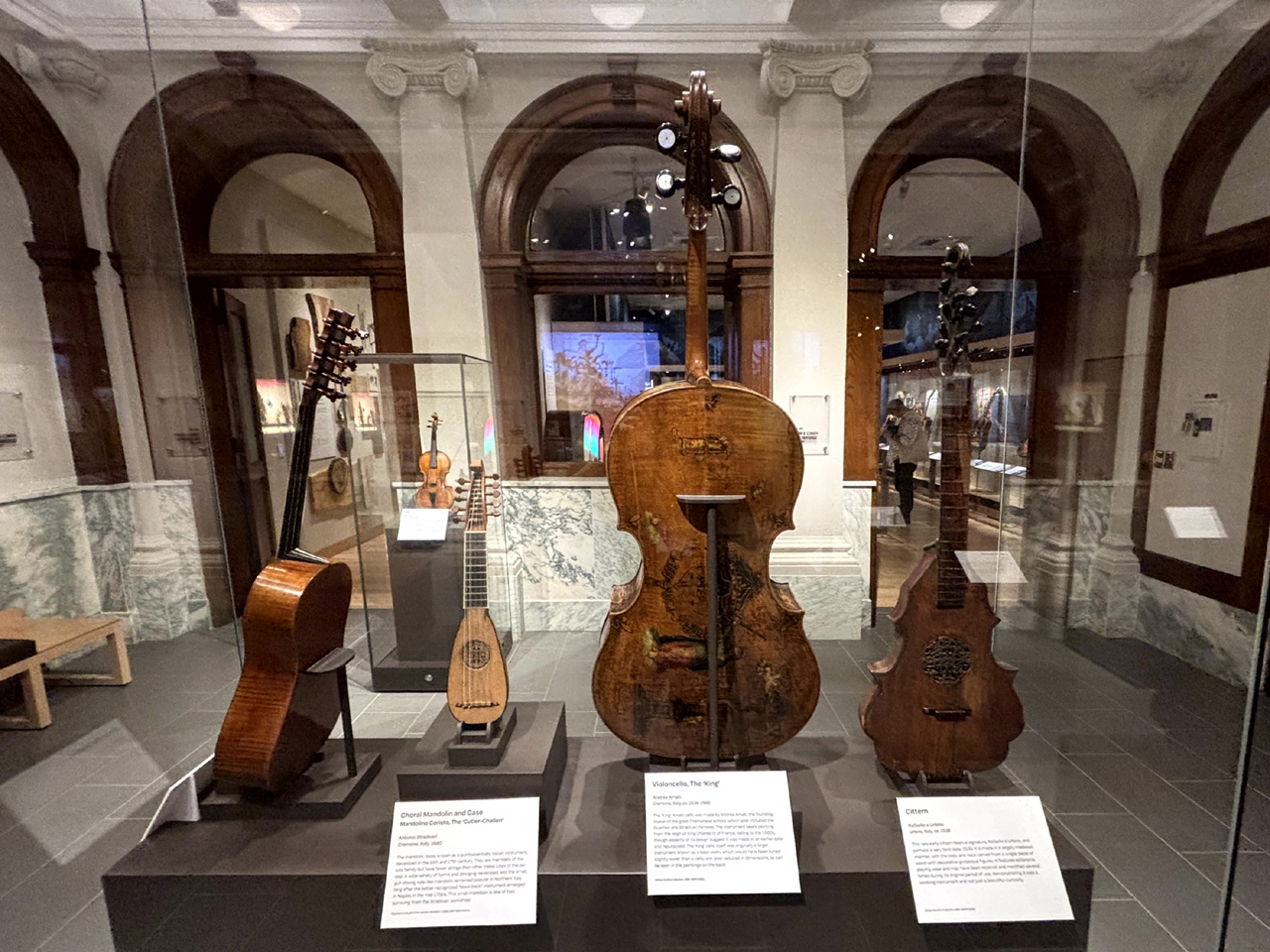
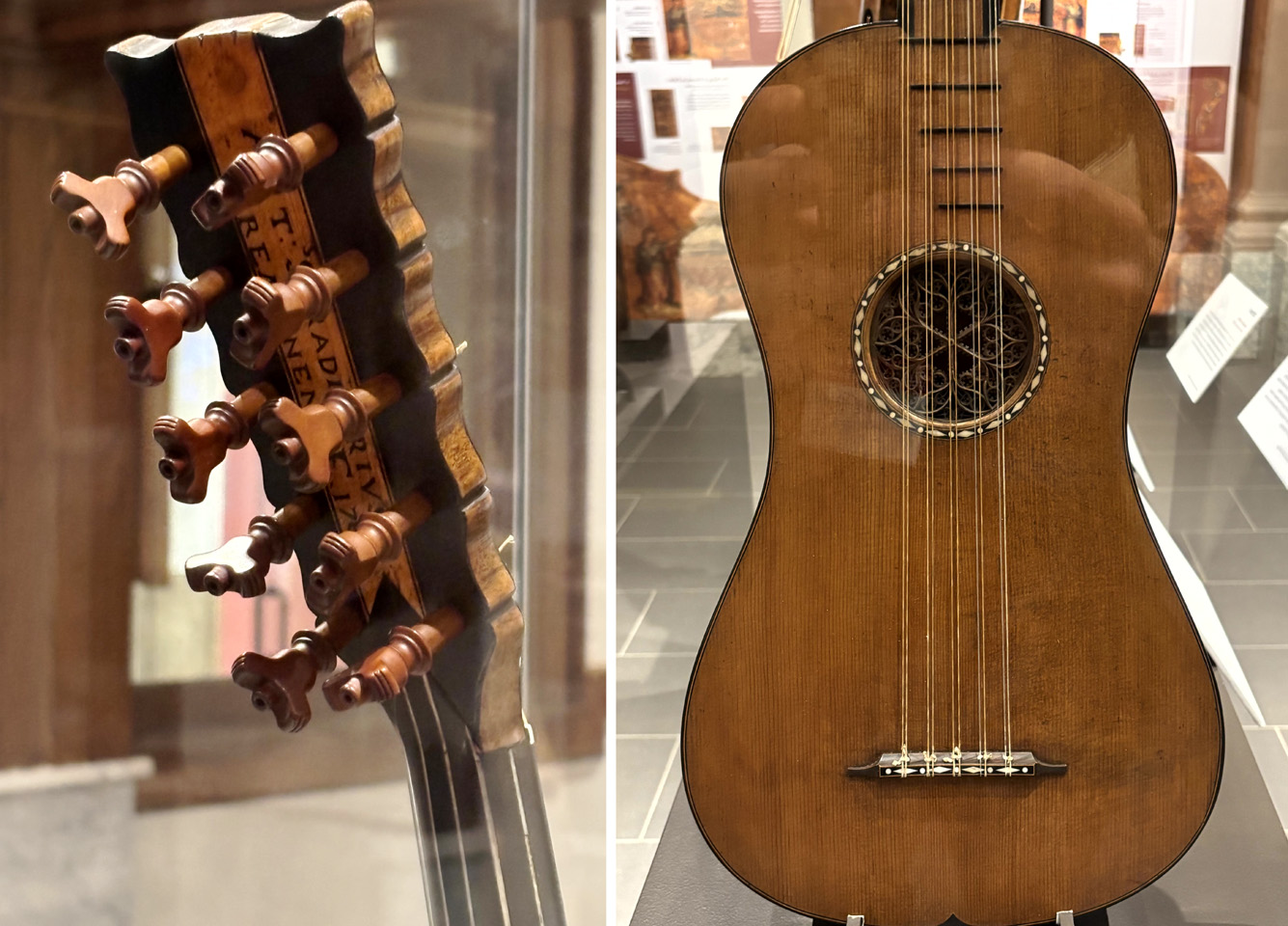
I’ll split the images and captions roughly into 3 sections: Friends (my peeps!), Papers, and Instruments (of the NMM). Actually, I think I’ll start with the latter, as the Museum is deep in the throes of its recent expansion. The research/conservator building and first floor of the public space is done; the latter space is very different from my last visit ten years ago (and truth be told, I miss so many instruments!). Here are overviews of the new first floor exhibits, in no particular order:
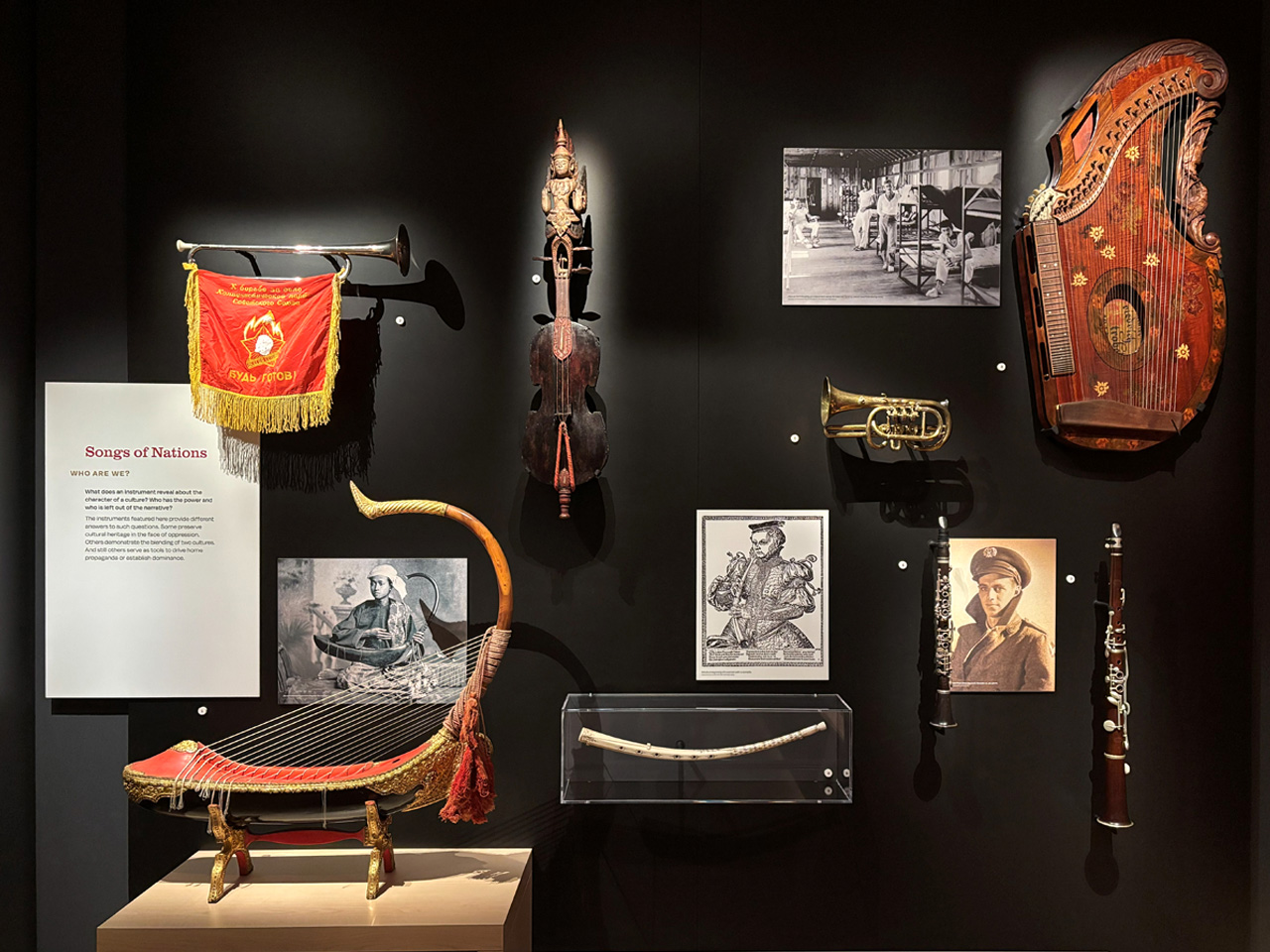
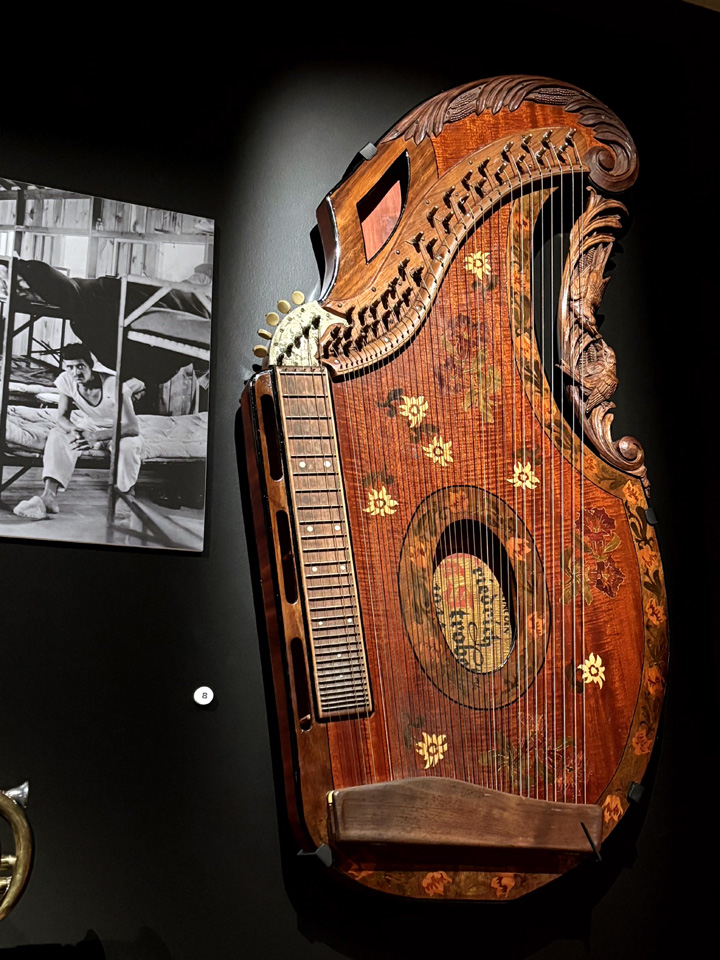
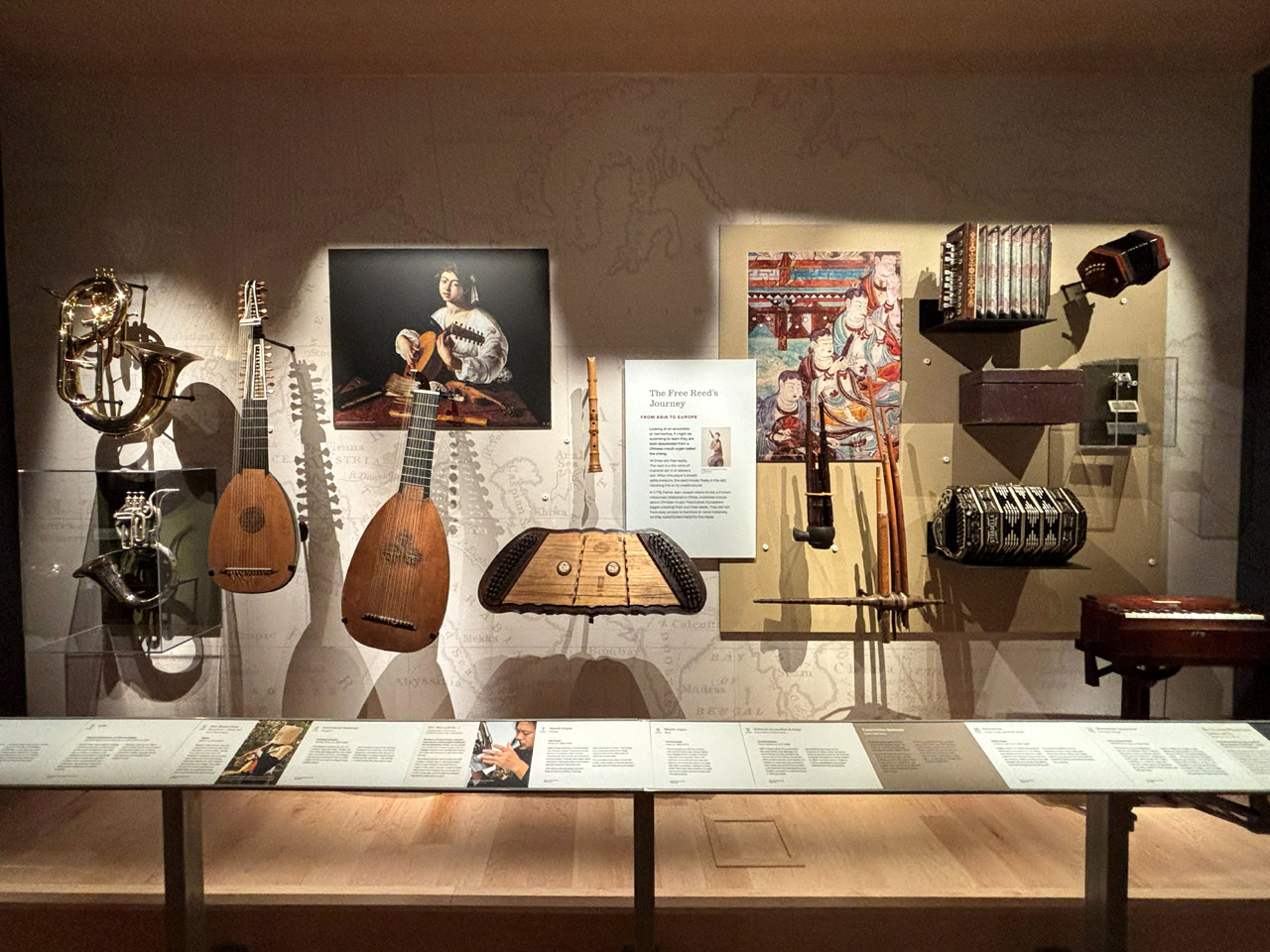
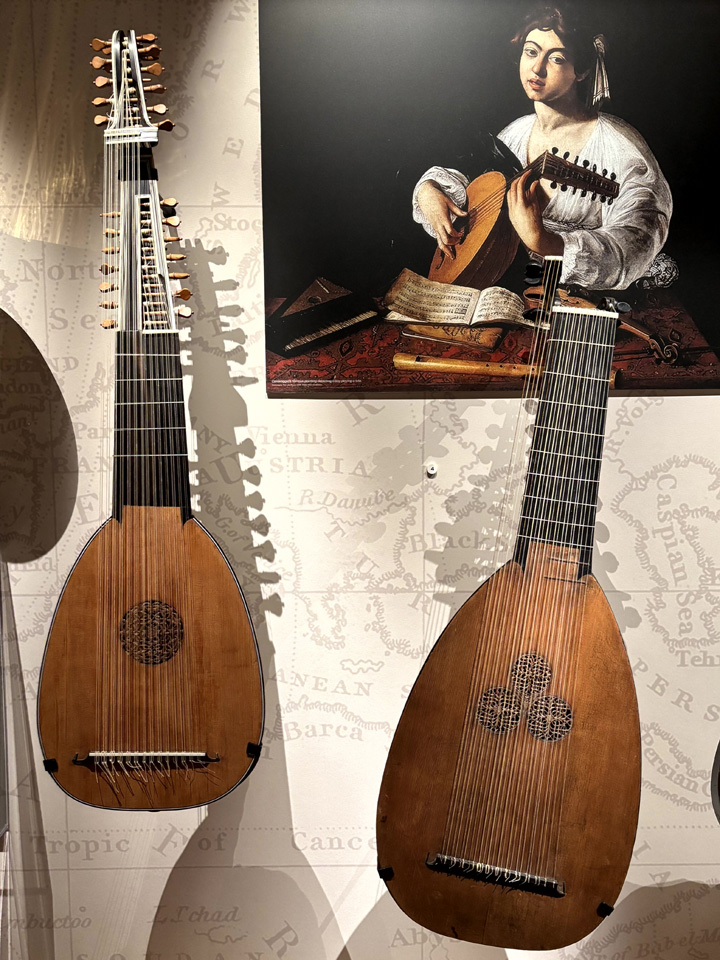
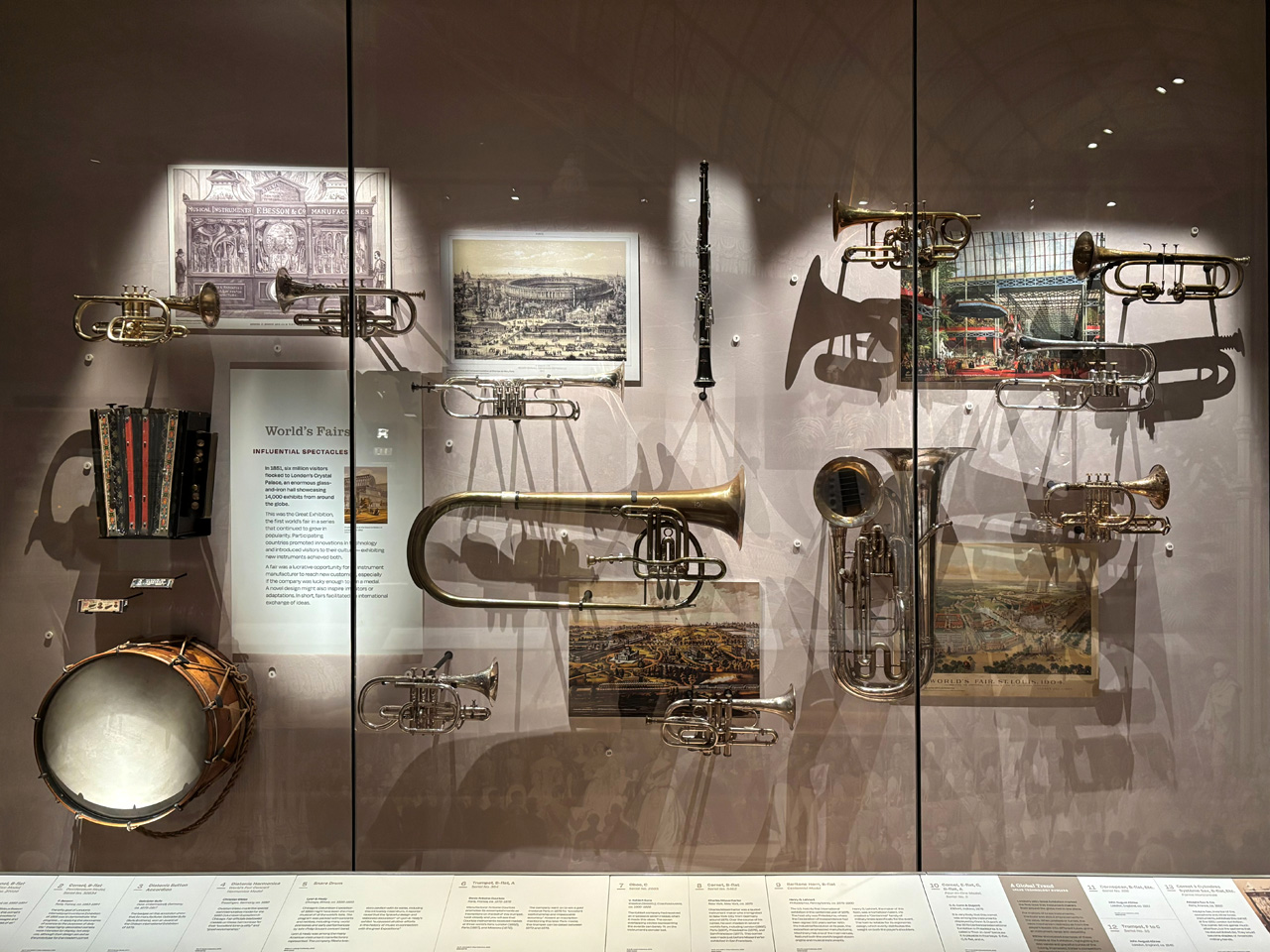
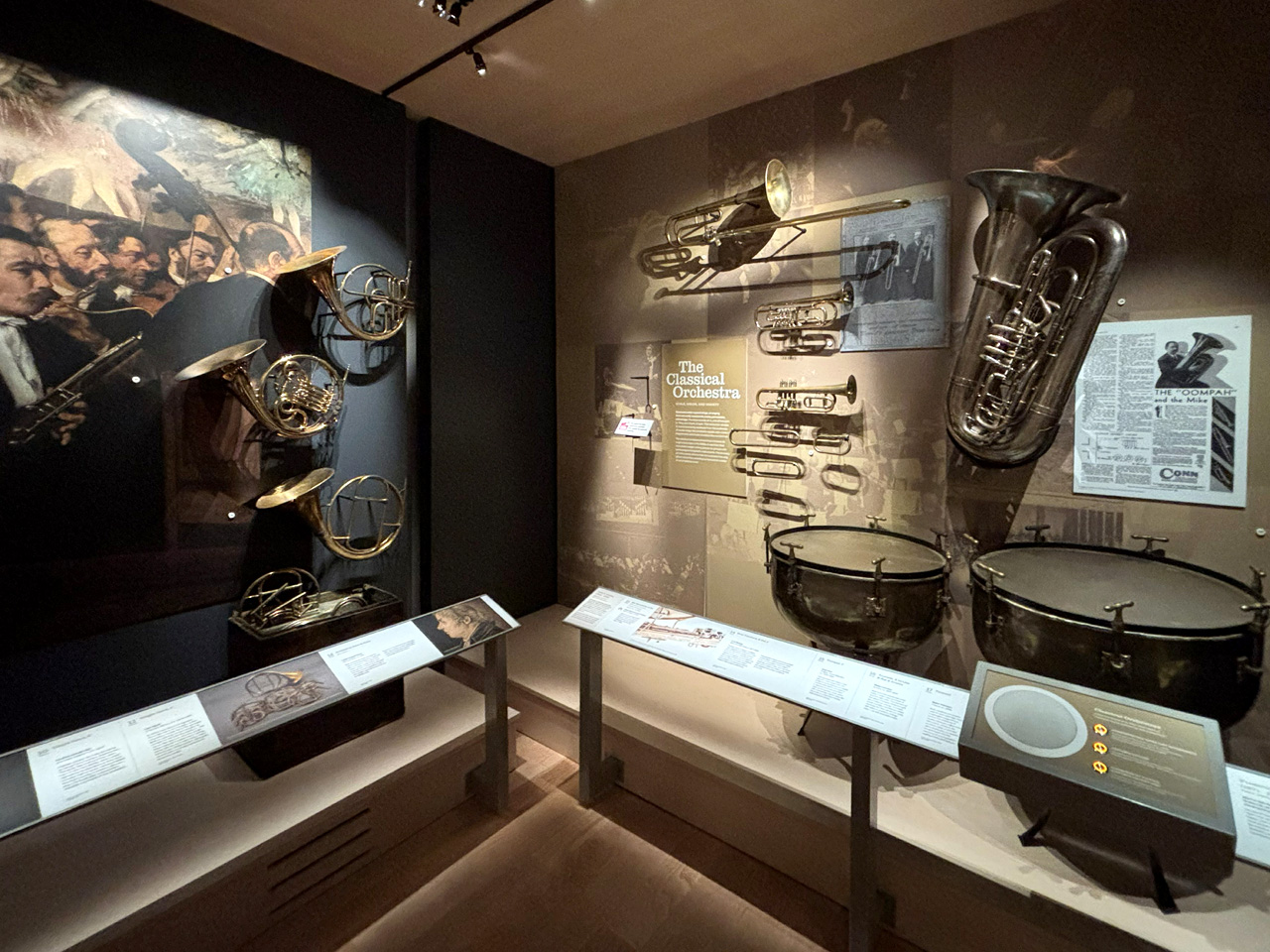
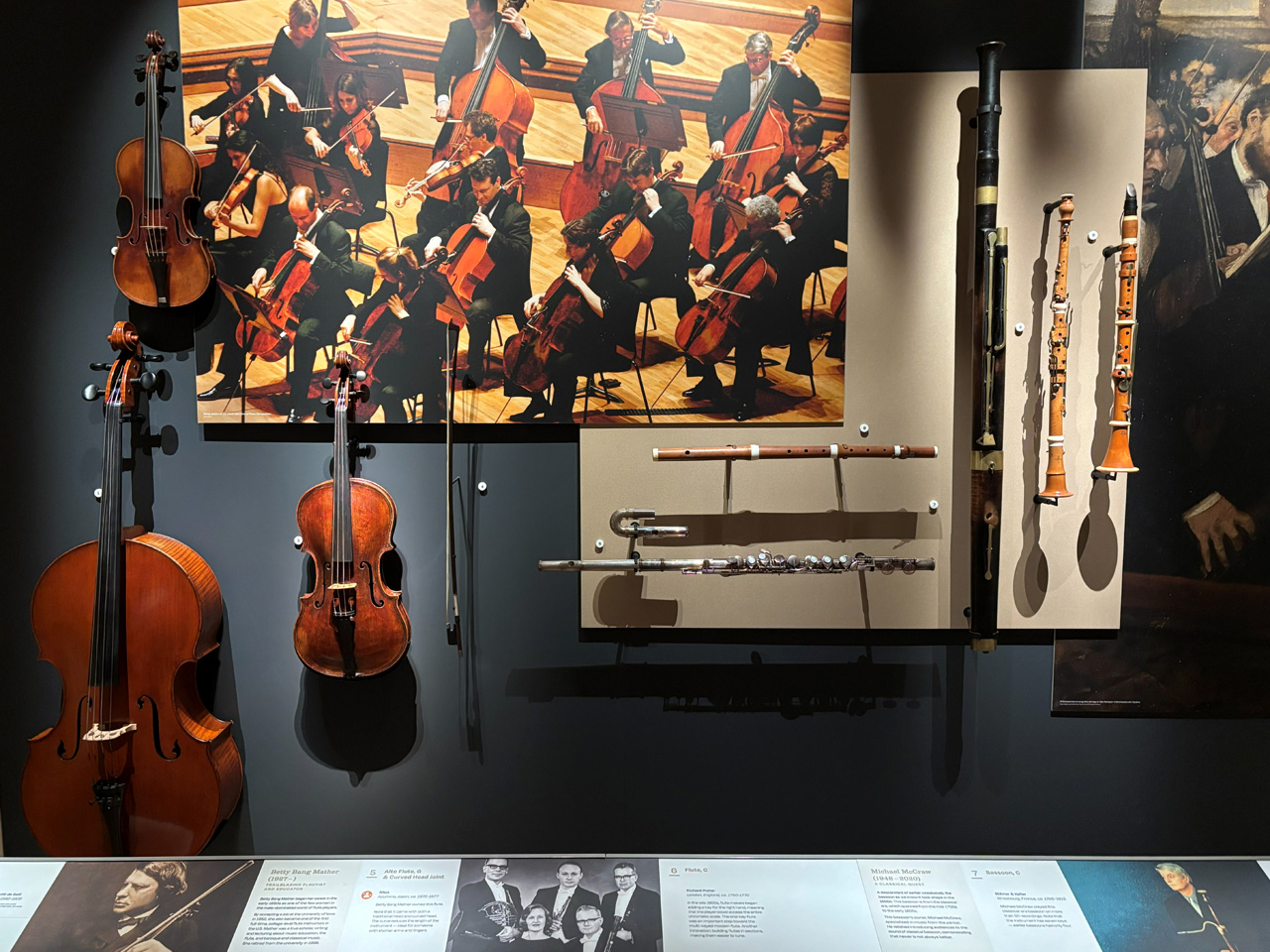
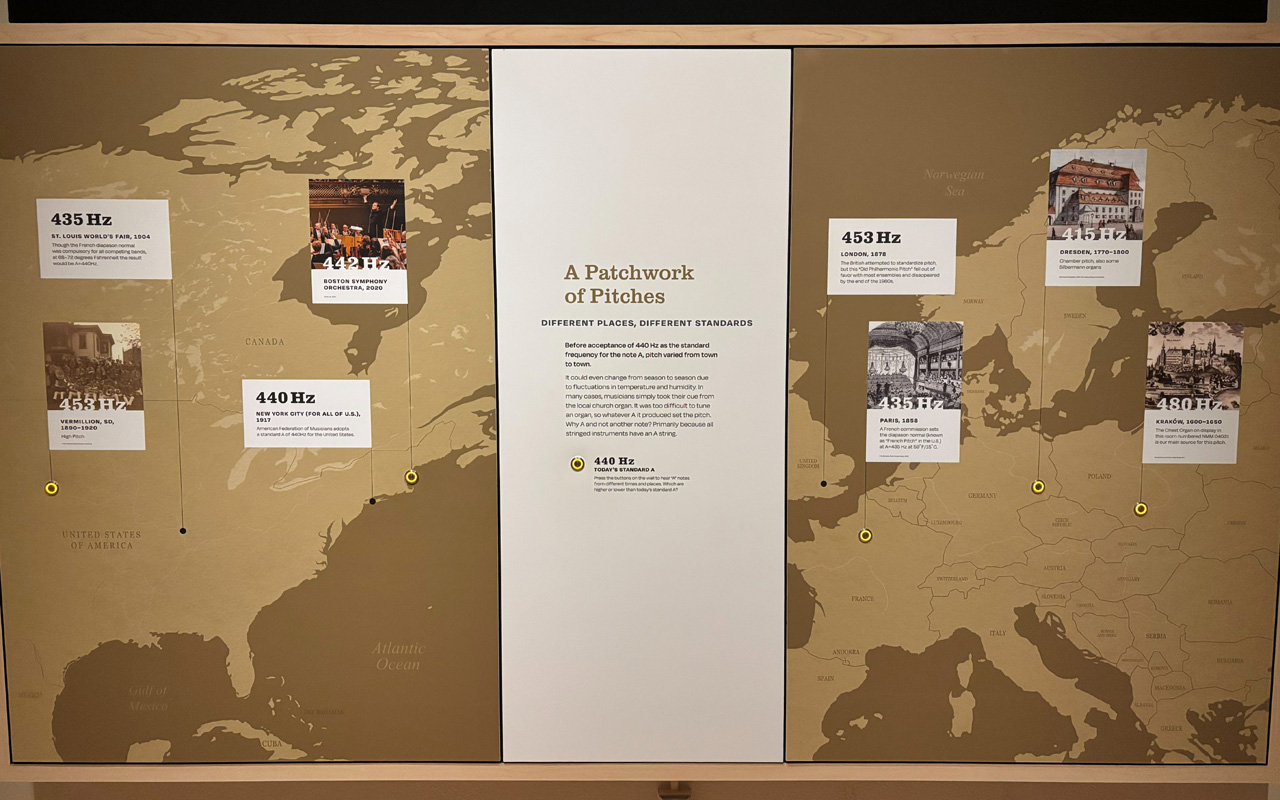
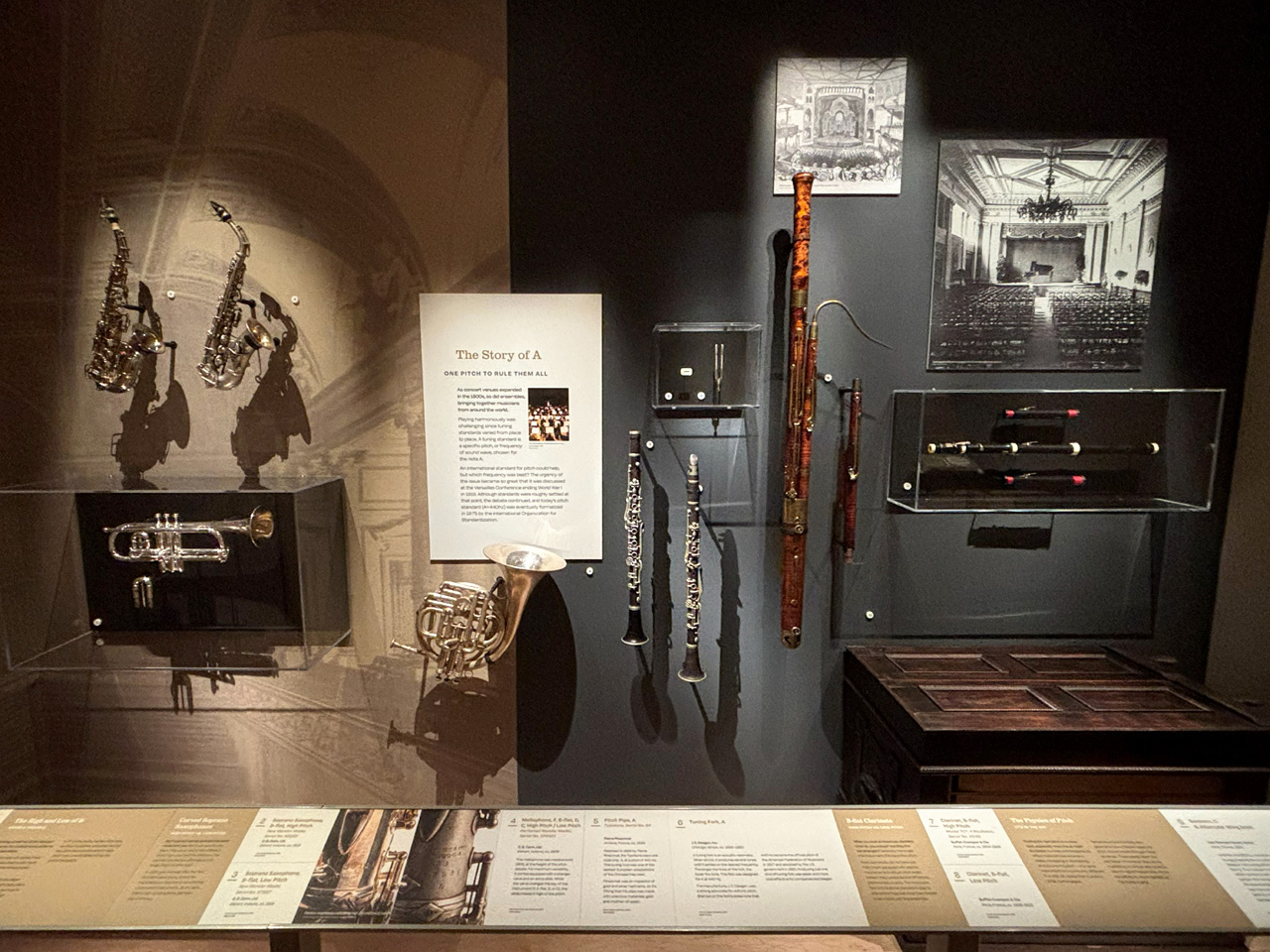
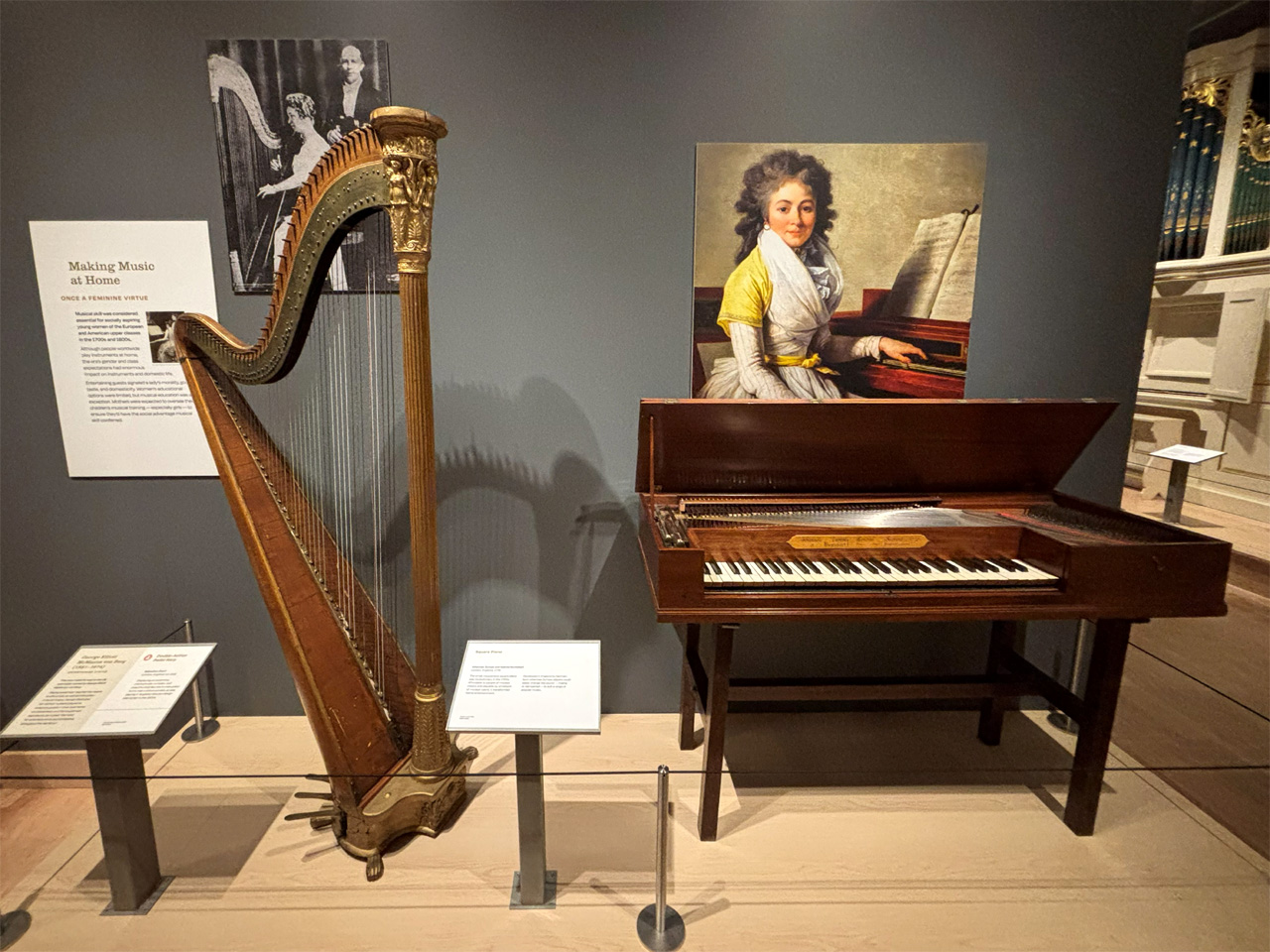
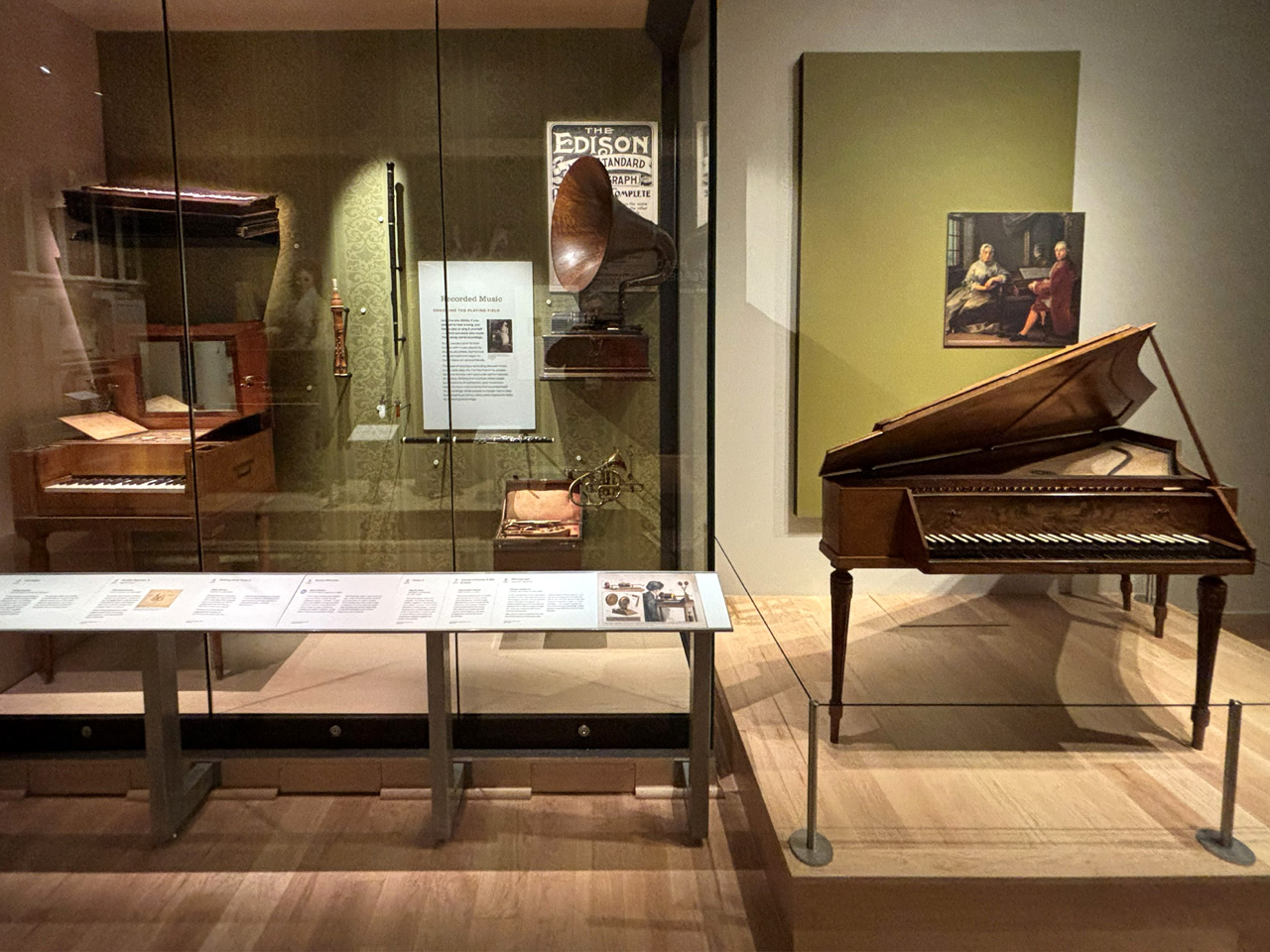
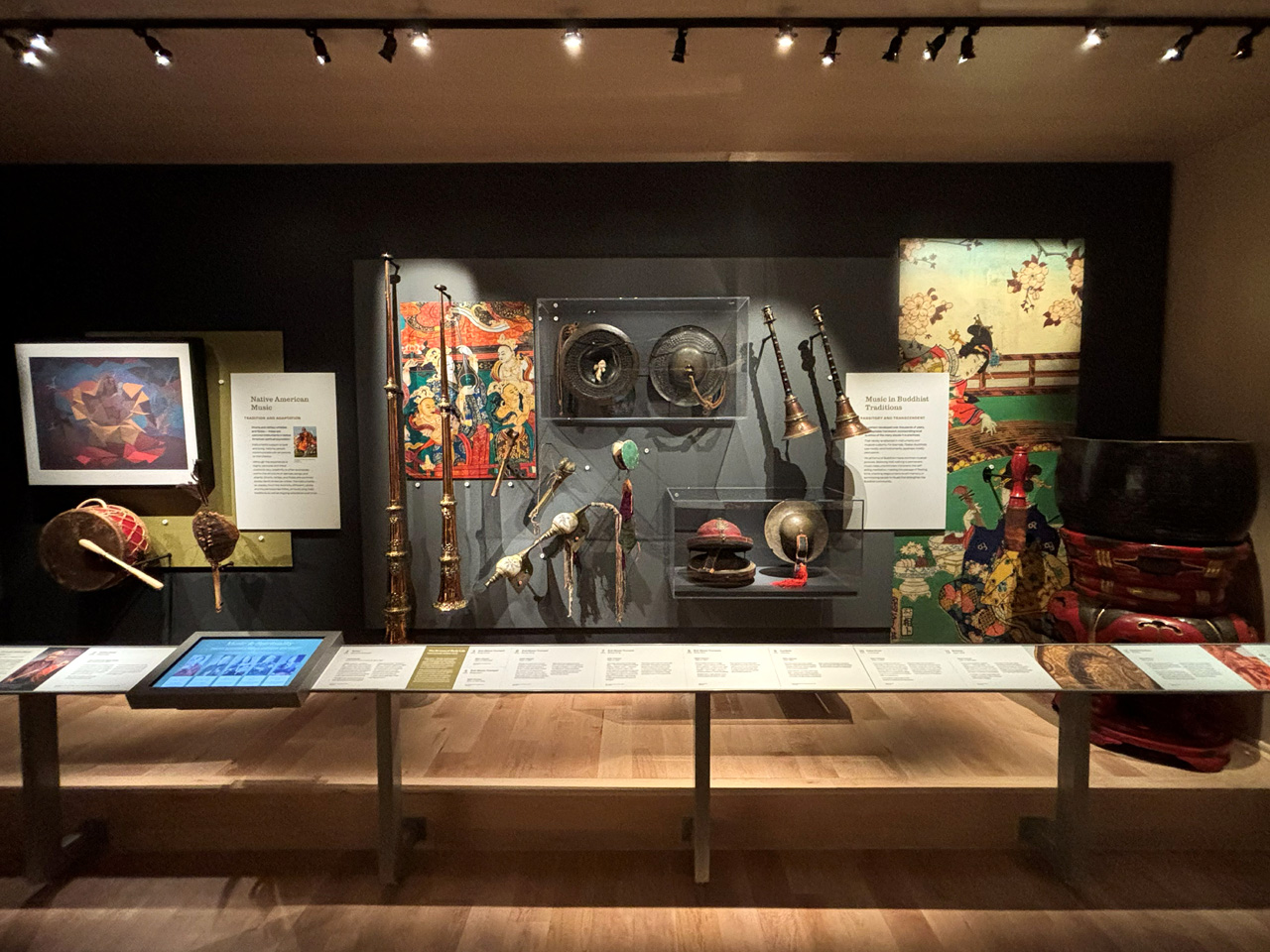
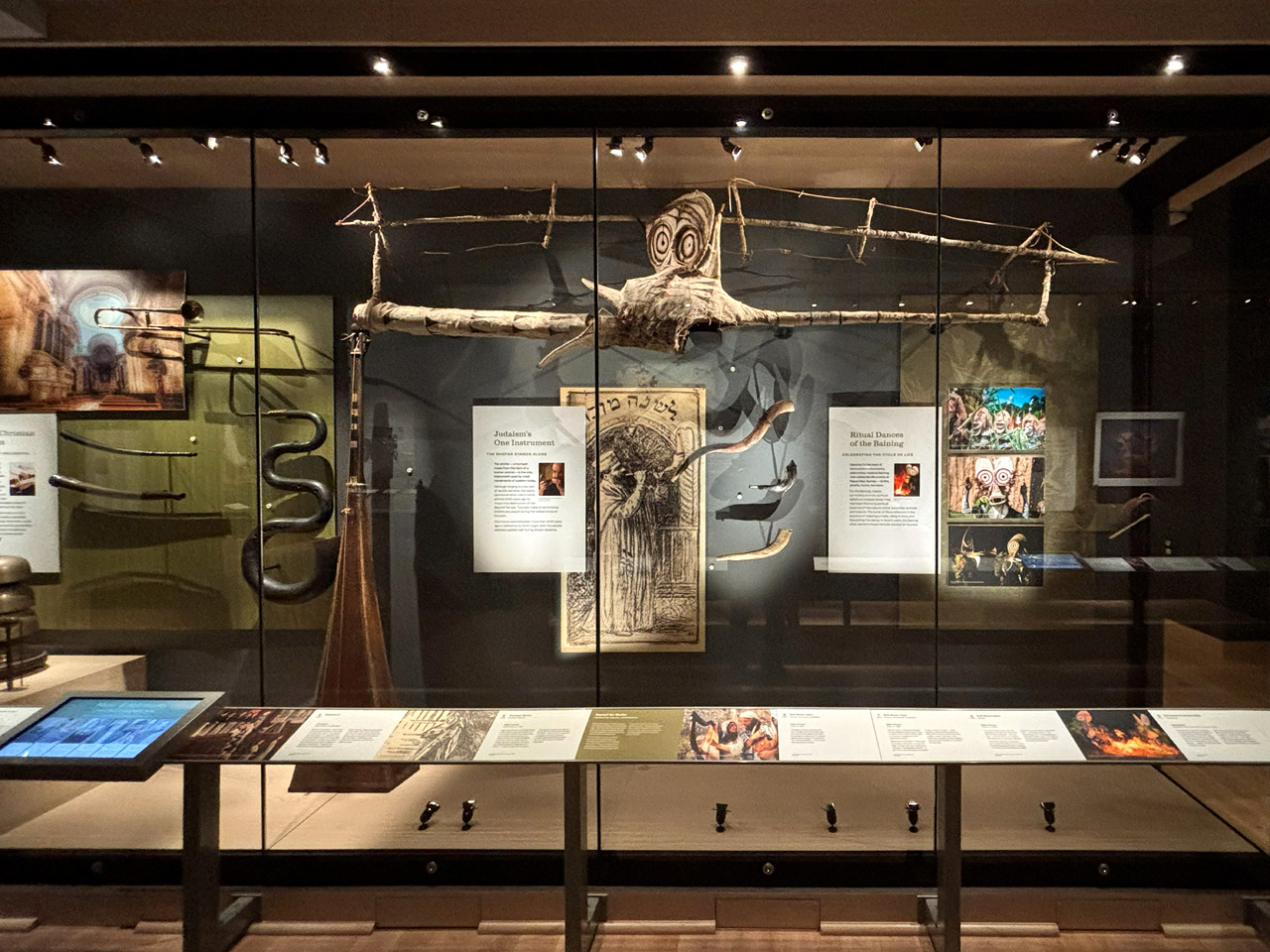
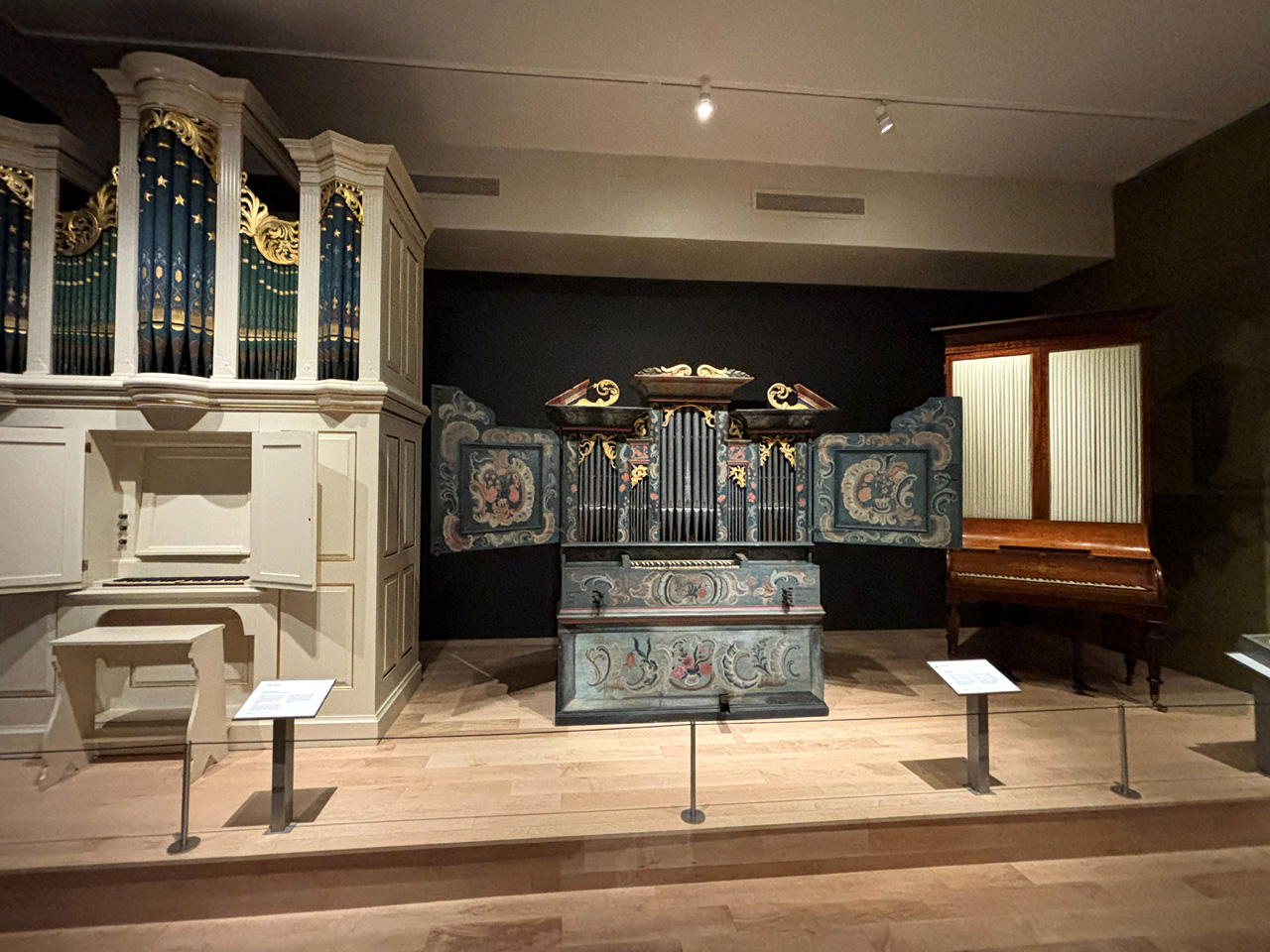
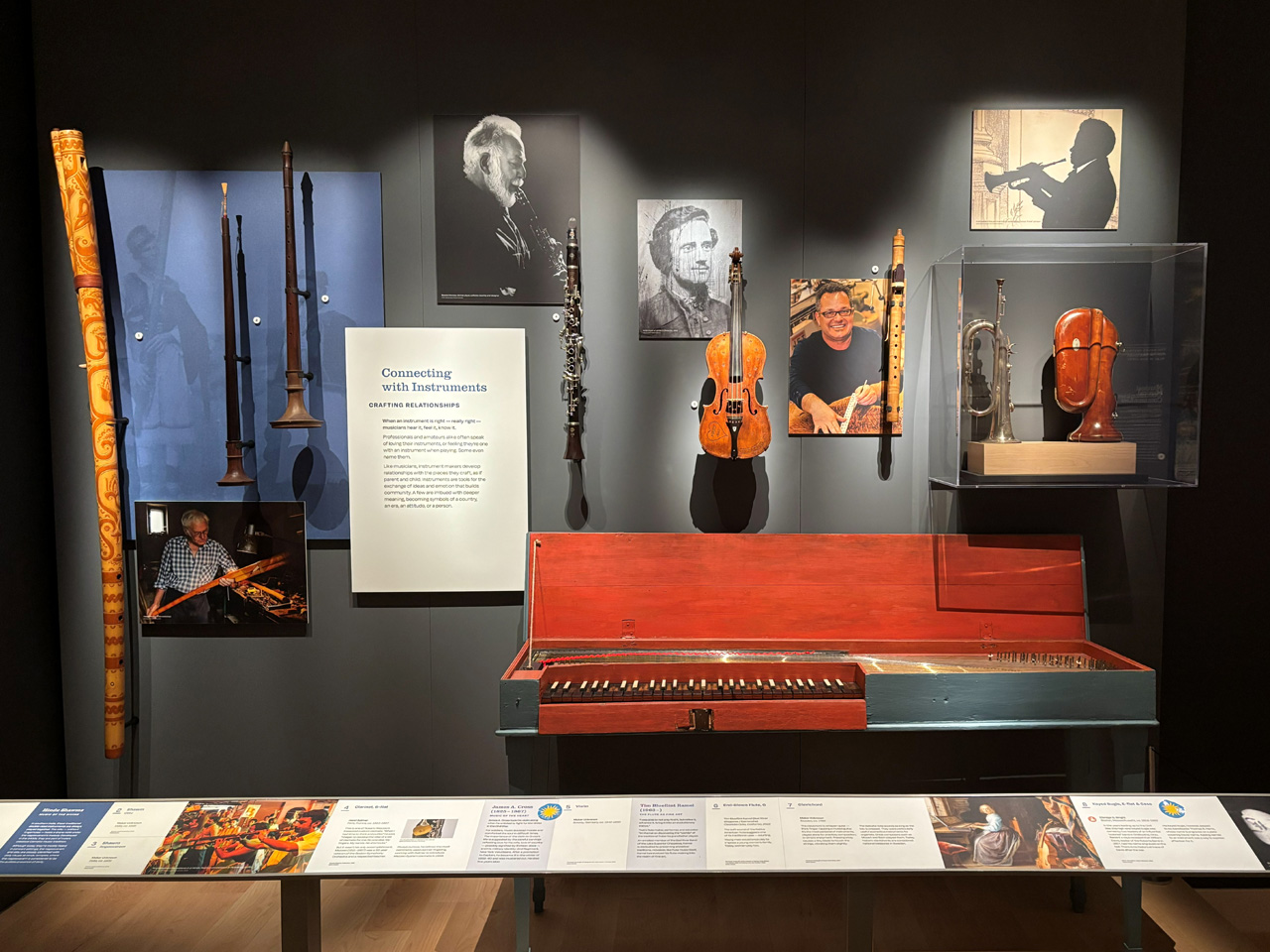
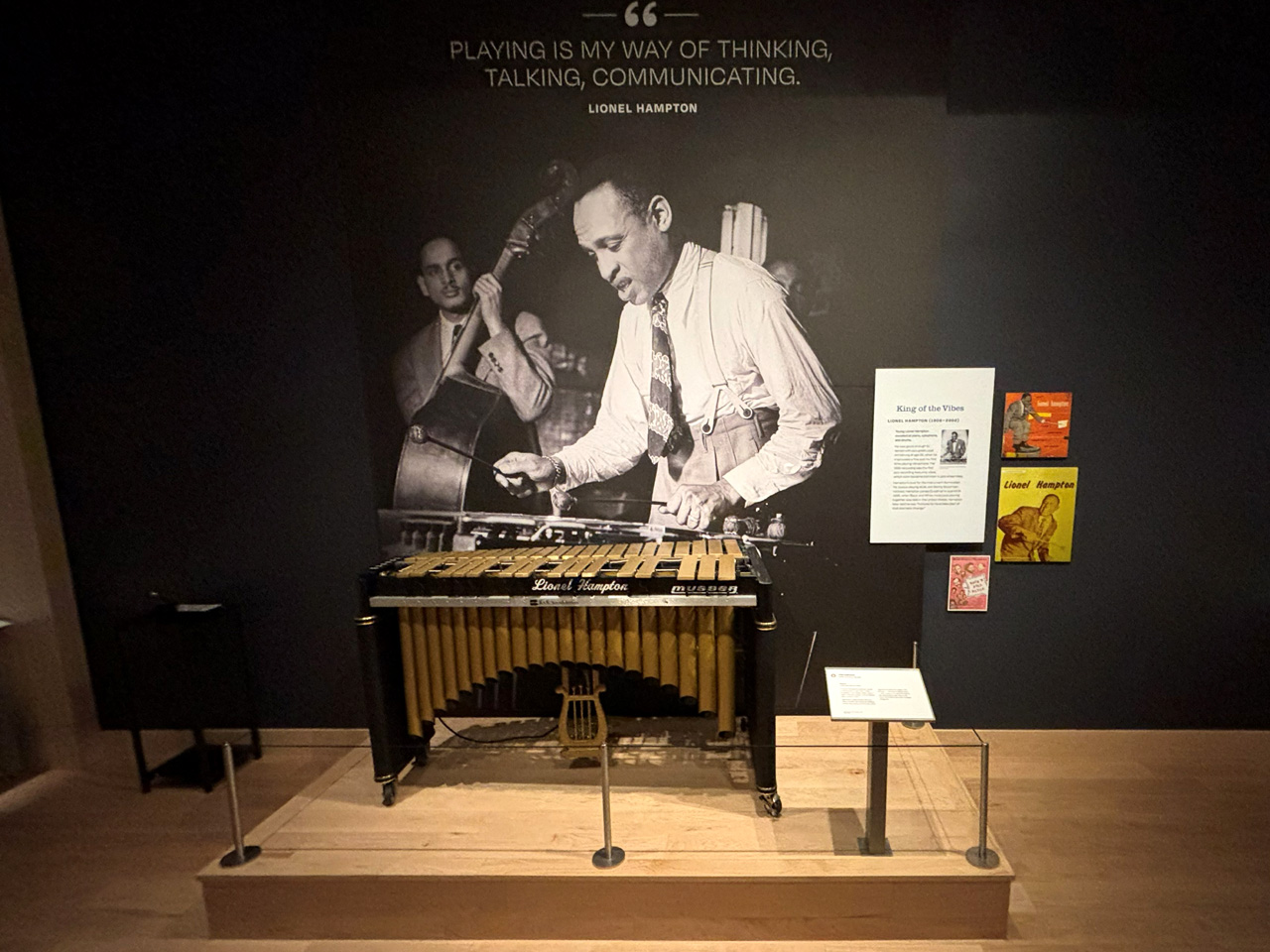
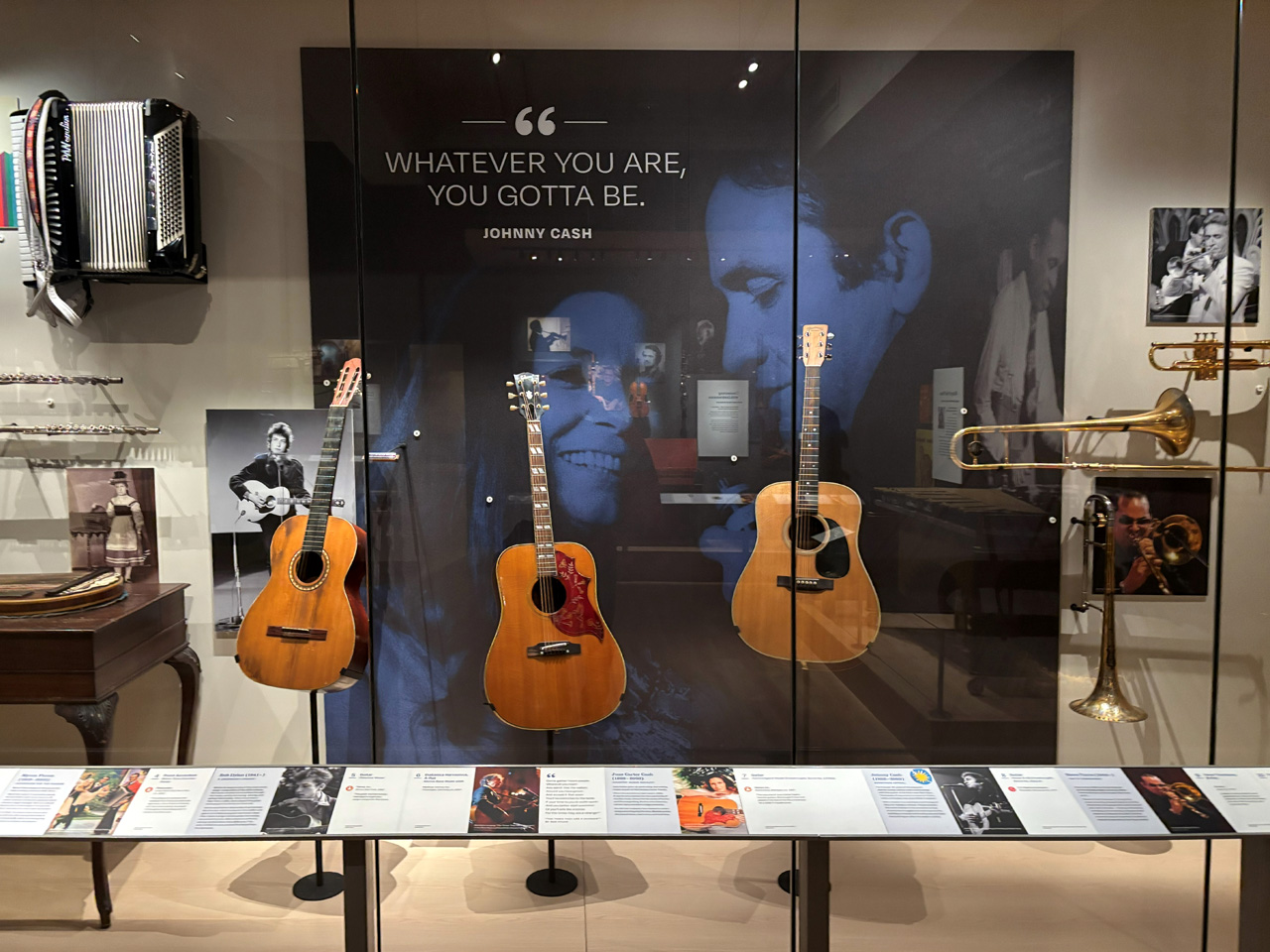
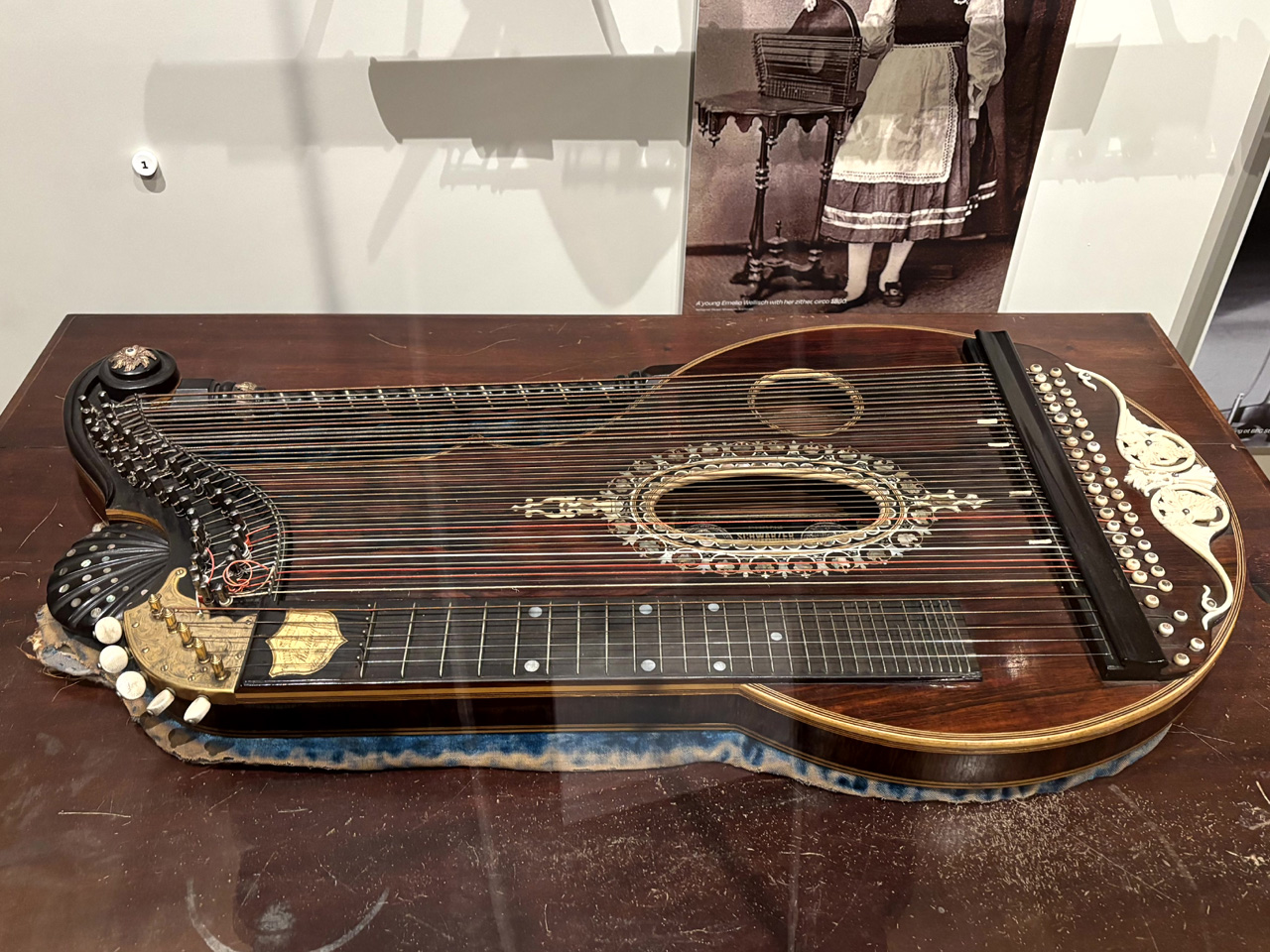
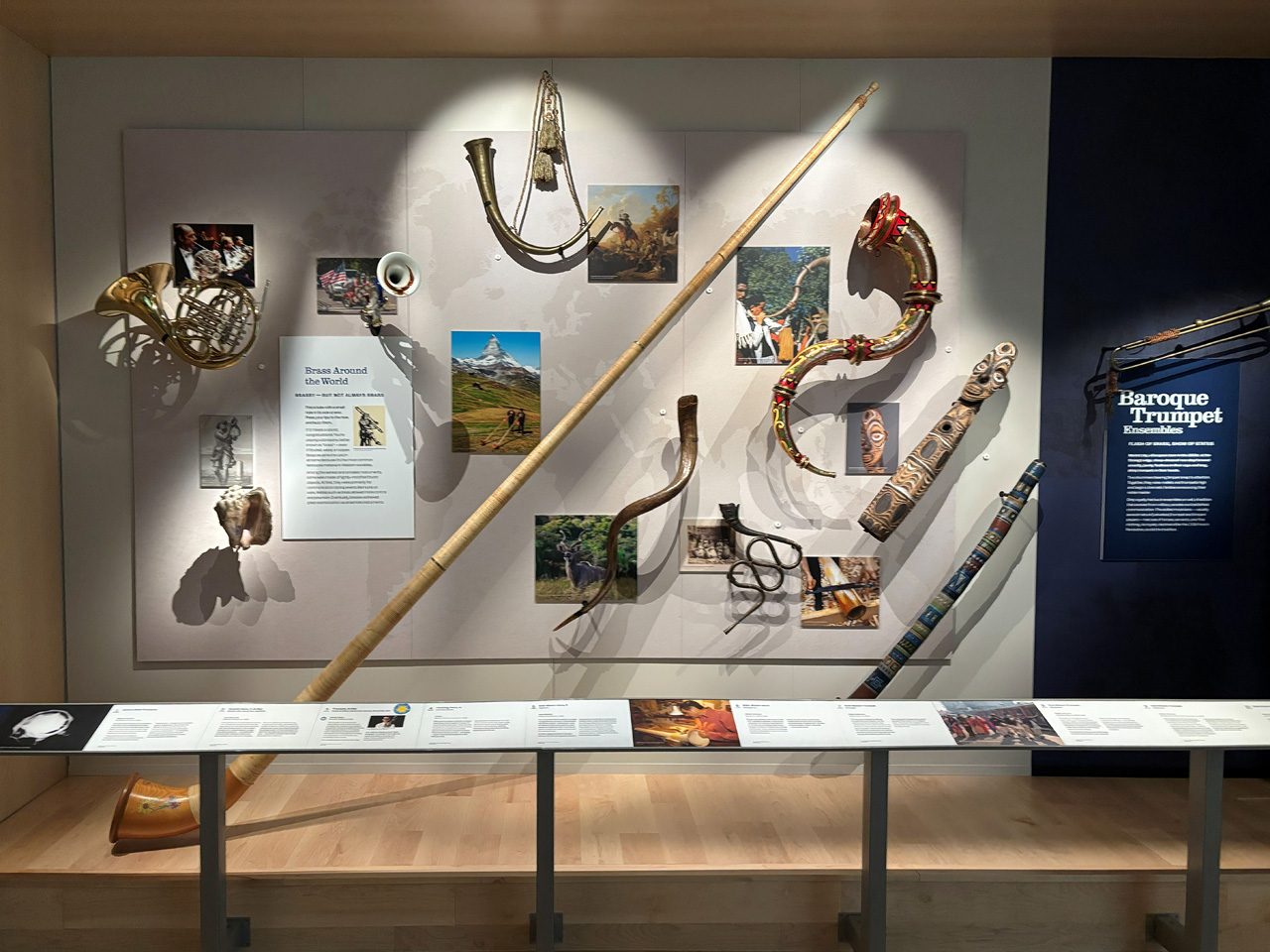
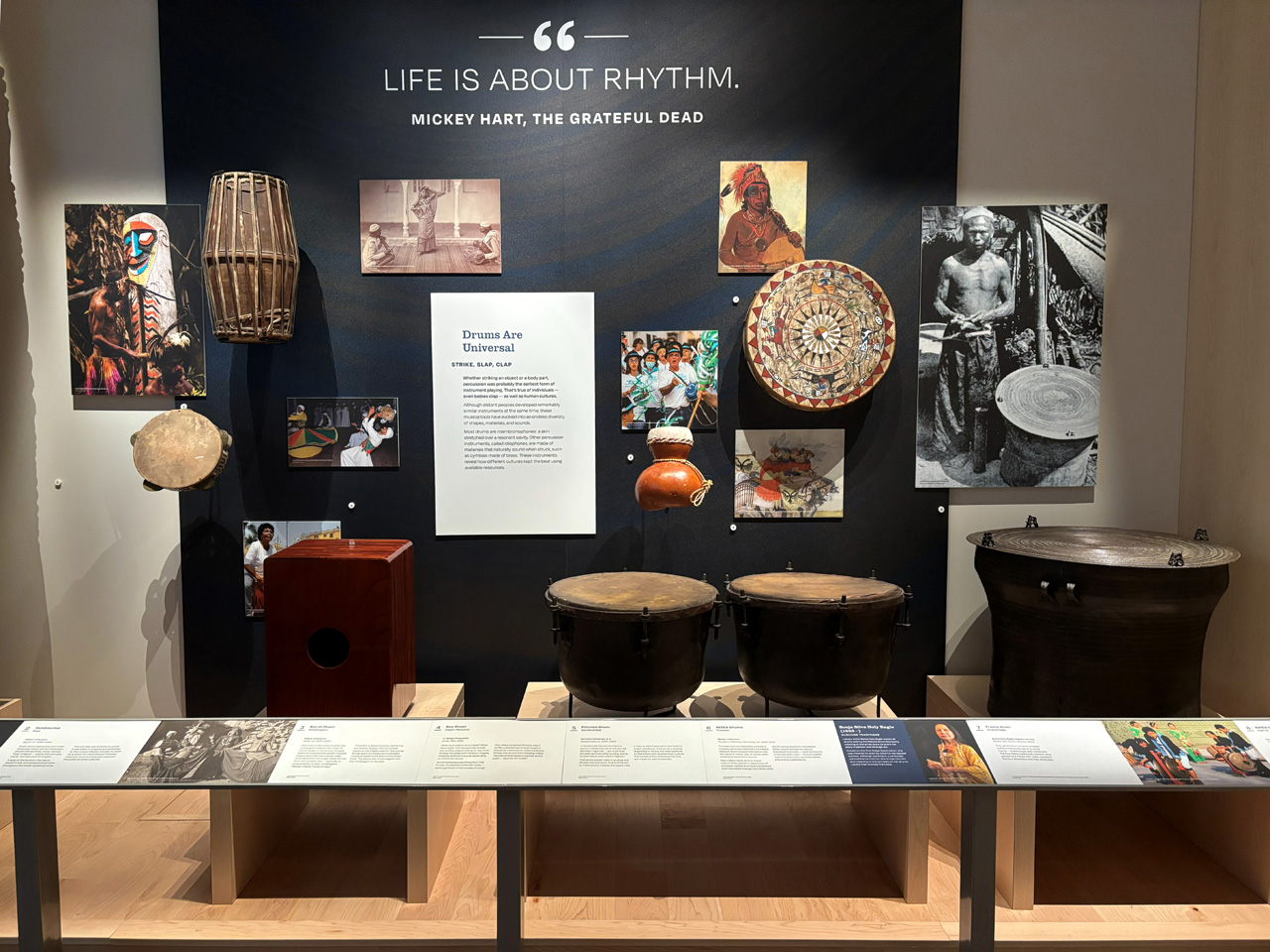
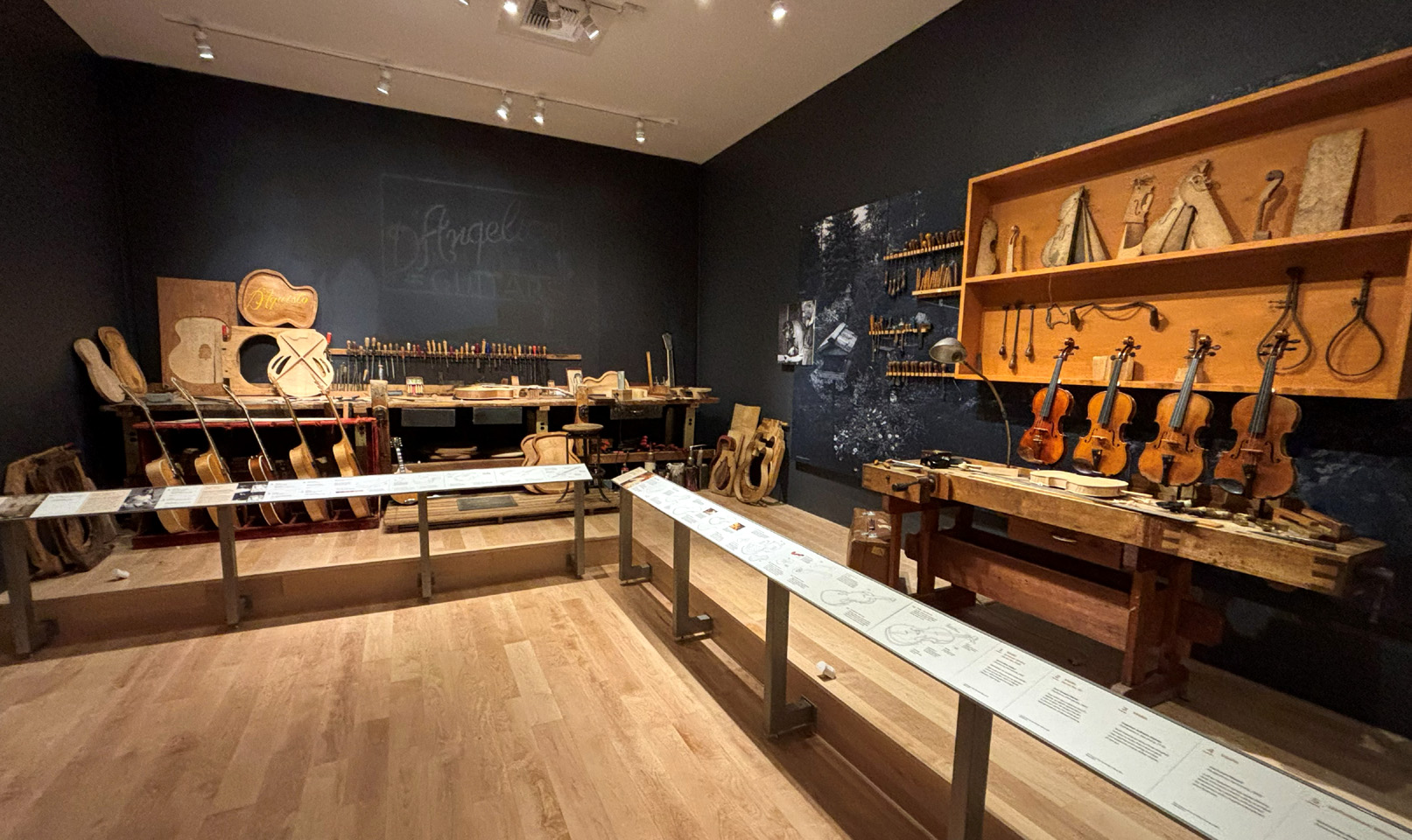
Above and below, the workshop of D’Angelico is again “recreated,” with instruments of his and protege D’Aquisto.
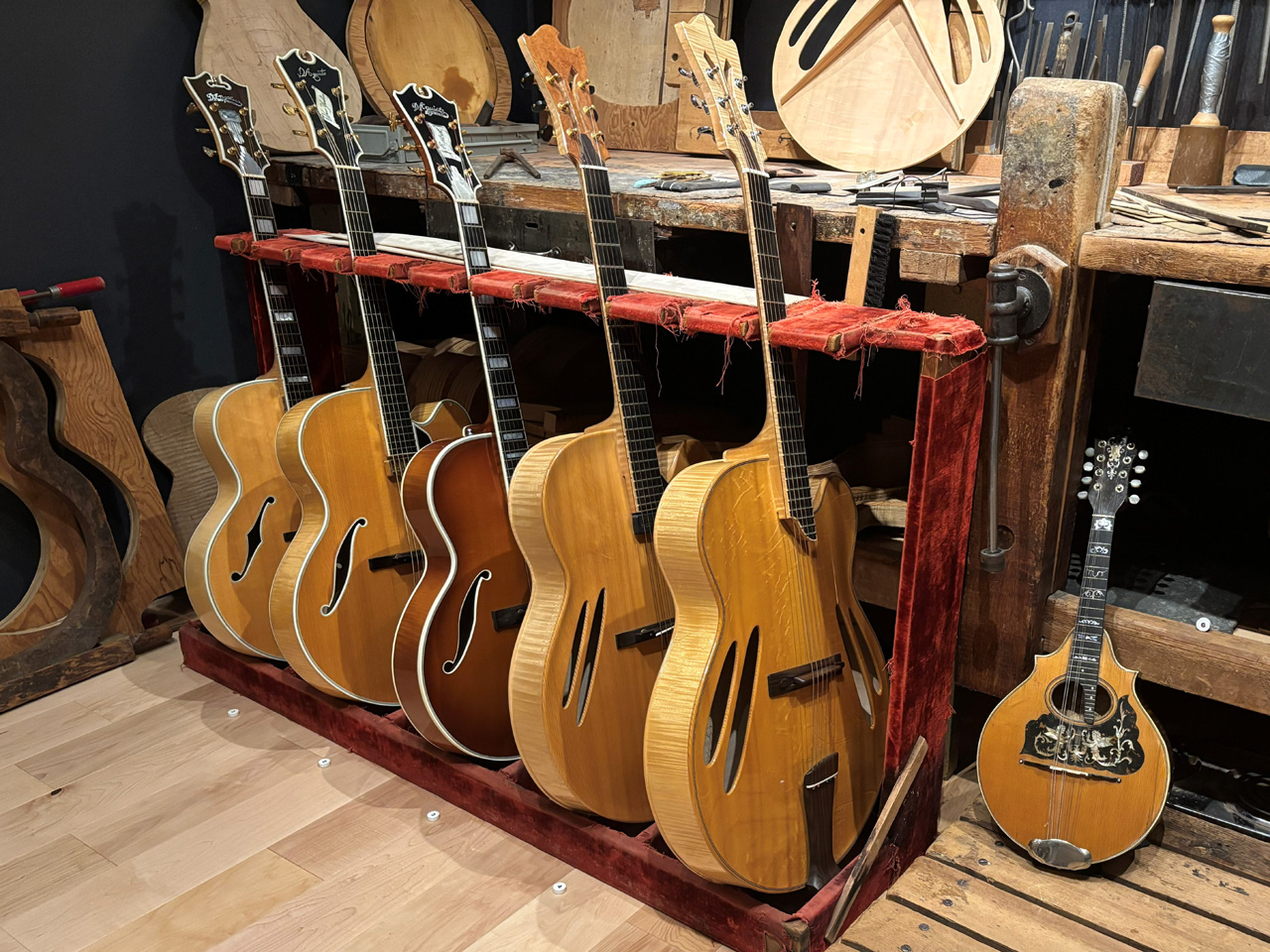
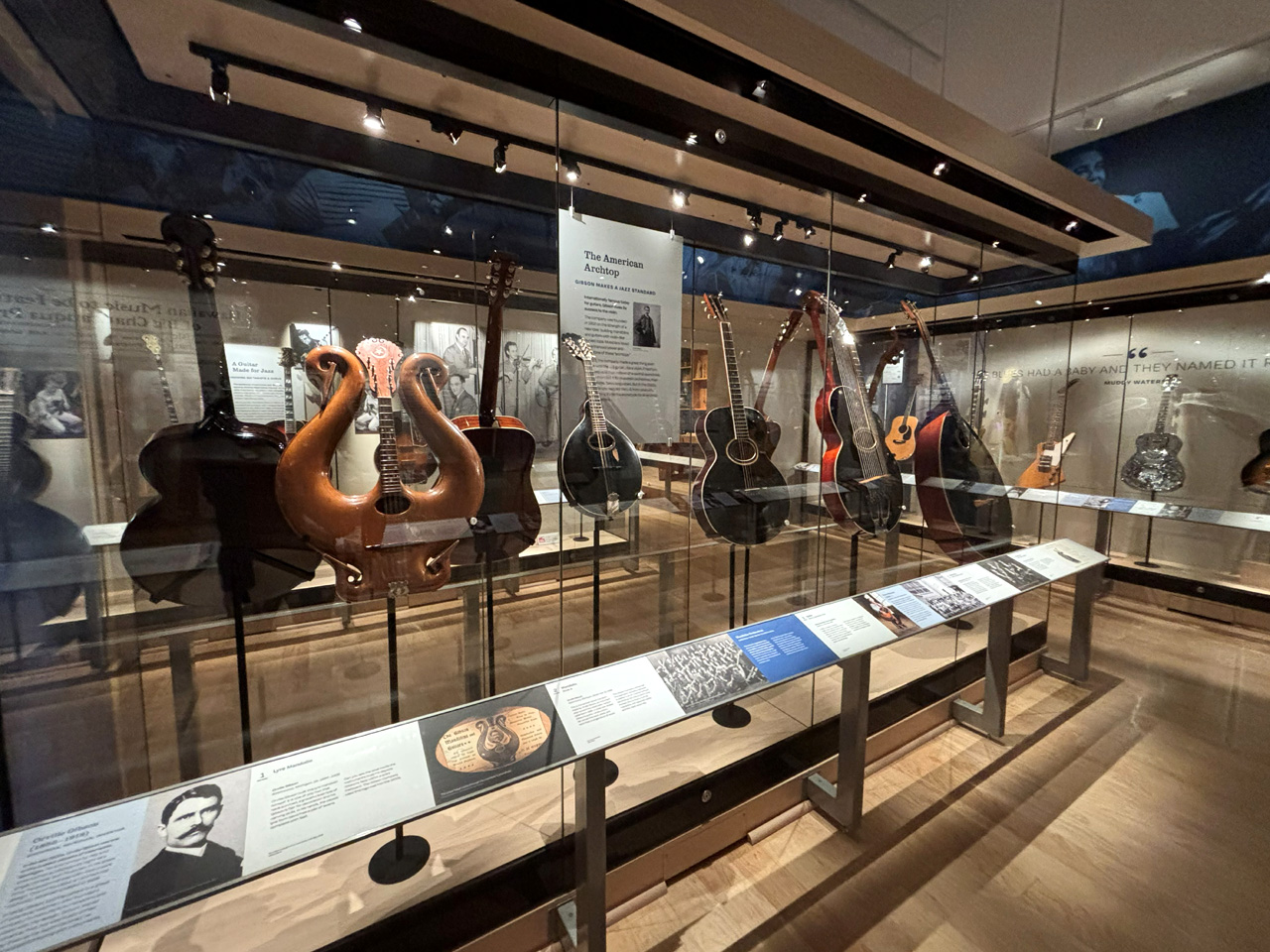
I was glad to see the rare early Gibsons (Orville and the later Manuf. Co.) given the center of the American guitar room.
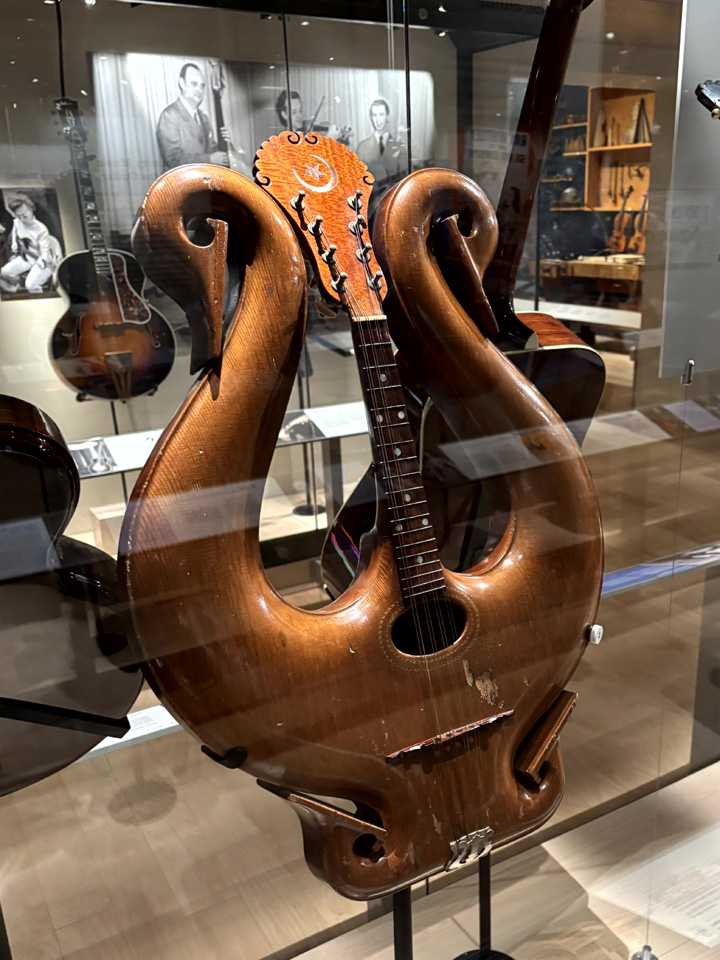
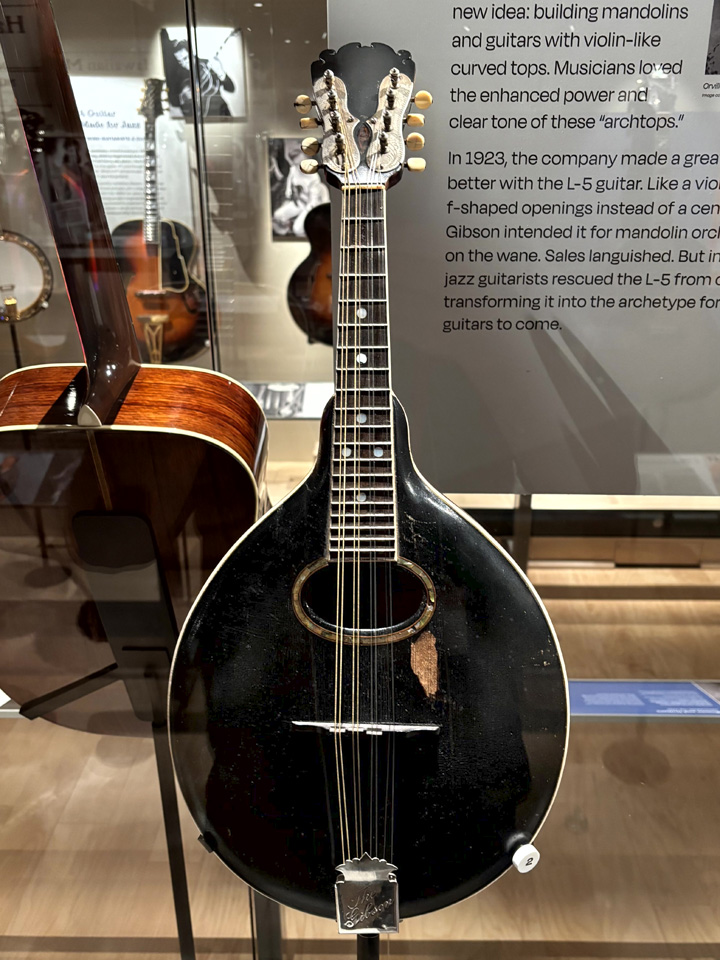
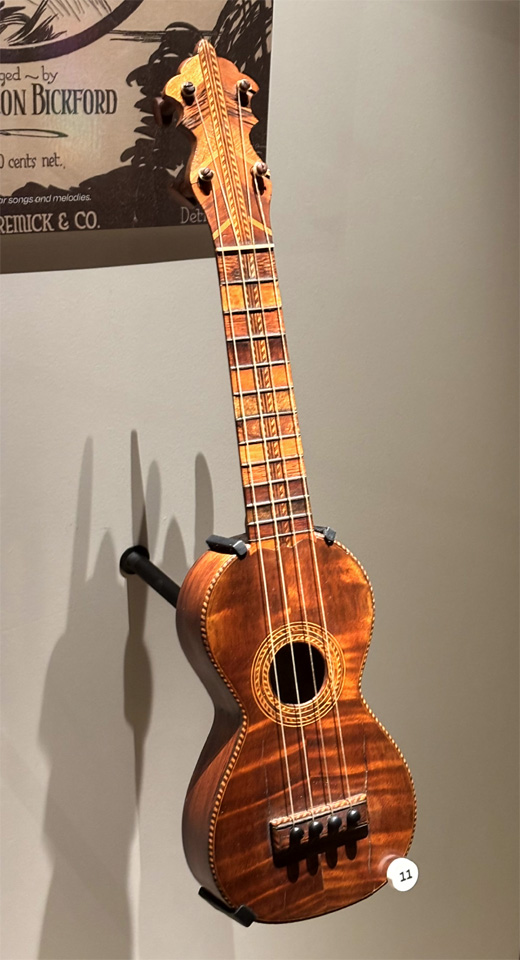
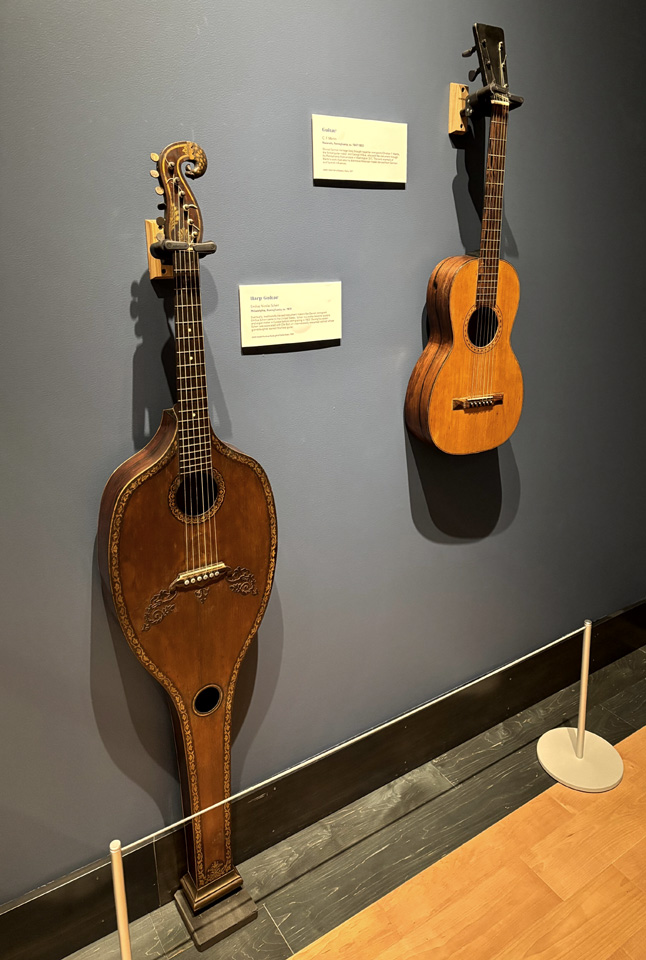
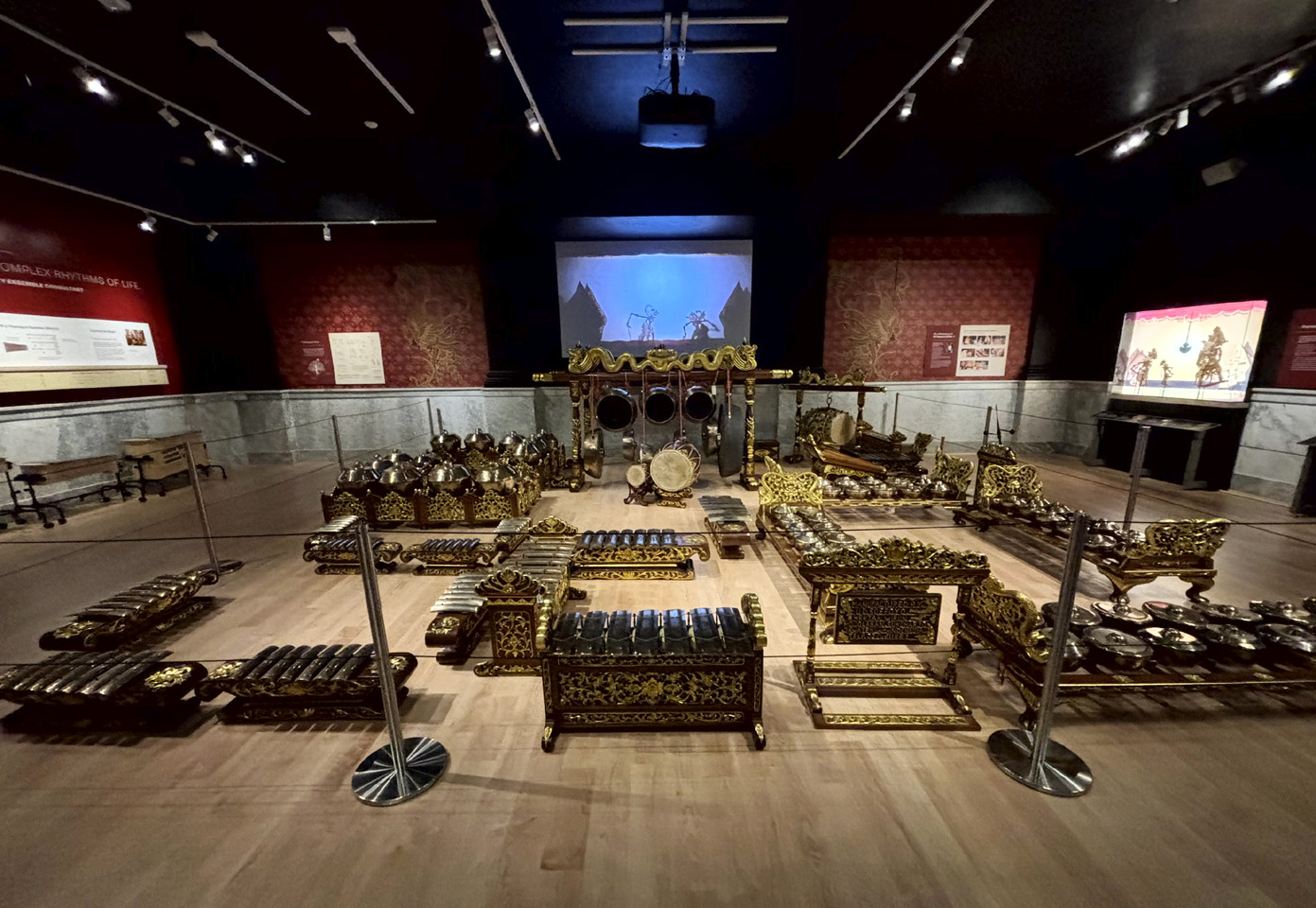
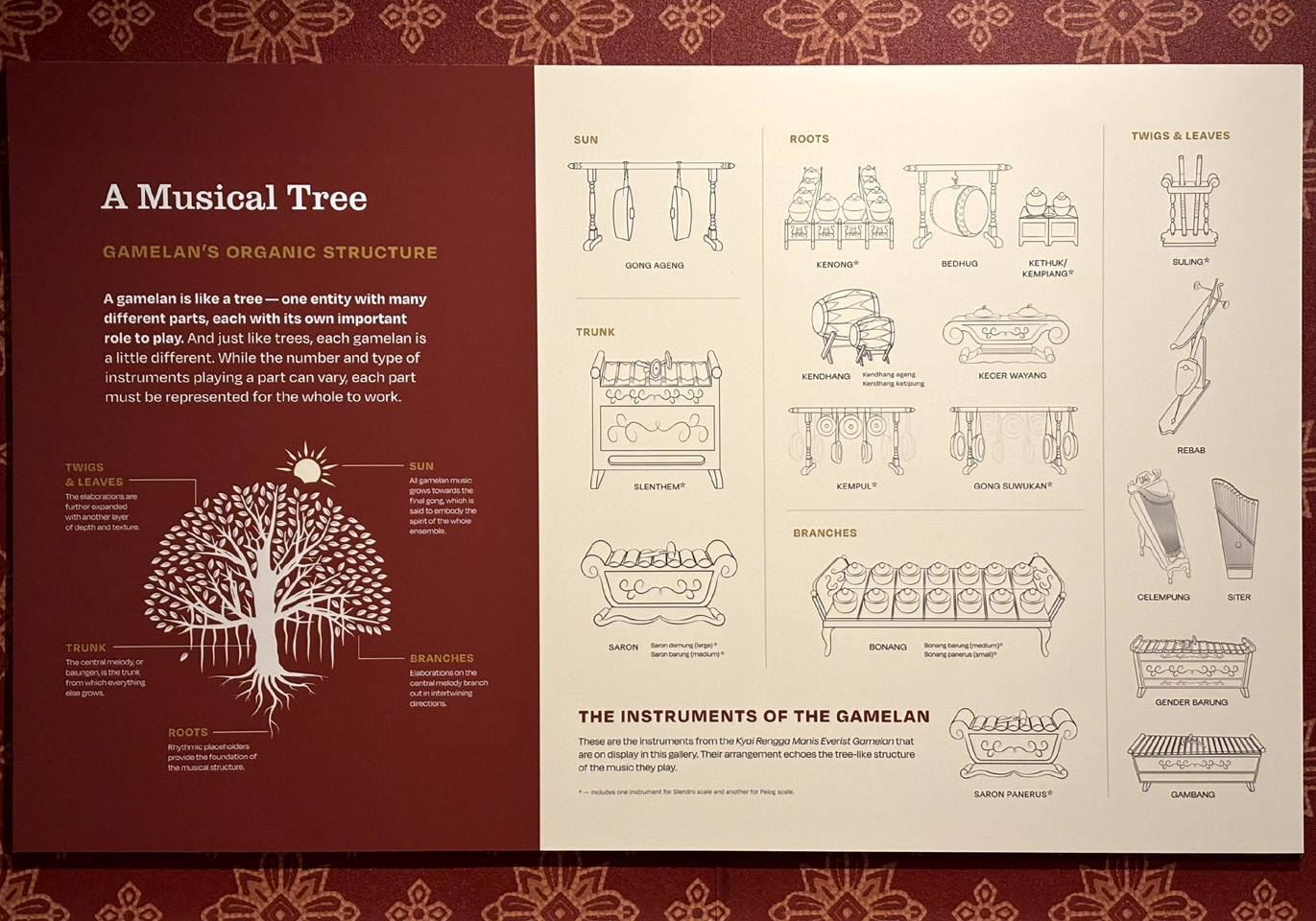
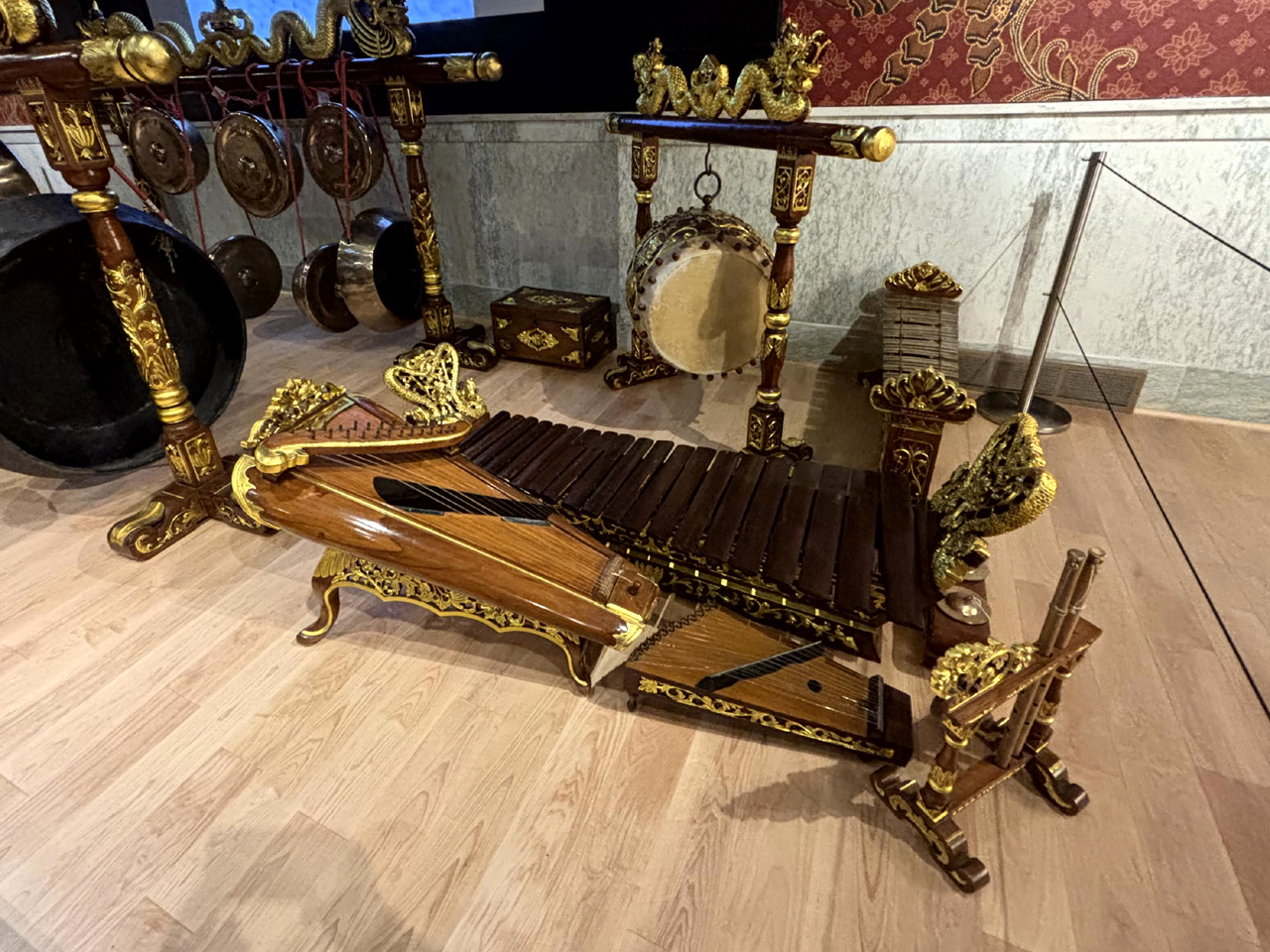
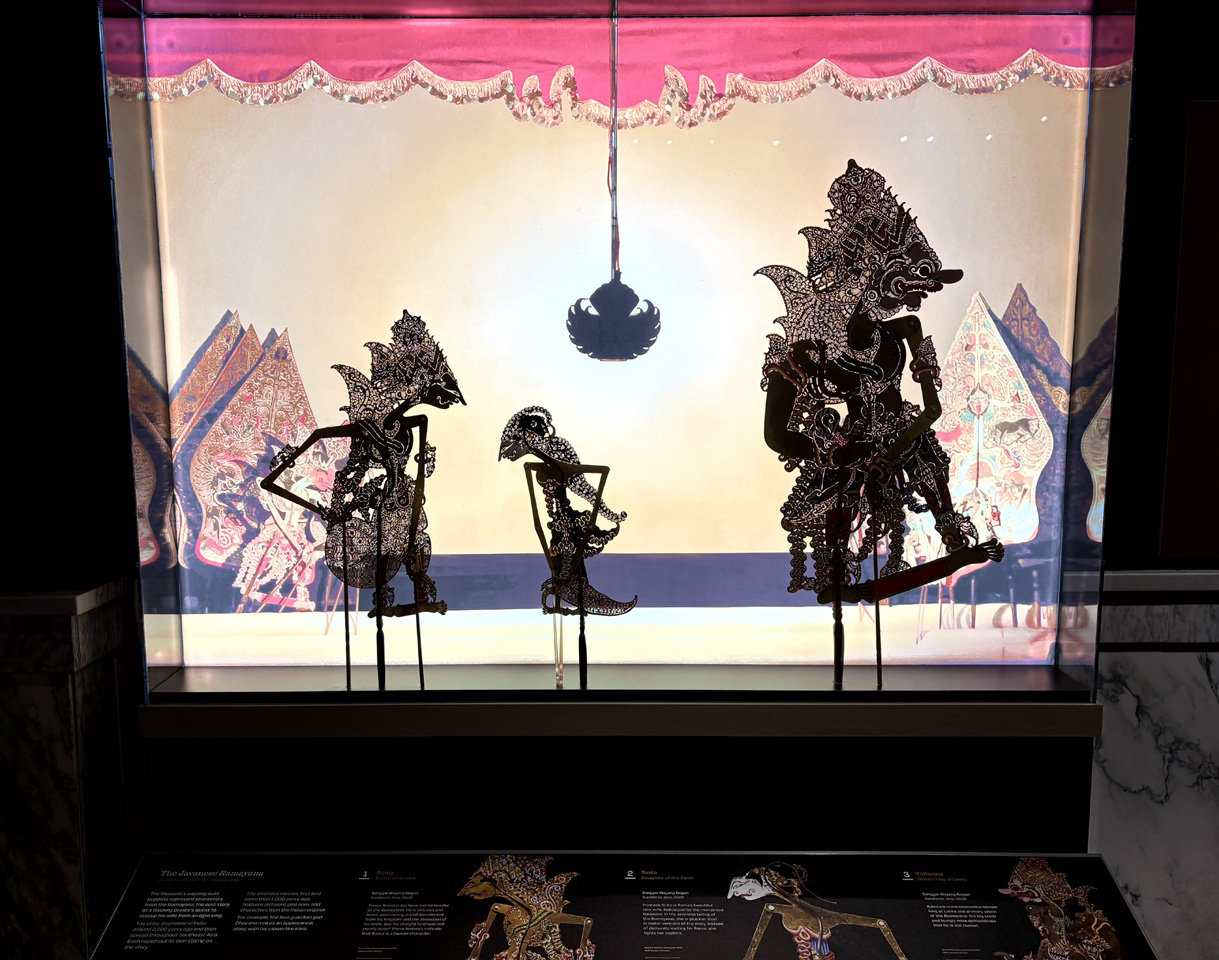
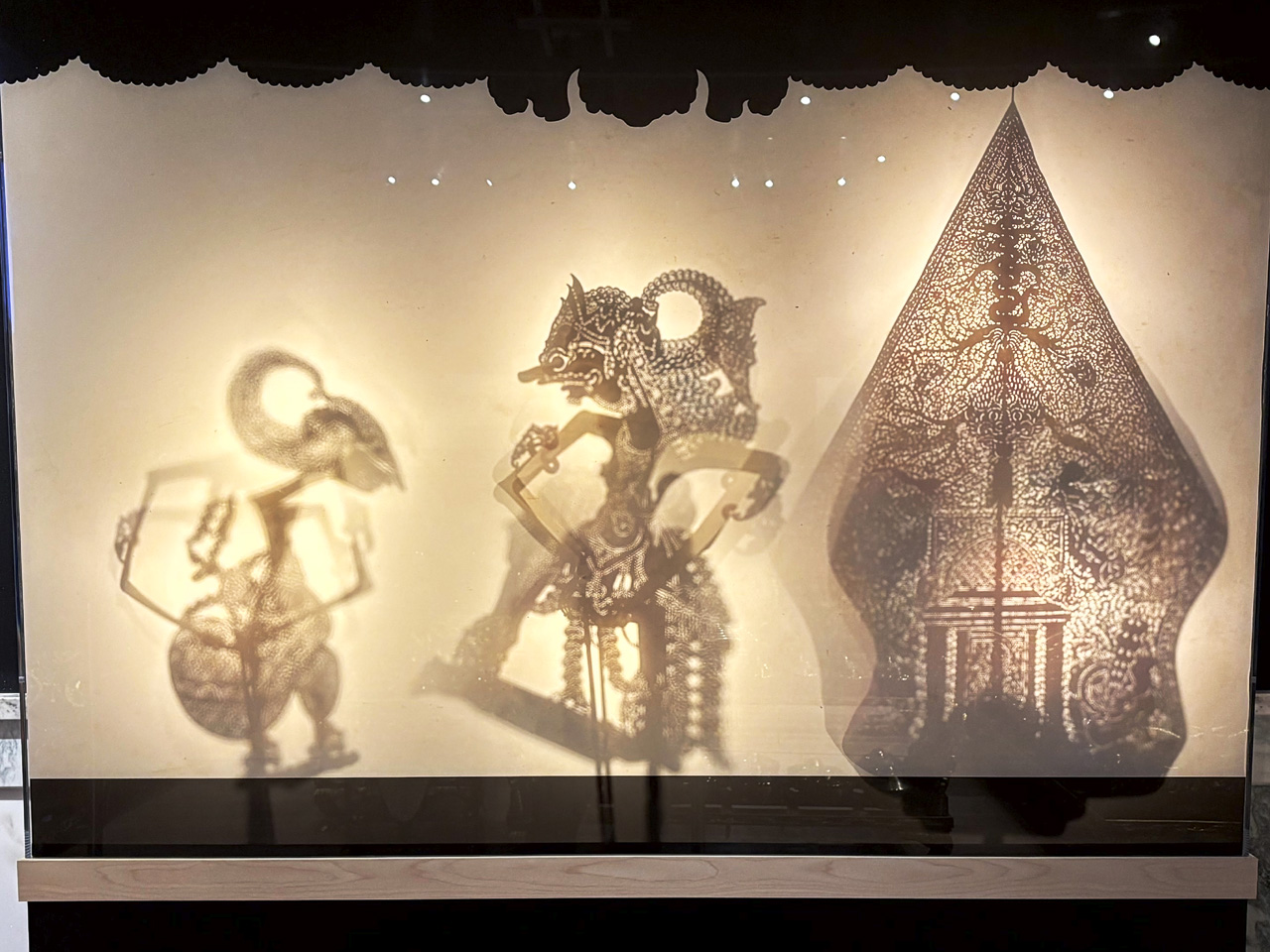
The modern gamelan set with complimenting shadow puppets was a wonderful separate display room.
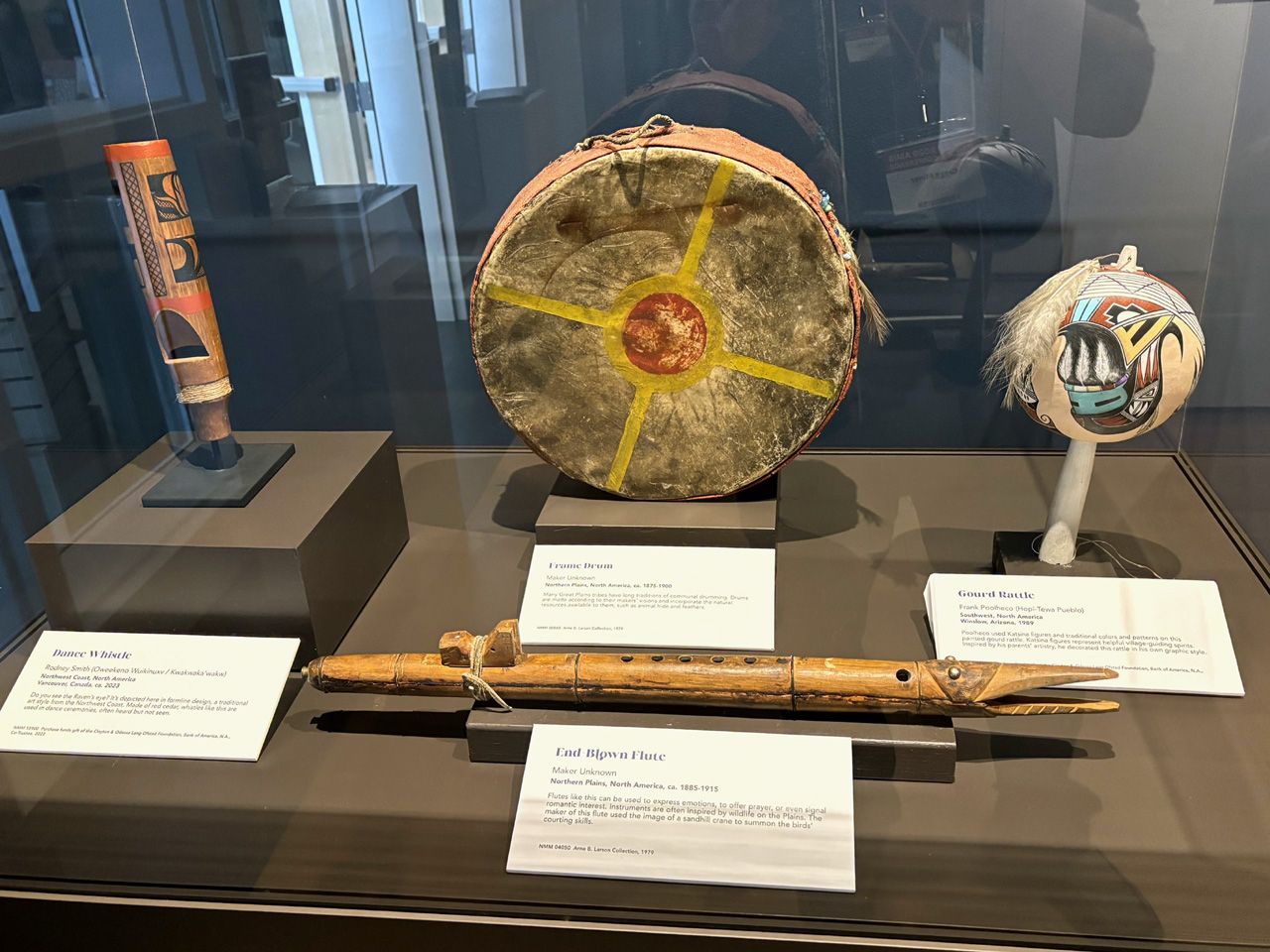
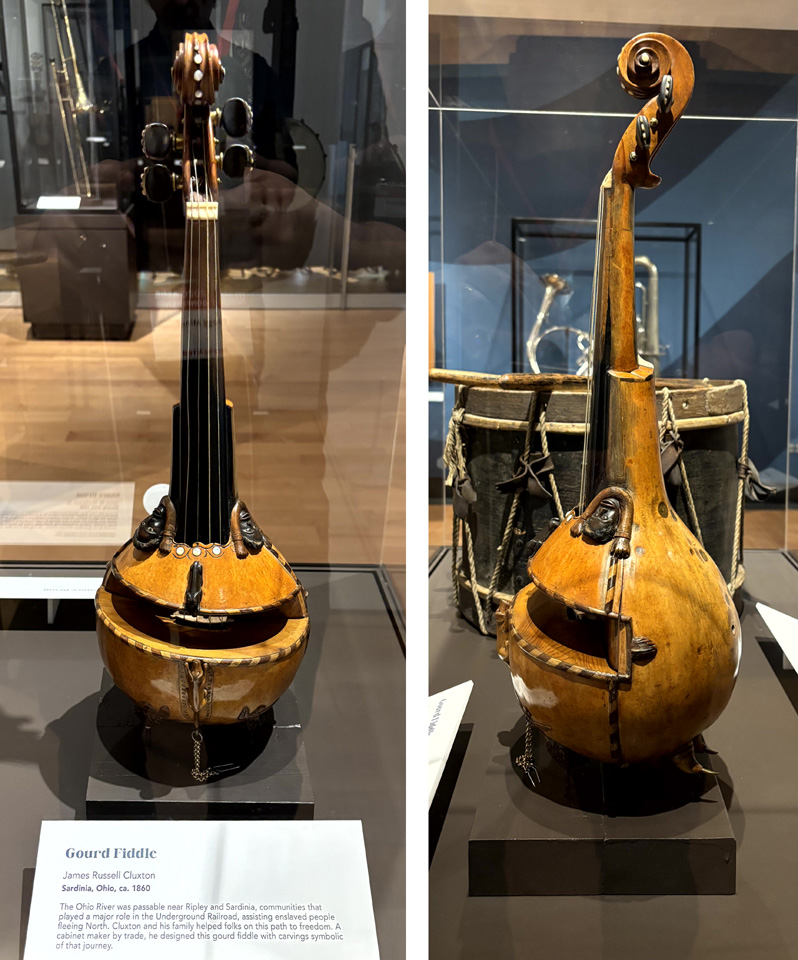
A number of us commented on the unique and imaginative gourd fiddle.
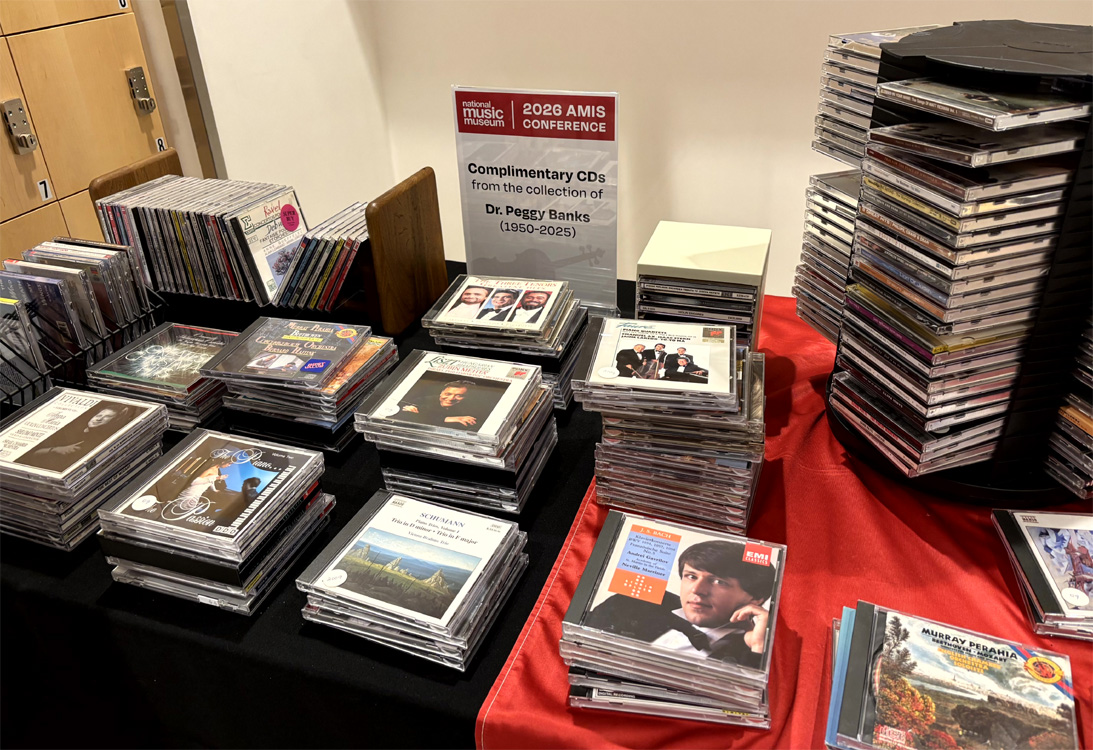
A nice way to honor their late director Dr. Peggy Banks while putting her vast CD collection to good use. I went home with several myself.
On now to papers (I took in as many as I good, tried to capture most apologies to those not included). I order of appearance throughout the three days:
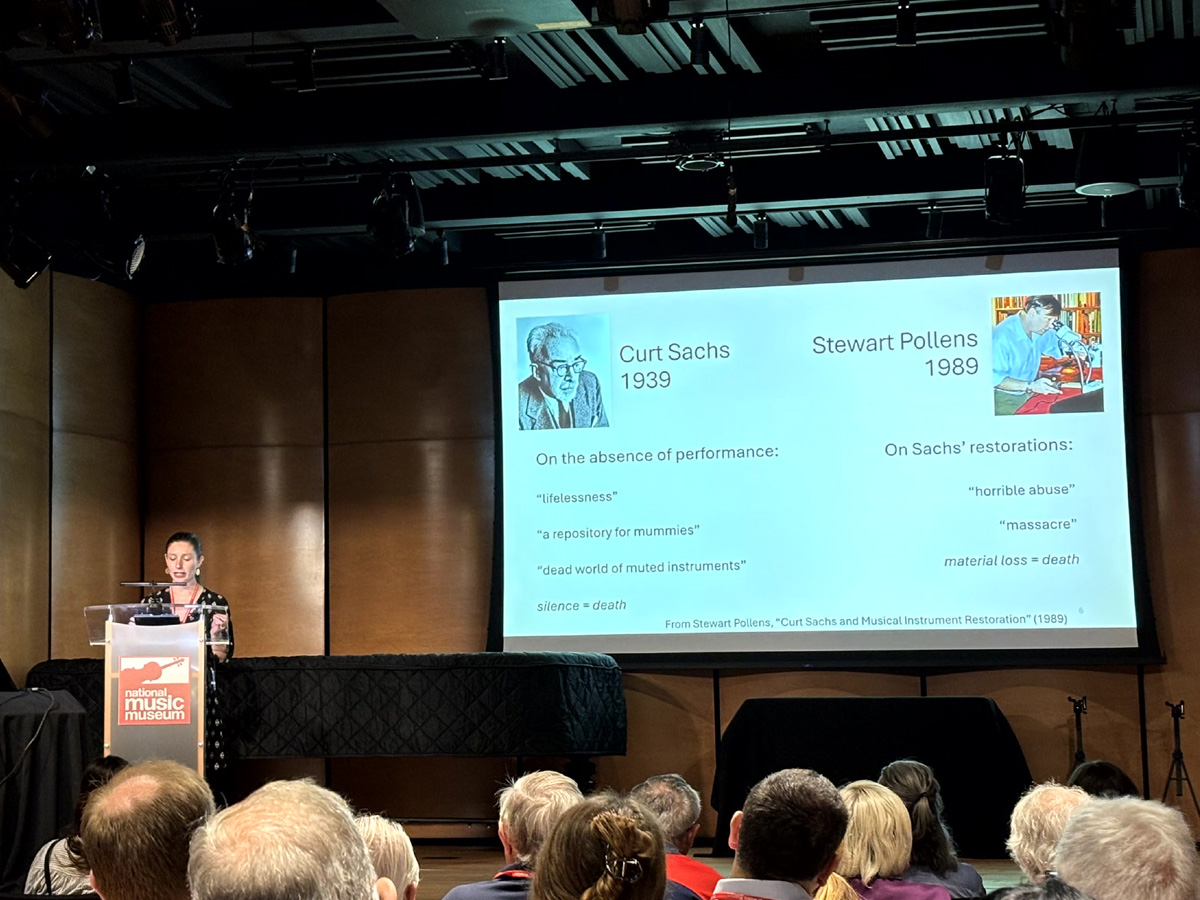
Devanney Haruta (Brown U) would later win for best student paper for her new look at “Performance, Preservation, and Instrumental Ethics in Musical Instrument Museums.” She addressed questions about my OWN collection, so food for thought!
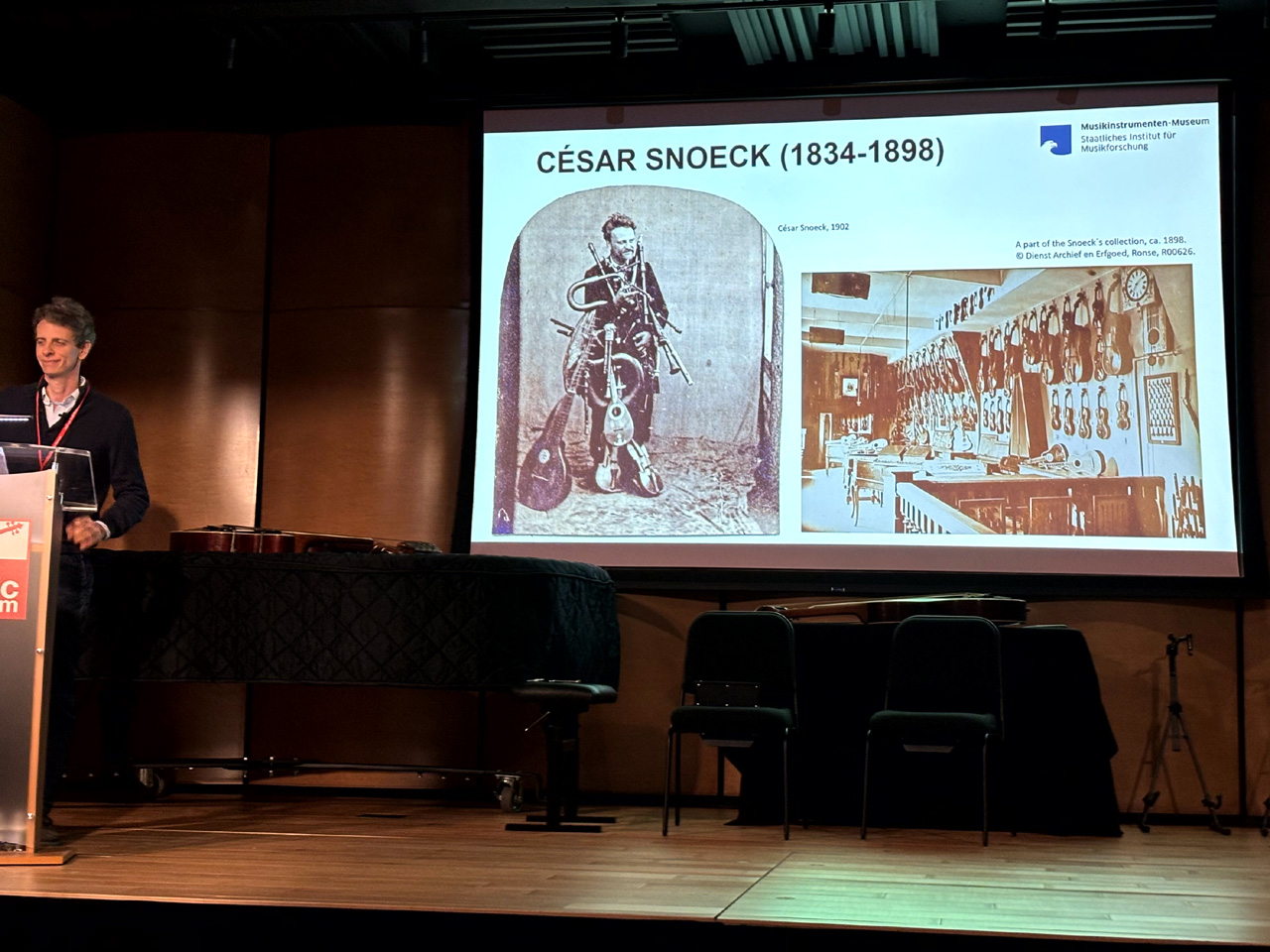
Another old friend, instrument restorer Emanuele Marconi is now director at the Berlin museum. He discussed museum practice of producing “facsimiles” of rare instruments, including those of collector César Snoeck (shown).
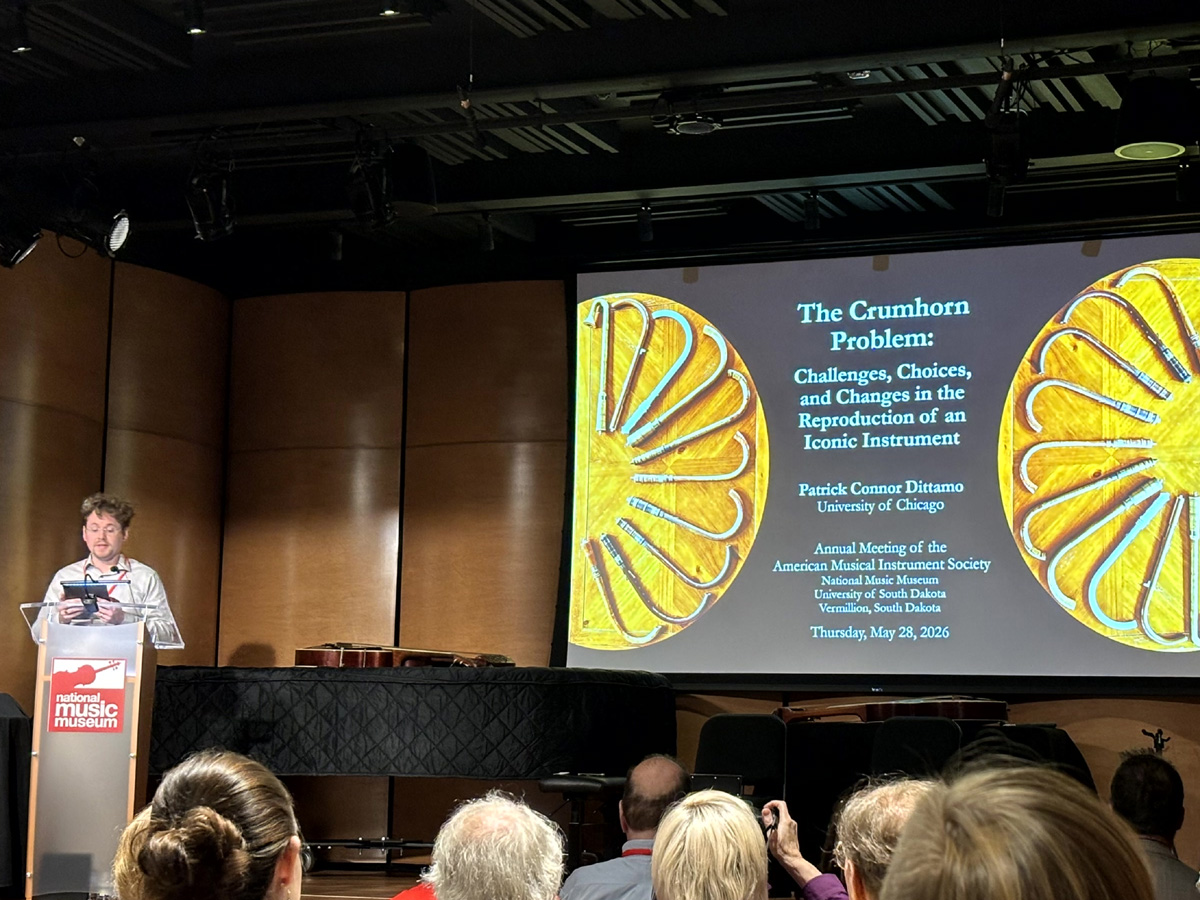
Patrick Dittamo (Chicago PhD student) continues his historical-to-modern crumhorn investigations.
OK, this was a challenge. It was also a surprise. To me.
Note to AMIS presenters: Ad libbing a paper will not be tolerated. Unless you have no choice.
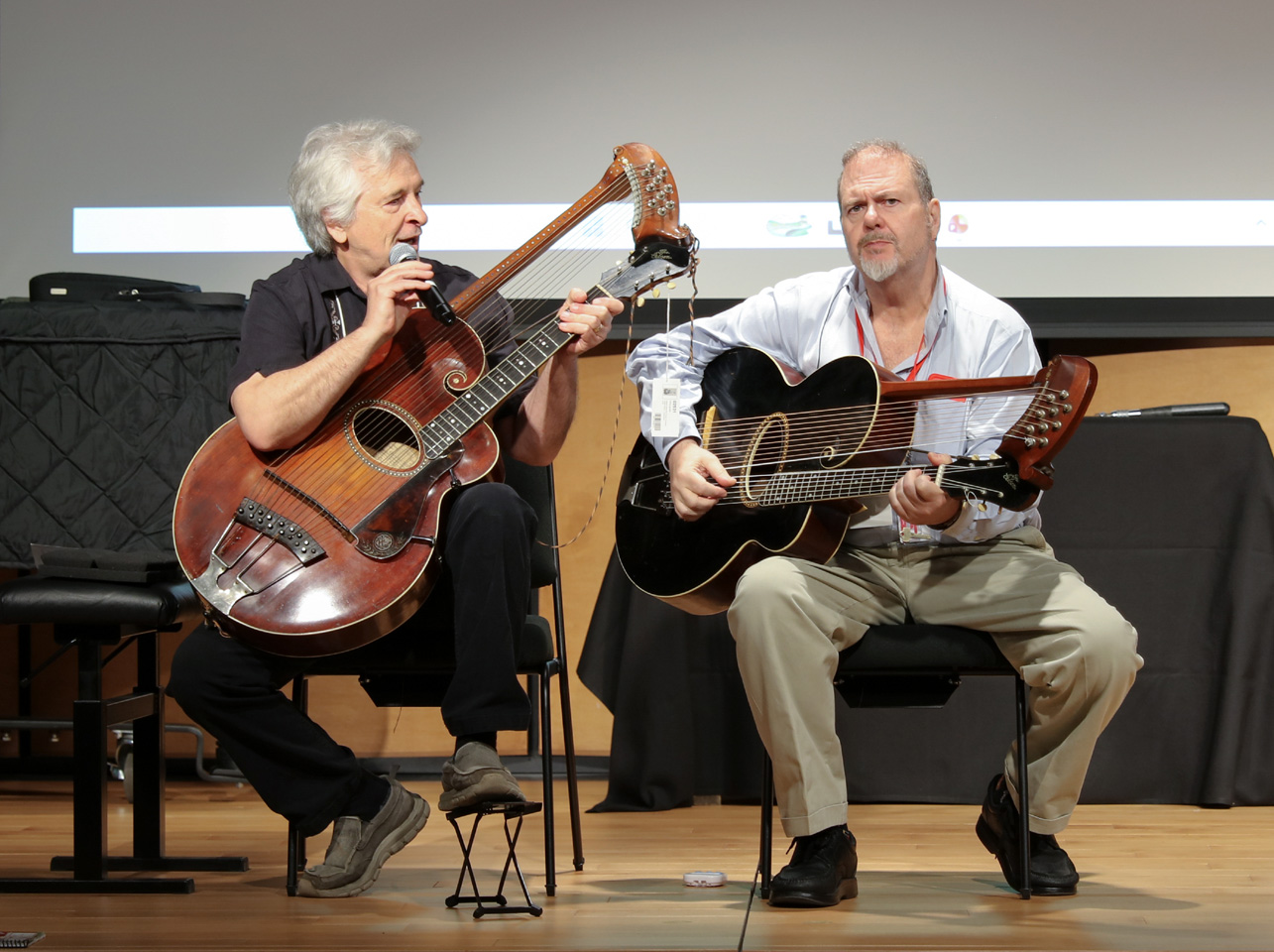
If you remember my AMIS post last year, I did my paper on Gibson strings, concluding with the reveal that No One on Planet Earth Has Ever Heard a Gibson Harp Guitar Strung as Intended. Which is…gut. Strike that. Heavy gut. Oh, and I’m not talking just about the early scroll, glued-bridge Gibsons, I’m talking about the two that Matthew Hill and I are holding above – mid/late ‘teens “jazz-bridge style” Gibsons!
Well, Matthew was so blown away by my talk last year (their Gretsch Museum’s Gibson had old light steel strings on it), that he “vowed” to be the first to string one “authentically.”
Yeah, right. Good luck with that and keep me posted!
So, there I was, having just made my decision to go to South Dakota, when I get a cryptic note from Matthew. He’s doing it. He’s gonna string his in “gut” and compare it – live on stage – to NMM’s Gibson, strung (as we find all of them) with old light steel strings.
Oh, and I’m on the program.
It’s not like I wasn’t prepared. I’m joking. I was in NMM’s offices, seeing (and failing in any way to tune) each of the instruments in question an hour before our talk downstairs. “What Hath Matthew Wrought?” was the (Biblical level) question I was about to see – and hear – answered. Did I mention the “live audience”? Of “learned scholars?” Who were musicians and had “ears”?
As you can see from the image above, we were indeed (live) onstage. And we did present something (my mind wiped it from my memory as a defense mechanism). And we did actually pull something off. What that was will be explained later (very encouraging, but incomplete results due to a conflagration of unrelated issues…).
Suffice it to say that I hope to continue the (controlled) experiment on my own back here at home and hope to provide further, even more interesting, results. Stay tuned!
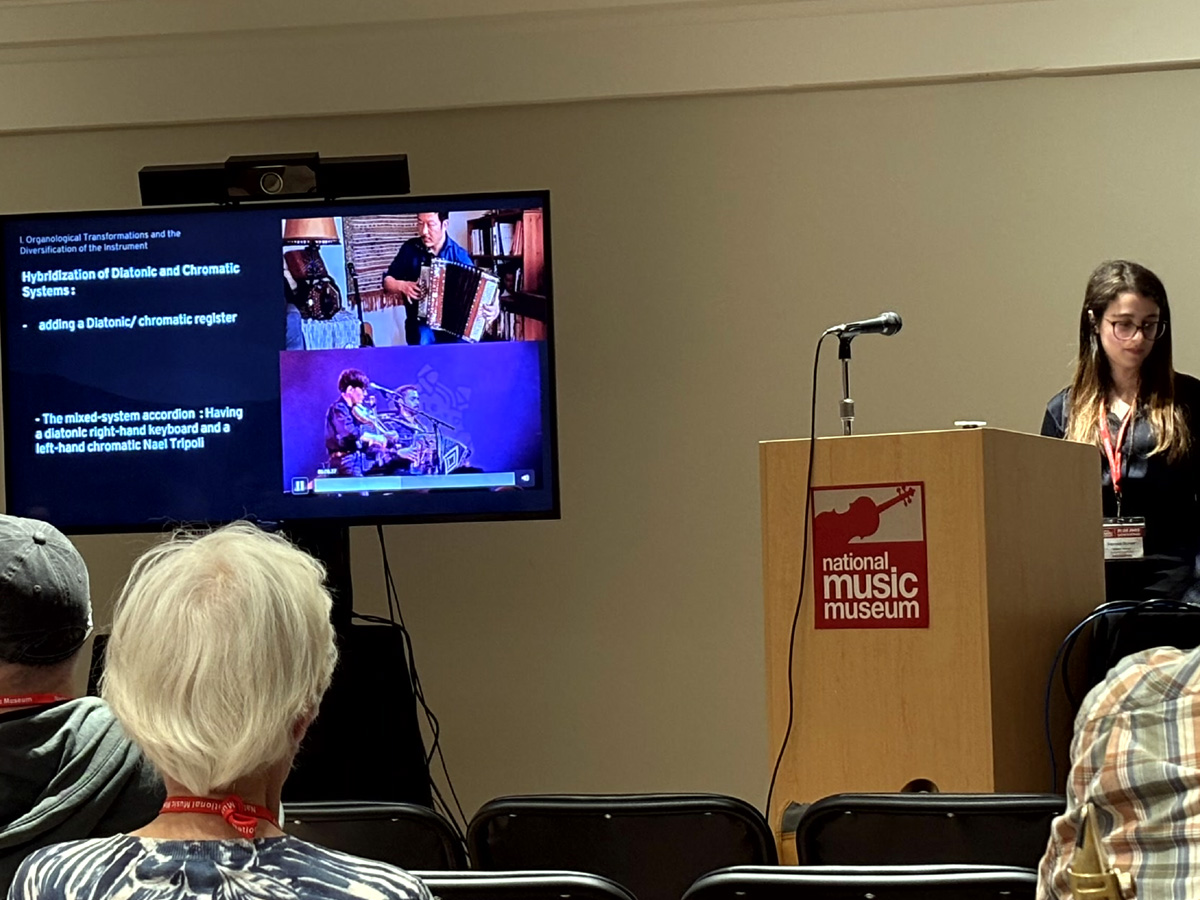
We’re now into concurrent sessions…upstairs, Fayrouz Osman gave an elaborate study of accordion practice in France. Below is a sample chart (so, no napping).
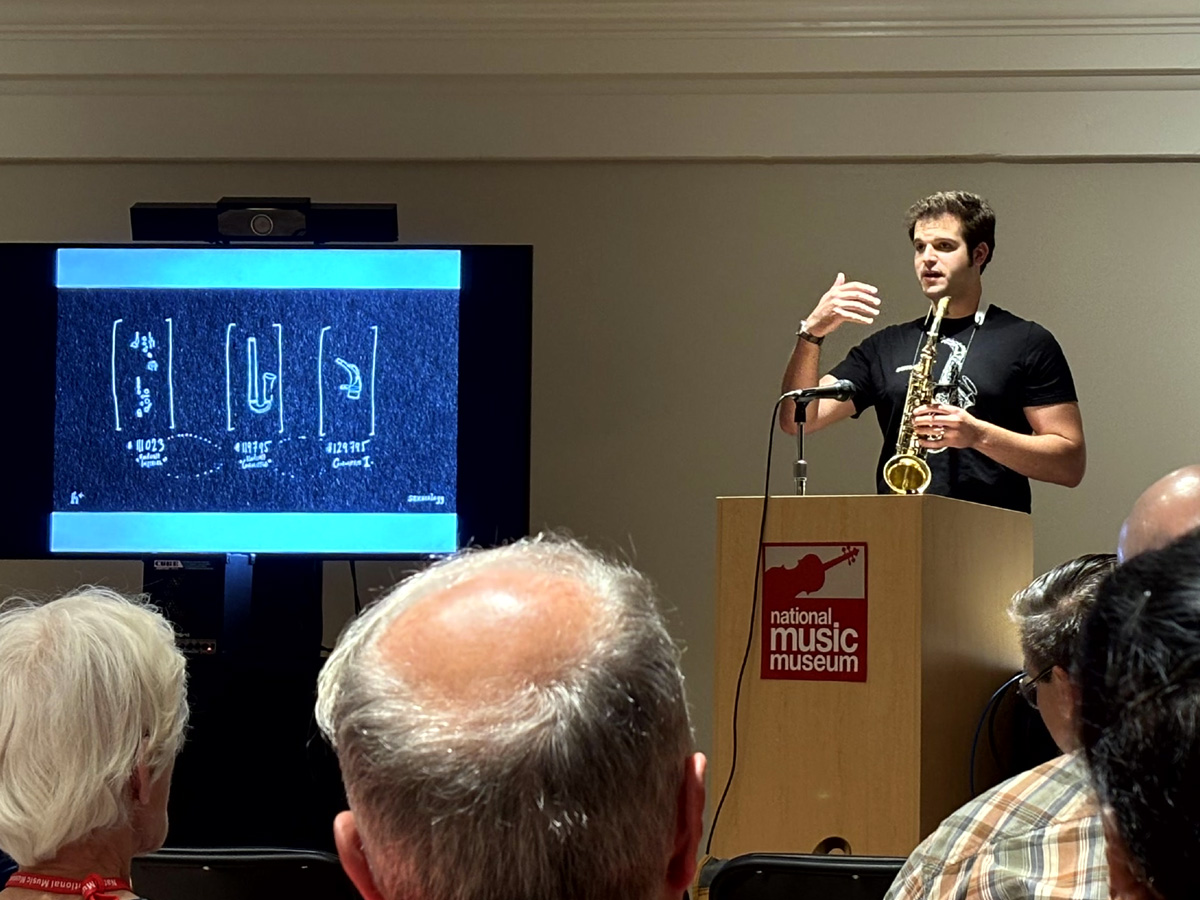
Followed by leading “Saxologist” (admittedly, he made up the term, so he’s the only one) Jake Goldwasser, examining one of the NMM’s Cecil Leeson instruments.
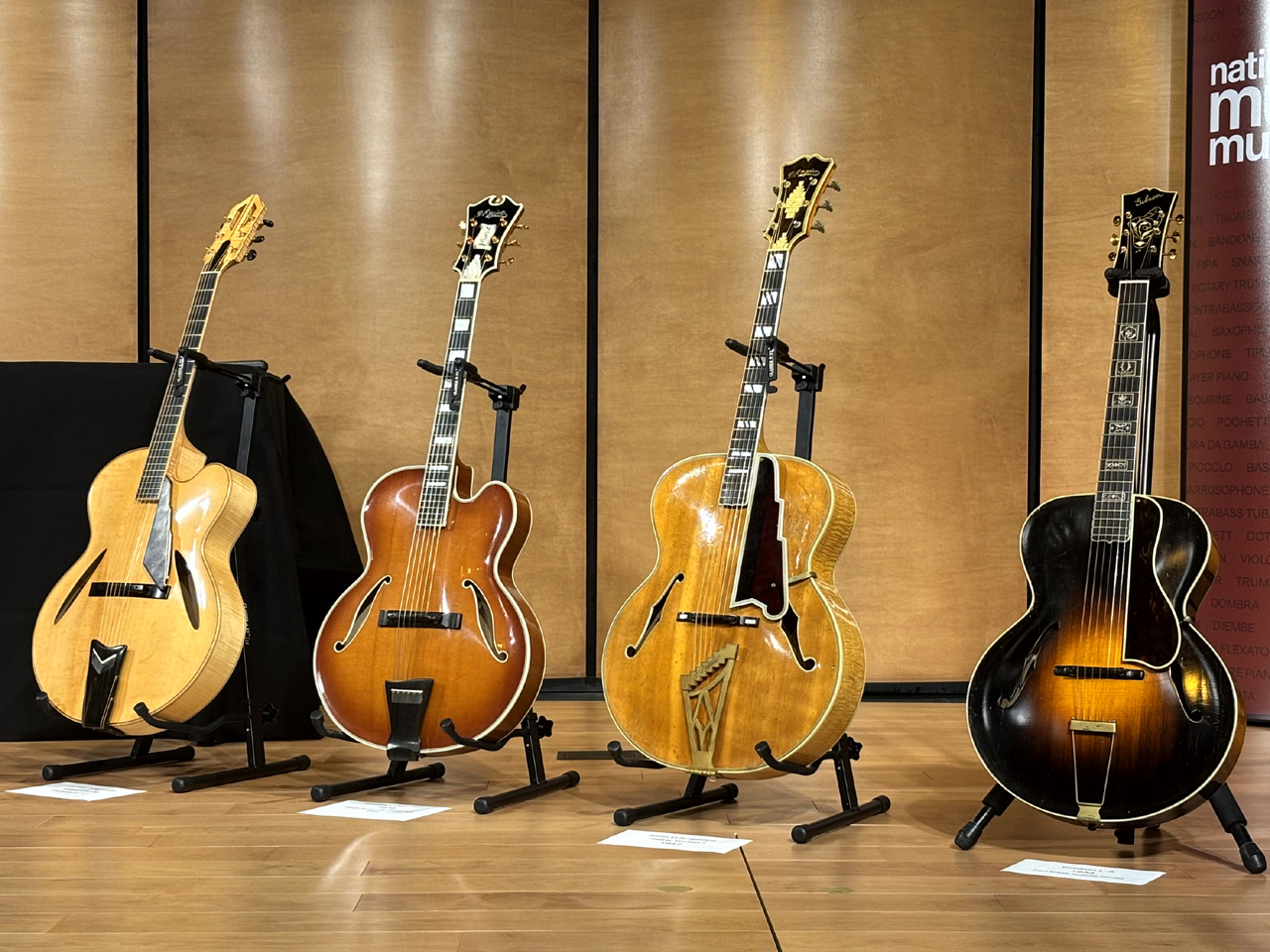
Before dinner, we were treated to a concert on four of the museum’s very special archtop guitars: 1988 D’Aquisto Avant Garde Prototype #1, 1970 D’Aquisto Excel made for Joe Pass, 1947 D’Angelico New Yorker, and Carl Kress’ 1933 Gibson L-5.
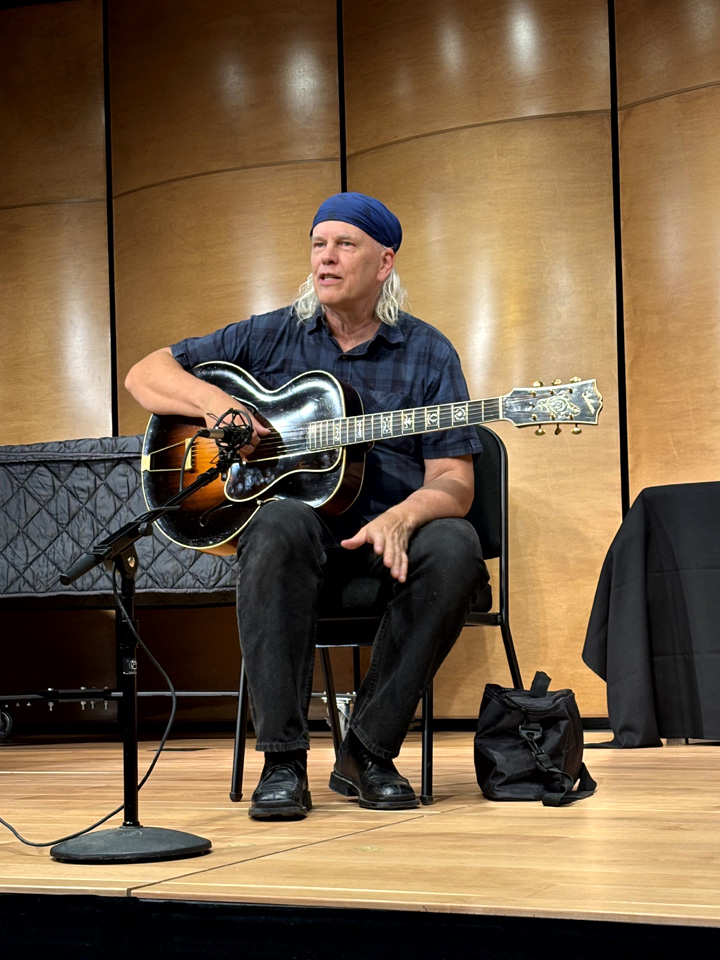
Demonstrating them was local guitarist Tim Snow. I quite liked his music, very reminiscent of our own harp guitar friend Dan Schwartz, who Tim used to play with in Minnesota. Unfortunately, while a fine fingerstyle guitar player/composer, his was the absolutely wrong style to demo these specific instruments. Still, a generous offering.
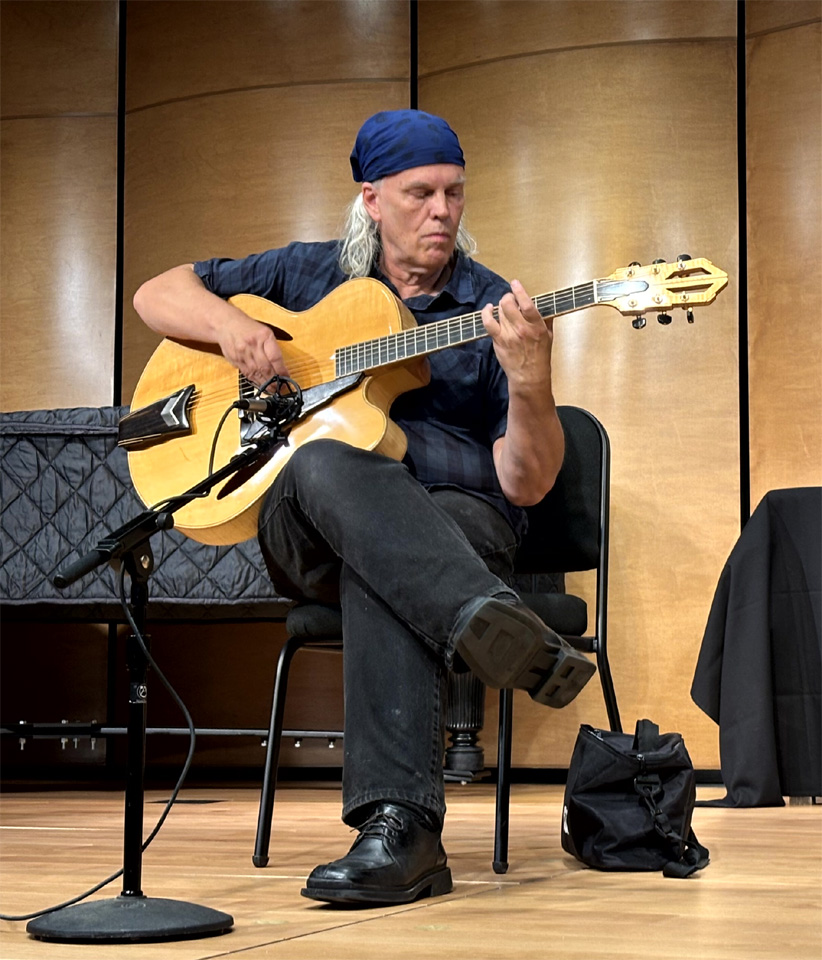
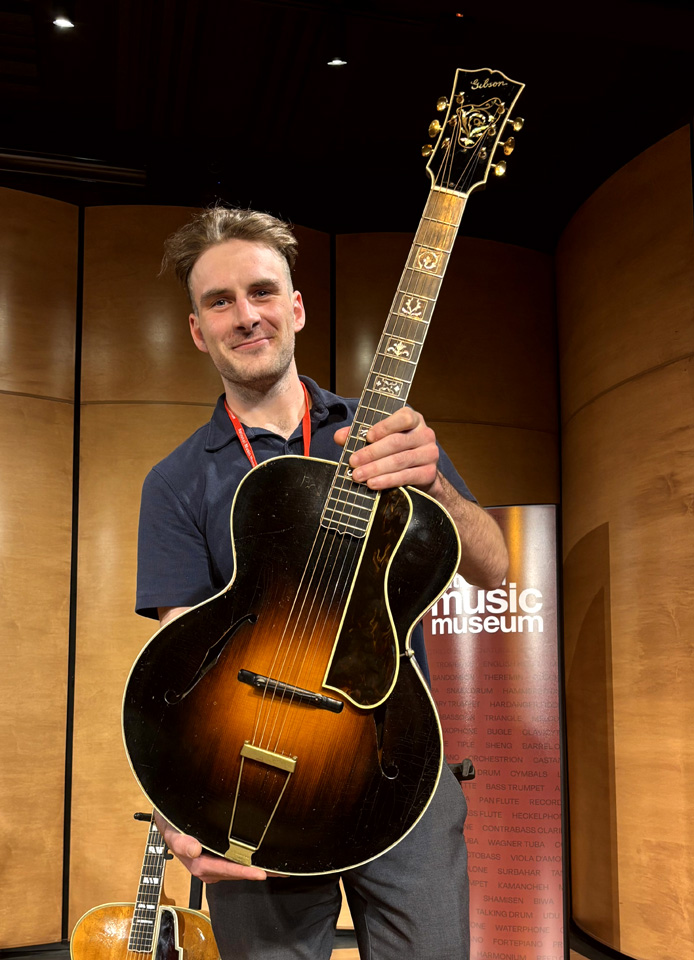
One never does this with a museum instrument, but Andrew Mullane was granted special permission to examine and hold Carl Kress’ personal Gibson. He was thrilled beyond words. I continue to urge my plucked string friends to consider joining (or just attending) AMIS, and our young guitar-playing/restoring/teaching friend from the Harp Guitar Gatherings had an incredible experience in so many unexpected ways.
After a communal dinner, many of us walked down to the main drag to elbow college kids out of the way to relax (mingle, converse, drink.
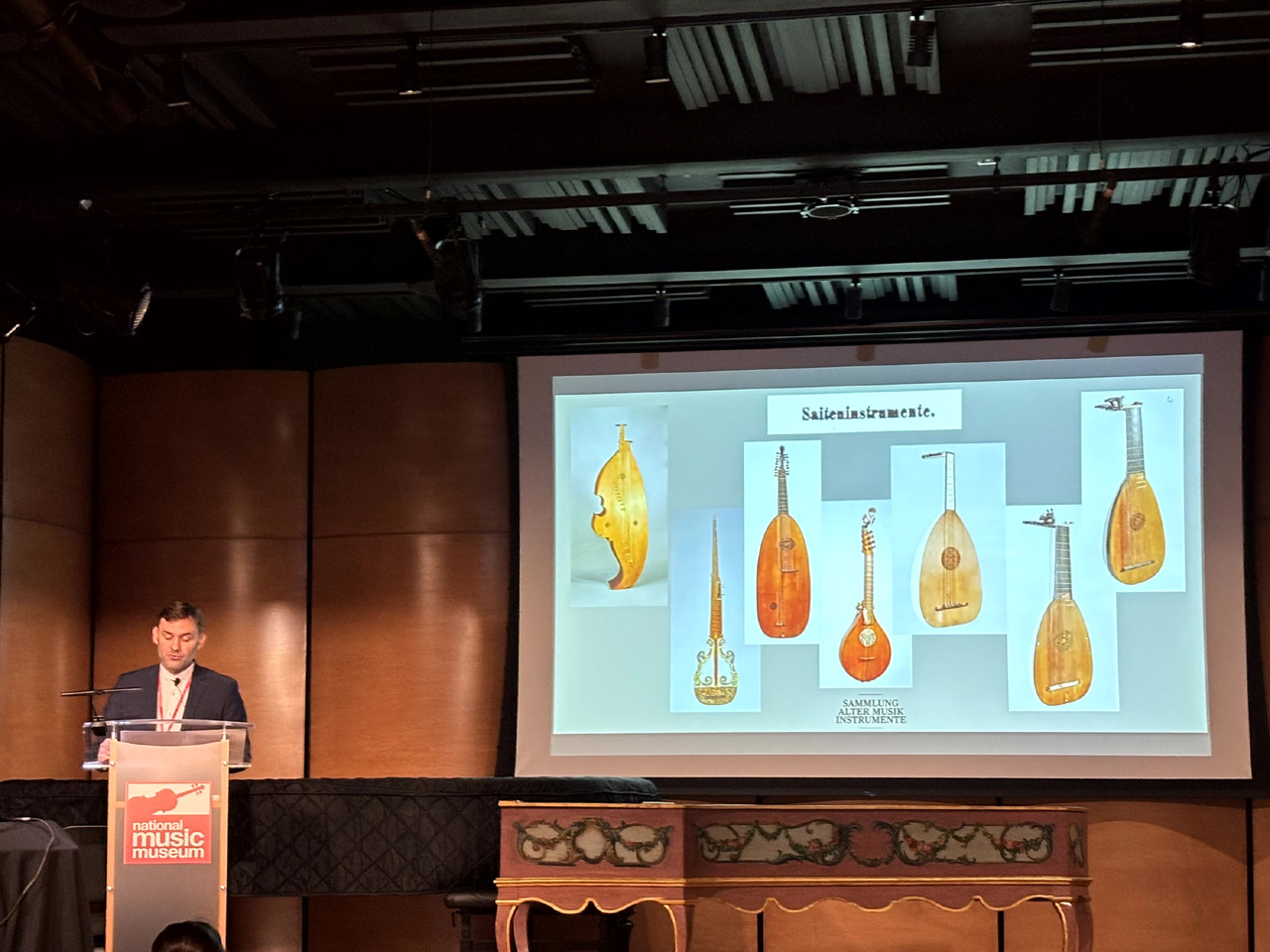
Up at the crack of dawn (or as early as we could crawl out of our beds), we got right back into it. Another talk on private collectors-to-museum collections, given by Sebastian Kirsch (new director at Vienna). An insider’s peek into the important and rarely-told history of this rarified world.
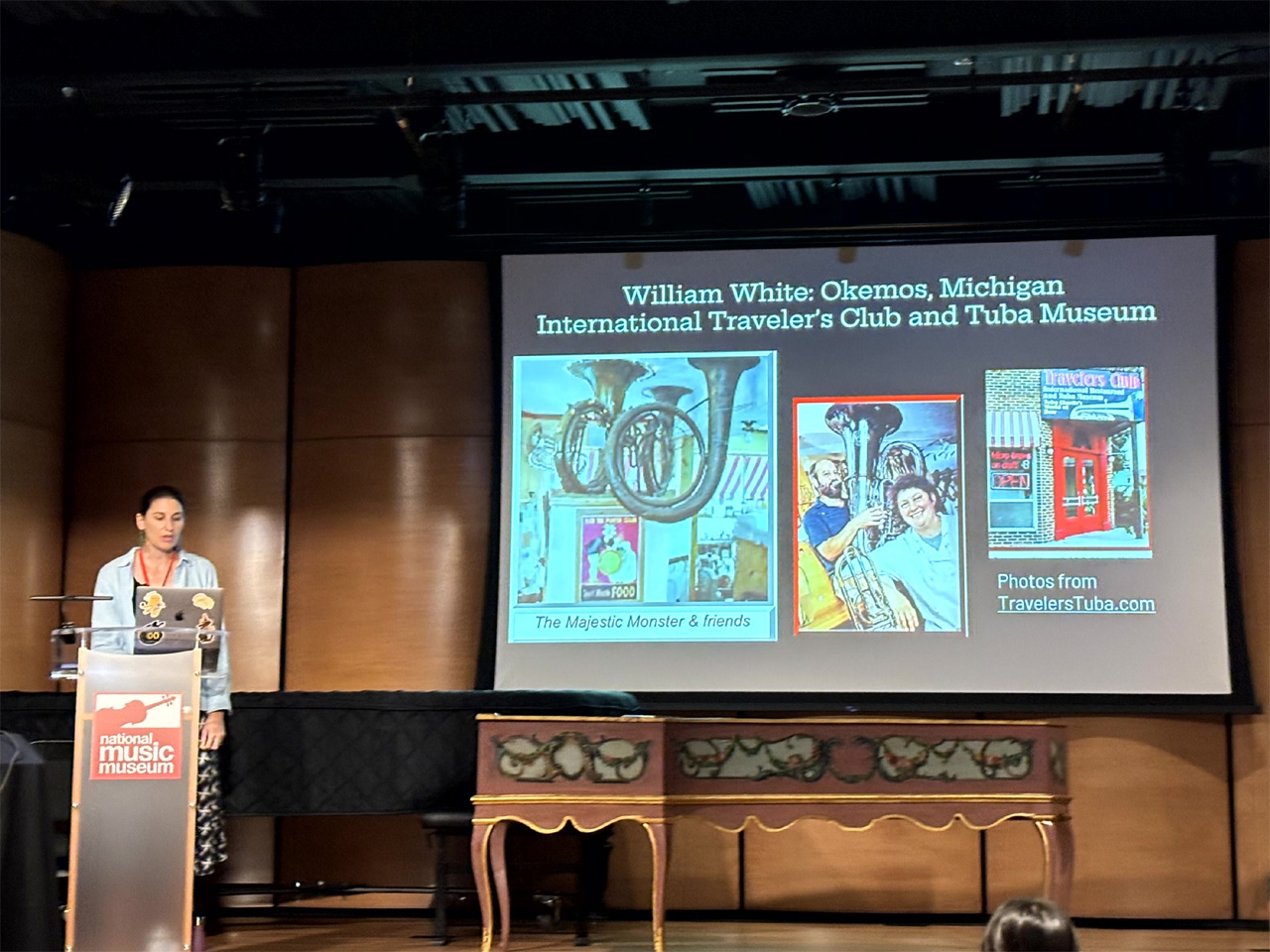
I’m going to splurge and give our next presenter three slides, as she profiled the stories of three “Regional Instrument Collectors and their Worlds.” This time, all private collections, as seen through the eyes of Lisa Beebe after interviewing various collectors (of all types of instruments) across the country. She chose William White and his Michigan Tuba Museum for her first victim.
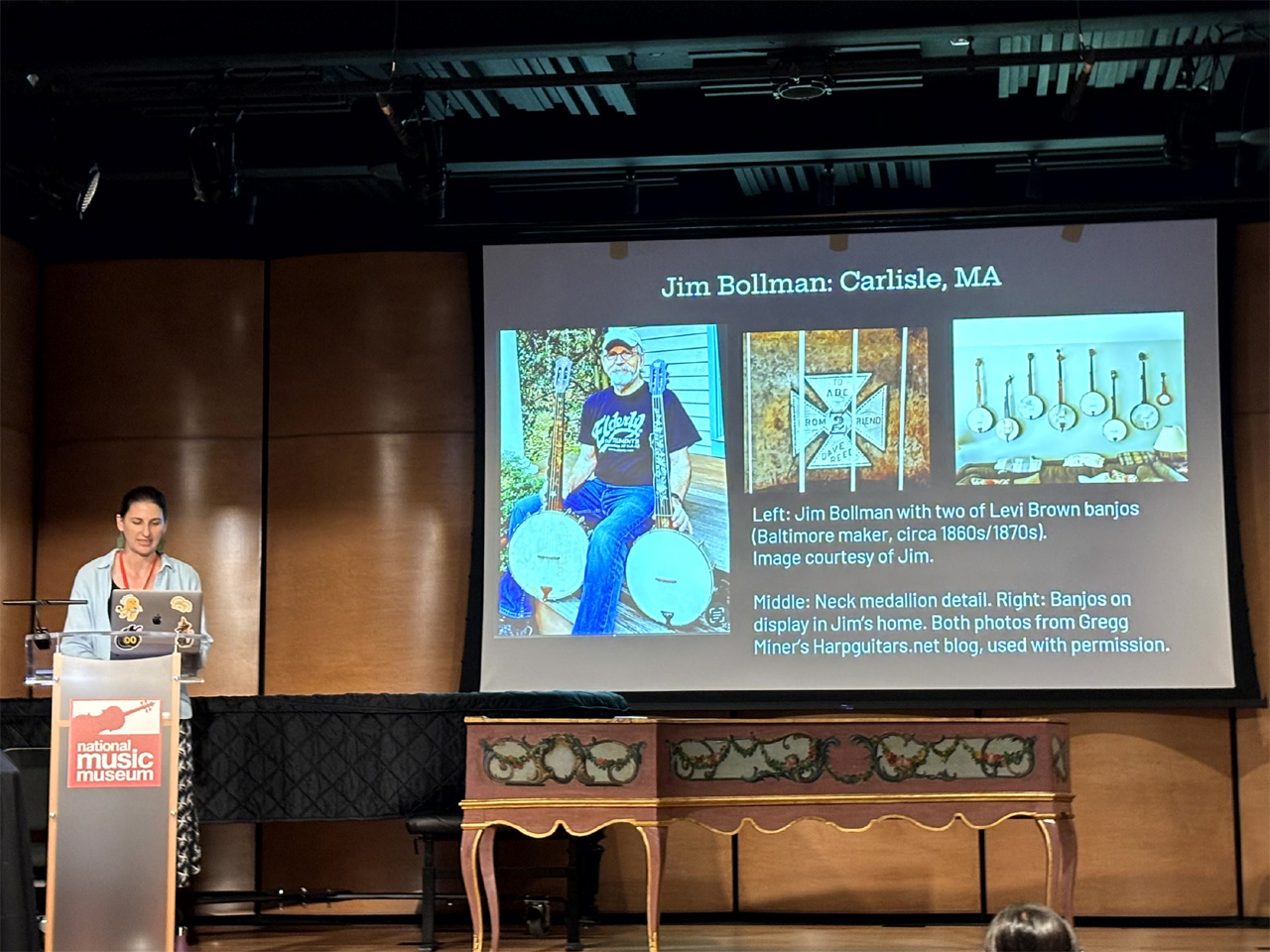
Her next subject was Jim Bollman, whose first words to me upon visiting his unprecedented banjo collection a couple years ago were “So, what’s your exit strategy?” Lisa discussed Jim’s single-minded passion, successes and challenges.
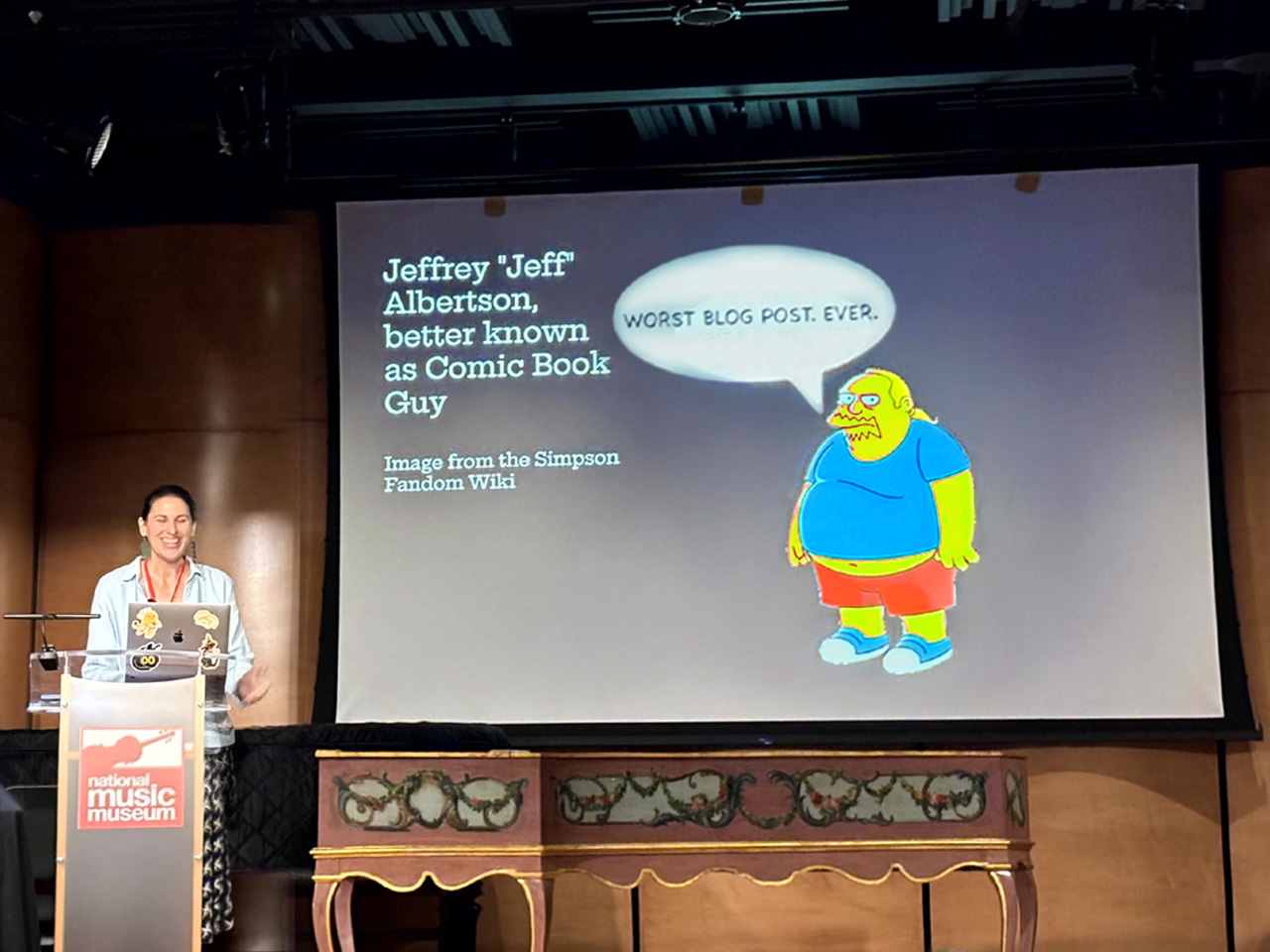
Speaking of challenges, she ended with the Miner Museum. This appropriate slide (yes, she ended with a shot of the Simpson figures in my front office) accompanied my comments about why I personally shy away from the “collector” moniker. But Lisa, a true Star Trek nerd, nailed me. Her phone number is now blocked.
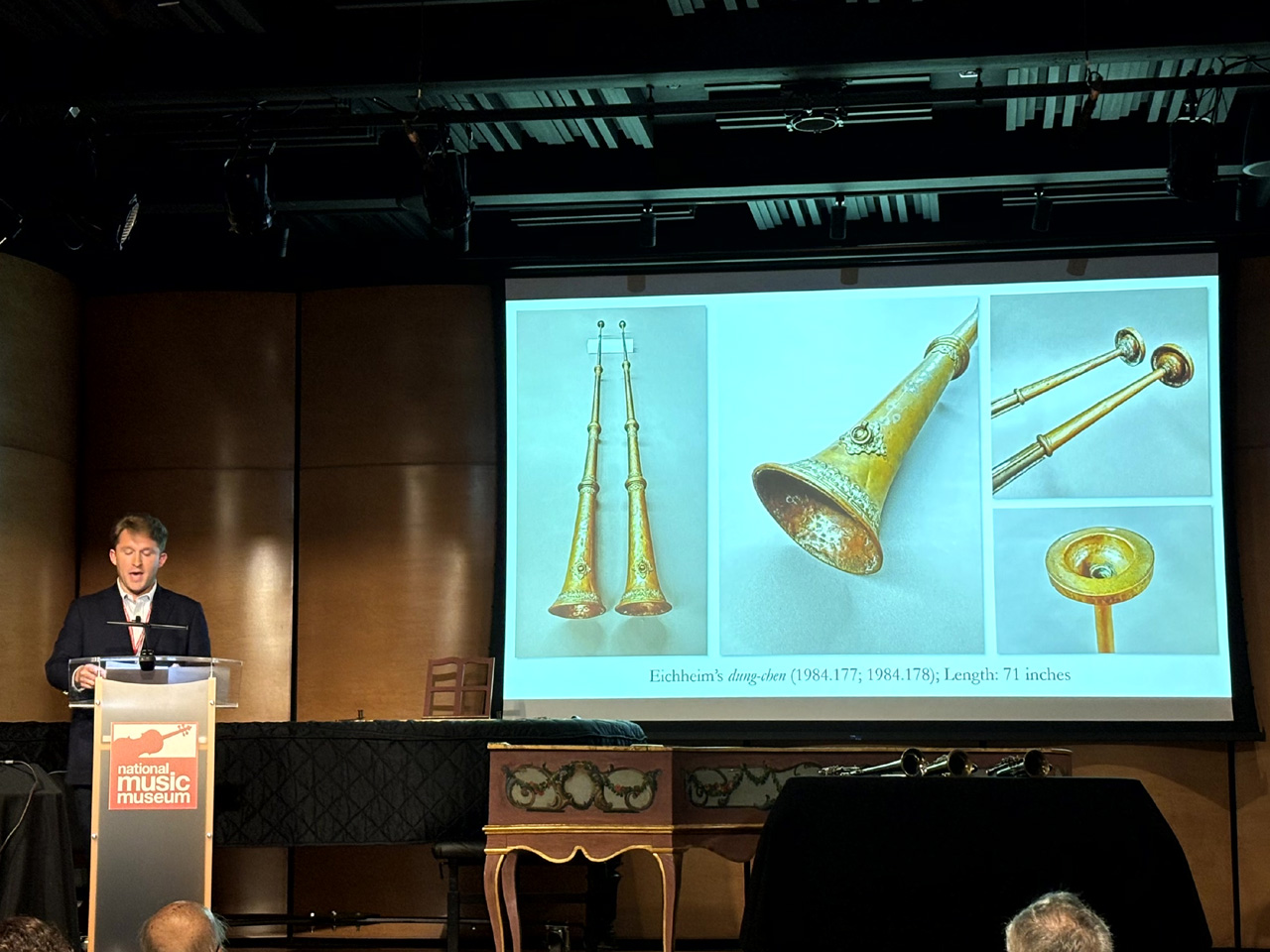
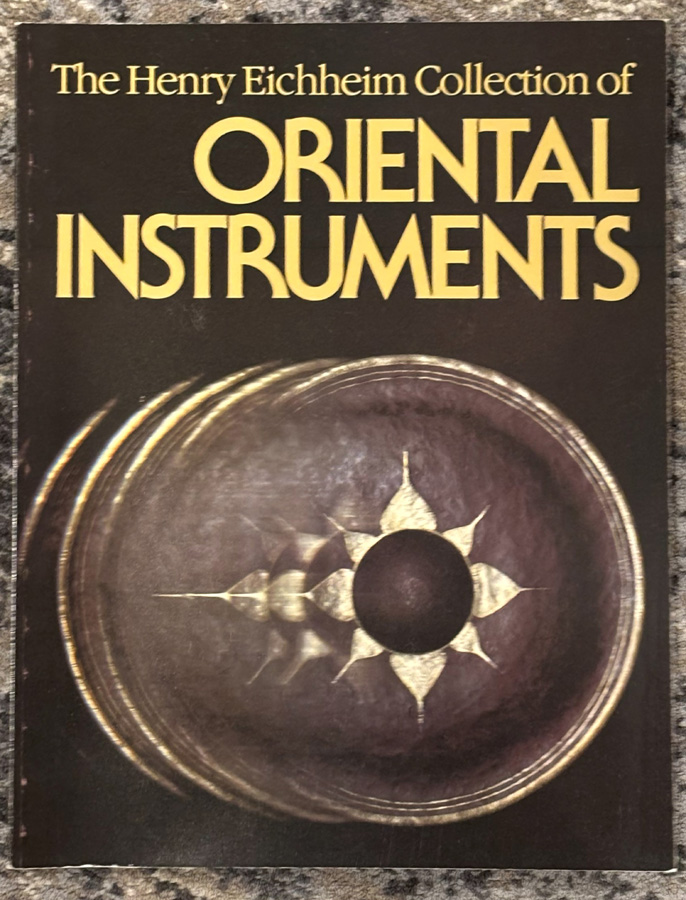
Chet Stussy (now completing his last year at UC Santa Barbera) did still another paper on a private collector’s holdings now in a museum (SB’s) – composer Henry Eichheim made fie Asian trips in the early 1900s to document music and instruments he might depict in his own musical works. After asking about the collection monograph that he mentioned in his talk, Chet very kindly gave me his last copy (below). Chet’s starting a year internship at the Met in the fall, so I expect to see him up here soon!
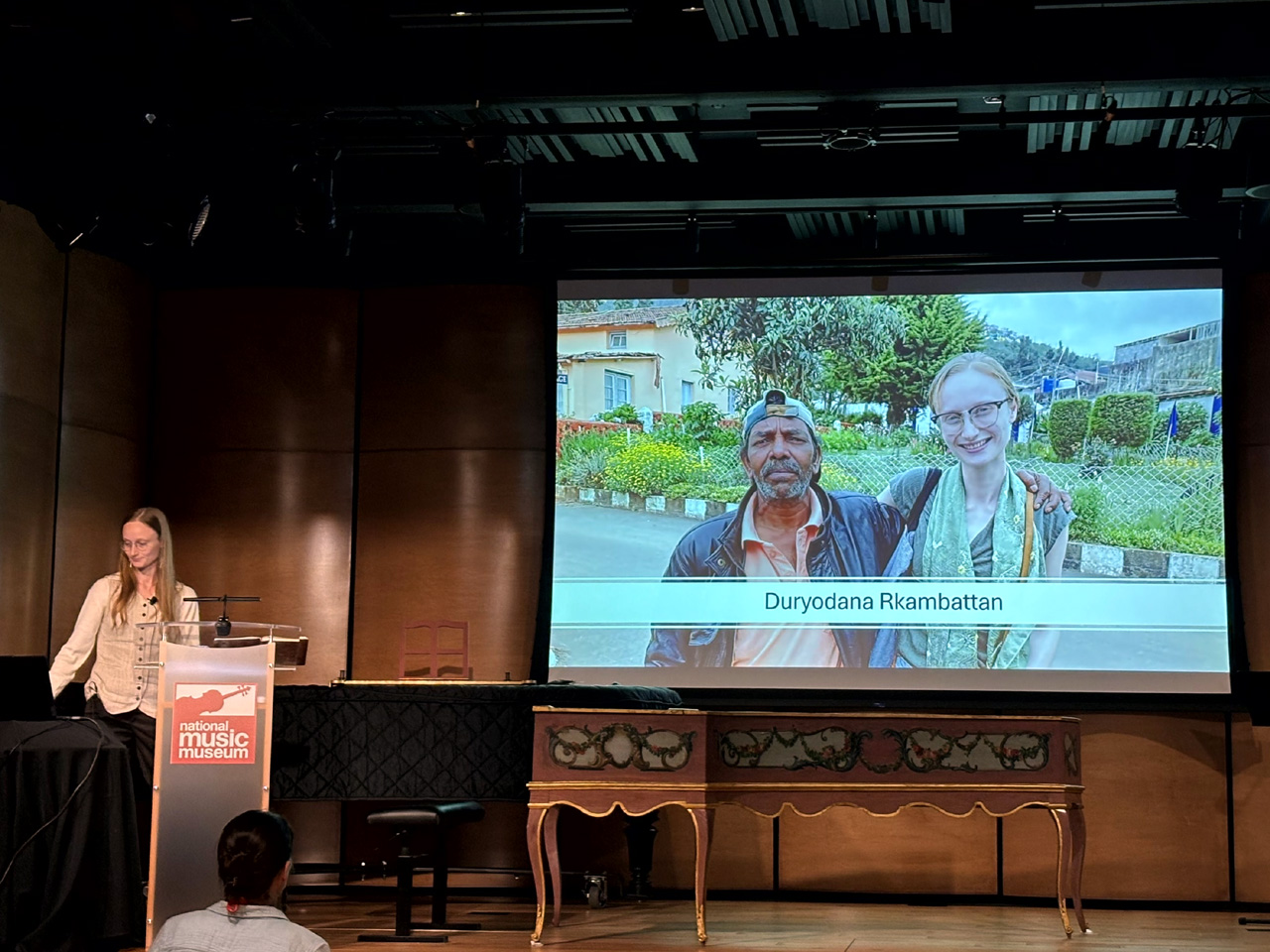
Gaia Saetermoe-Howard (on stage and onscreen in Tamil Nadu, India) gave a fascinating talk (and quick demo) of the pulang and kol, local reed instruments she learned to play by ear during her studies there (she’s a Baroque oboist in Boston).
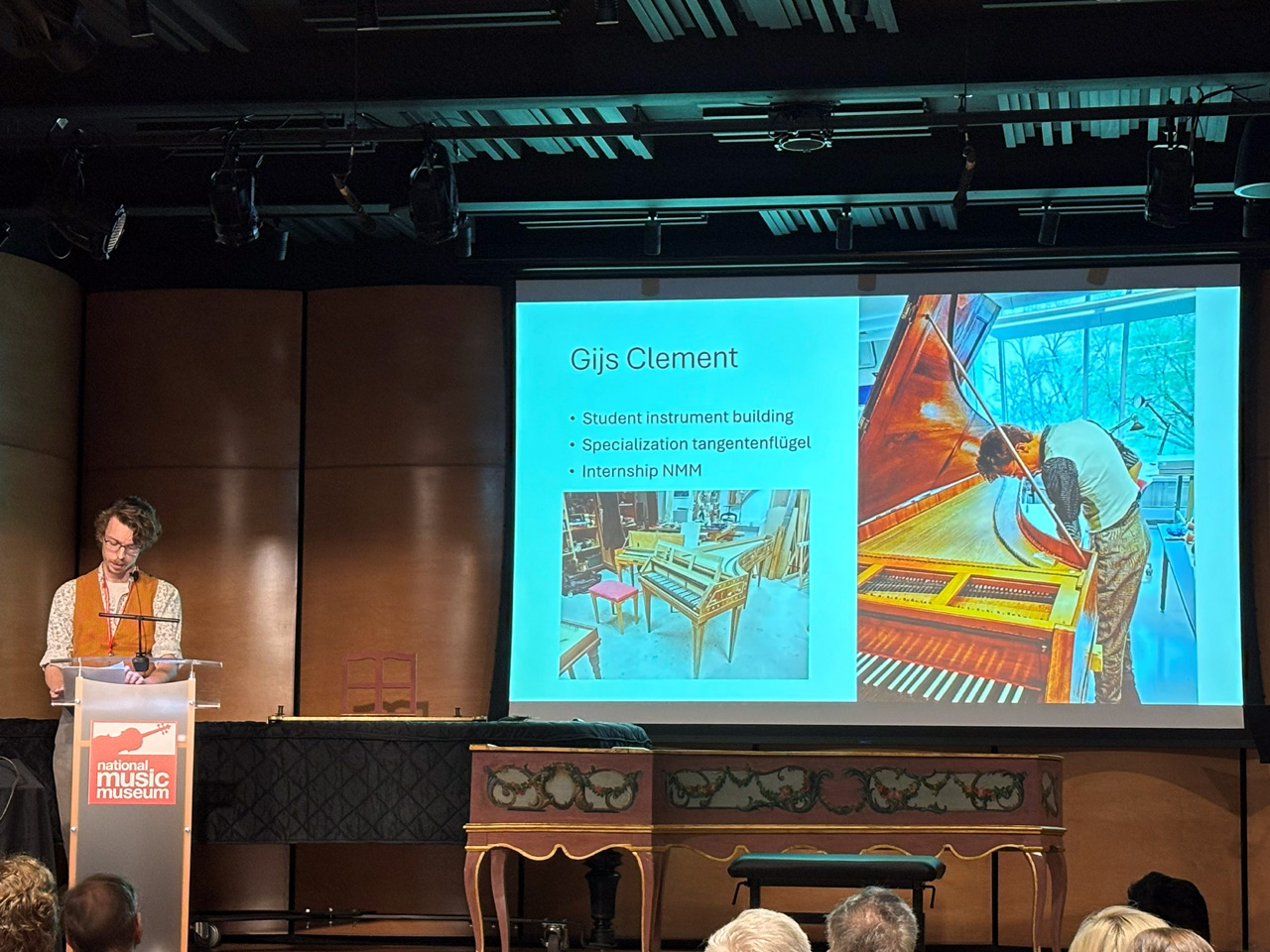
Gijs Clement spoke about his internship at the NMM, restoring the soundboard of their important tangentenflügel. Whilst inside the rare keyboard, he was able to access the details to build a reproduction. Nice multi-tasking!
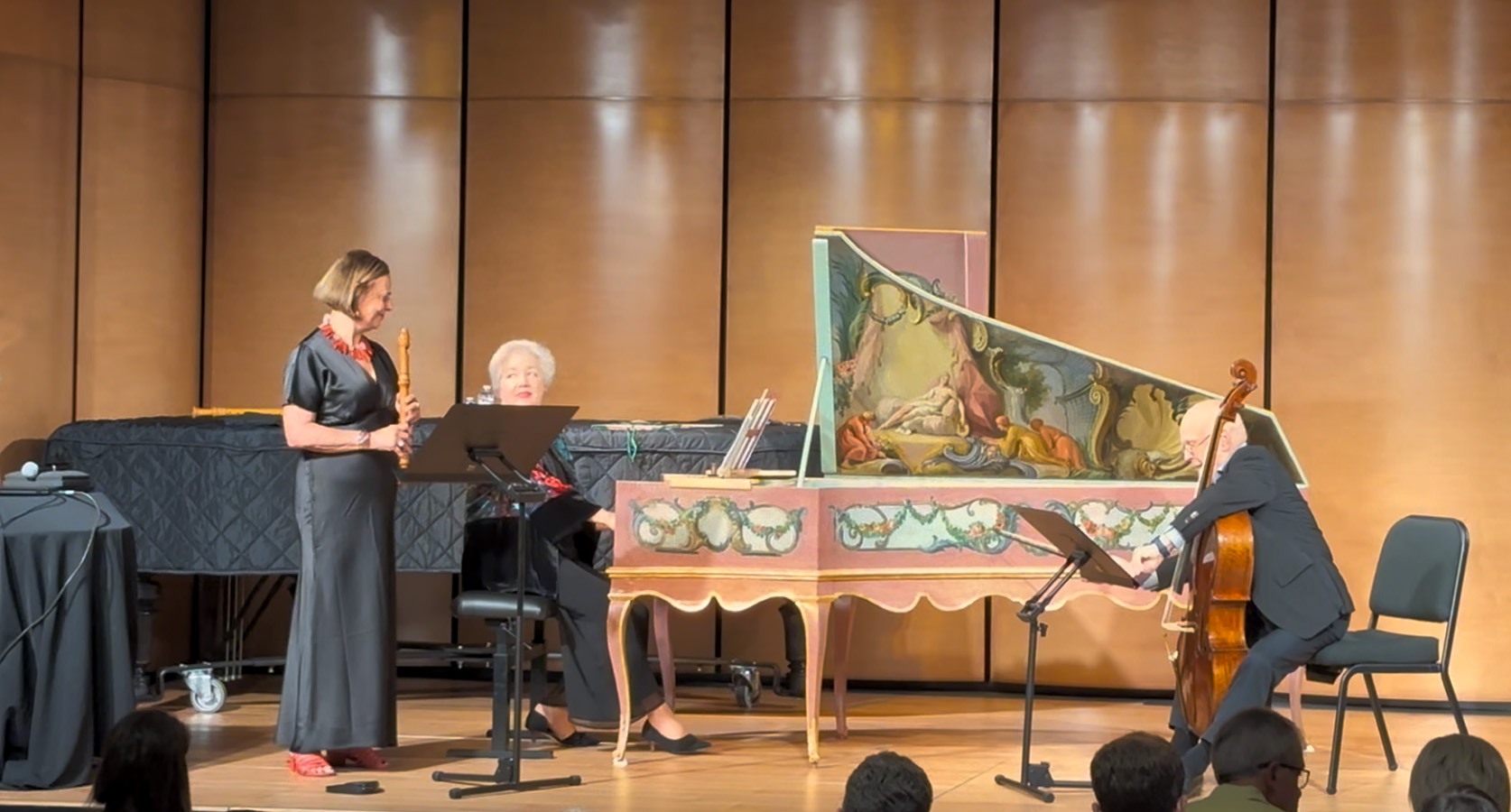
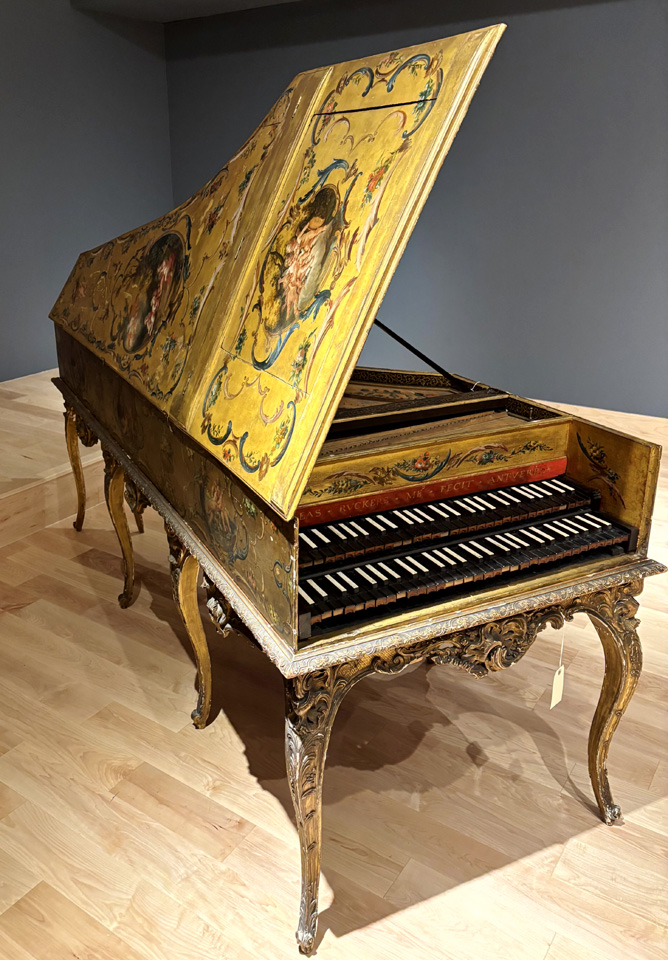
Friday evening’s pre-dinner concert on museum instruments (1785 French harpsichord by Jacques Germain and 1683 violincello by Francesco Ruggeri, Cremona) was a delightful German and French program by Elisabeth Wright, Jaap ter Linden, and Clea Galhano (on her own recorders).
It’s now Saturday morning, time for our last day of visiting the collection, having hallway conversations, and last day of papers, which began with Matthew Hill’s investigation of a civil war drum at Yale, followed by:
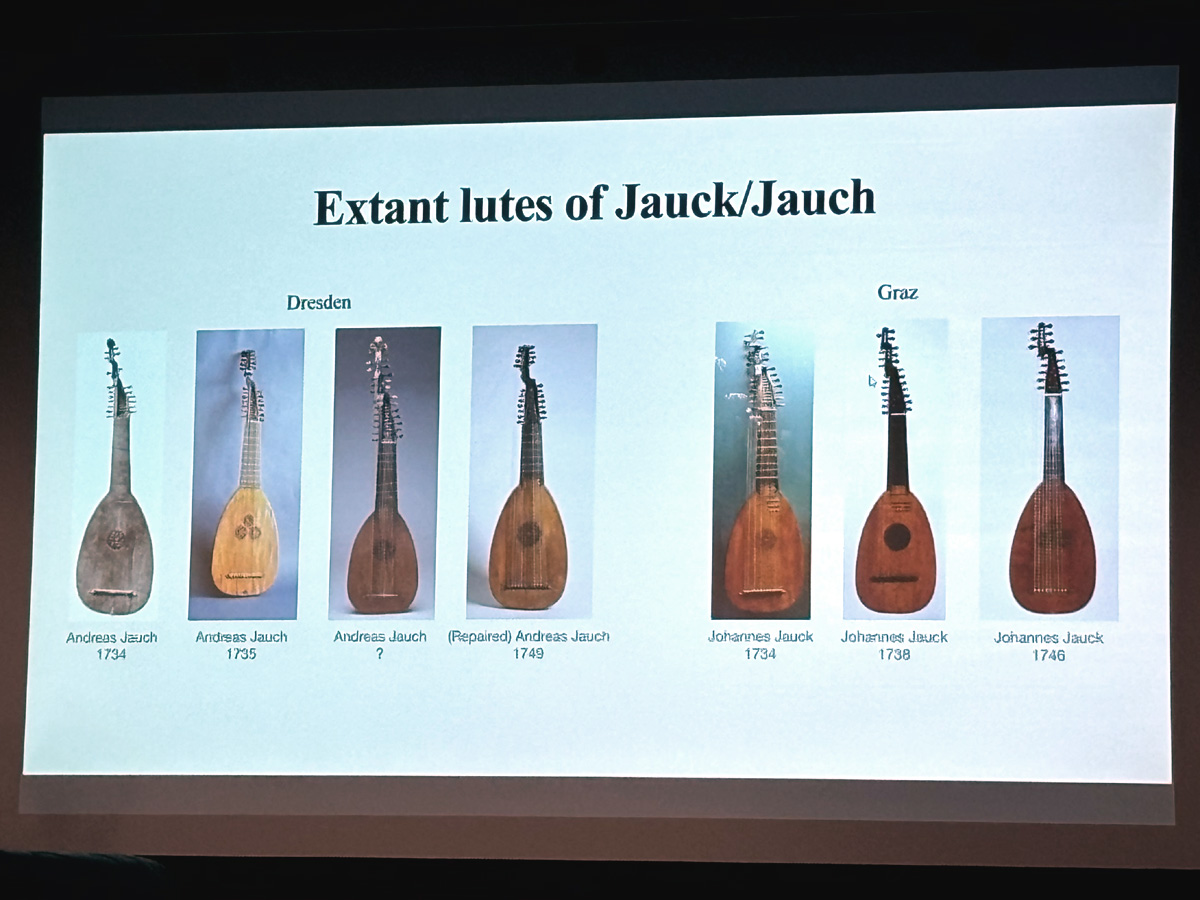
From Ghent, Milan Barbé (now obsessed with “triple pegbox lutes”) researched the distinct-but-related makers Jauch and Jauck, comparing both hi-res 3D scanning of their instruments and familial relationships.
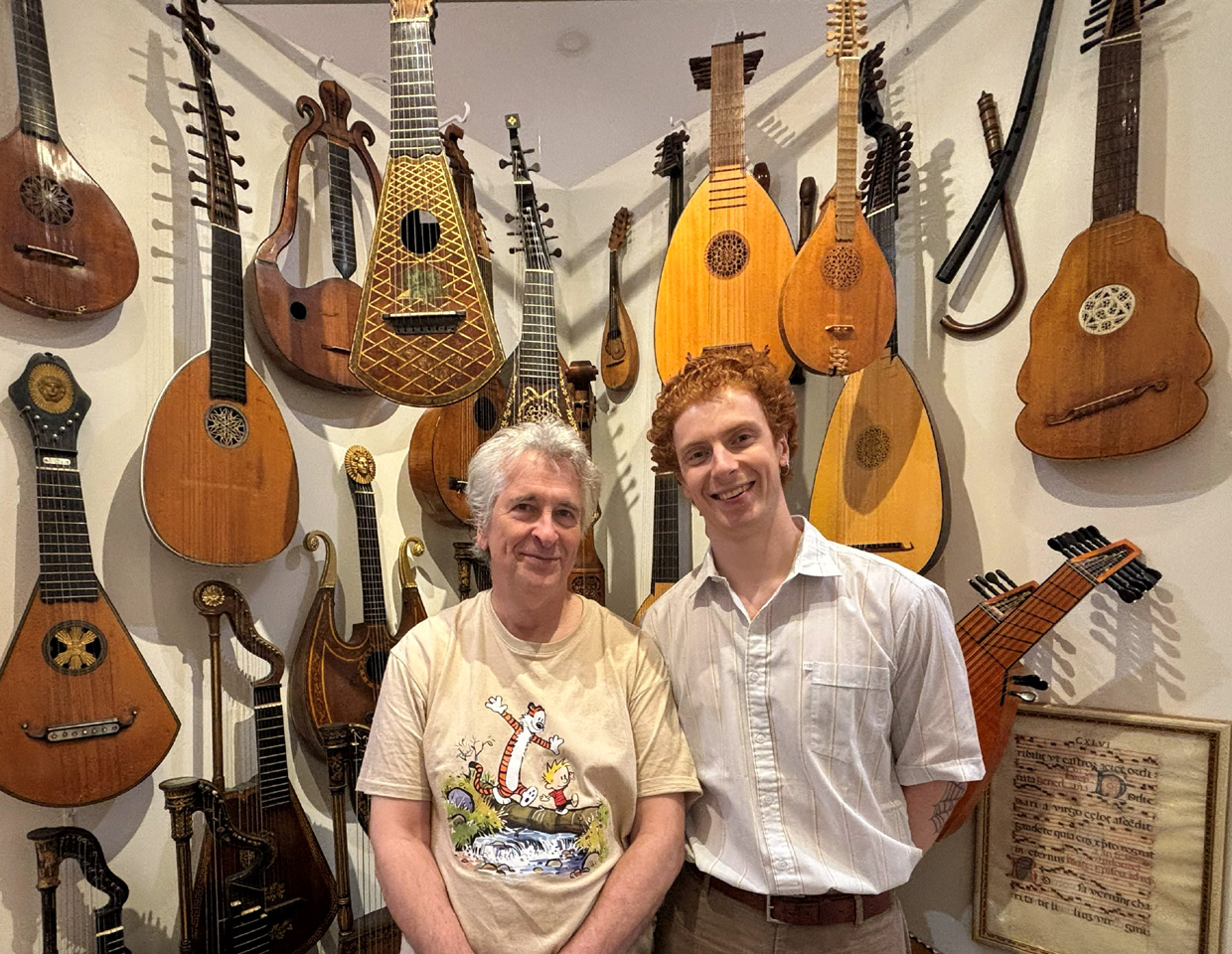
After AMIS, Milan made the rounds to do more U.S. research, heading to Oberlin, then Yale (to measure a triple-pegbox-lute!), then the reproduction lutes at the Miner Museum up the road.
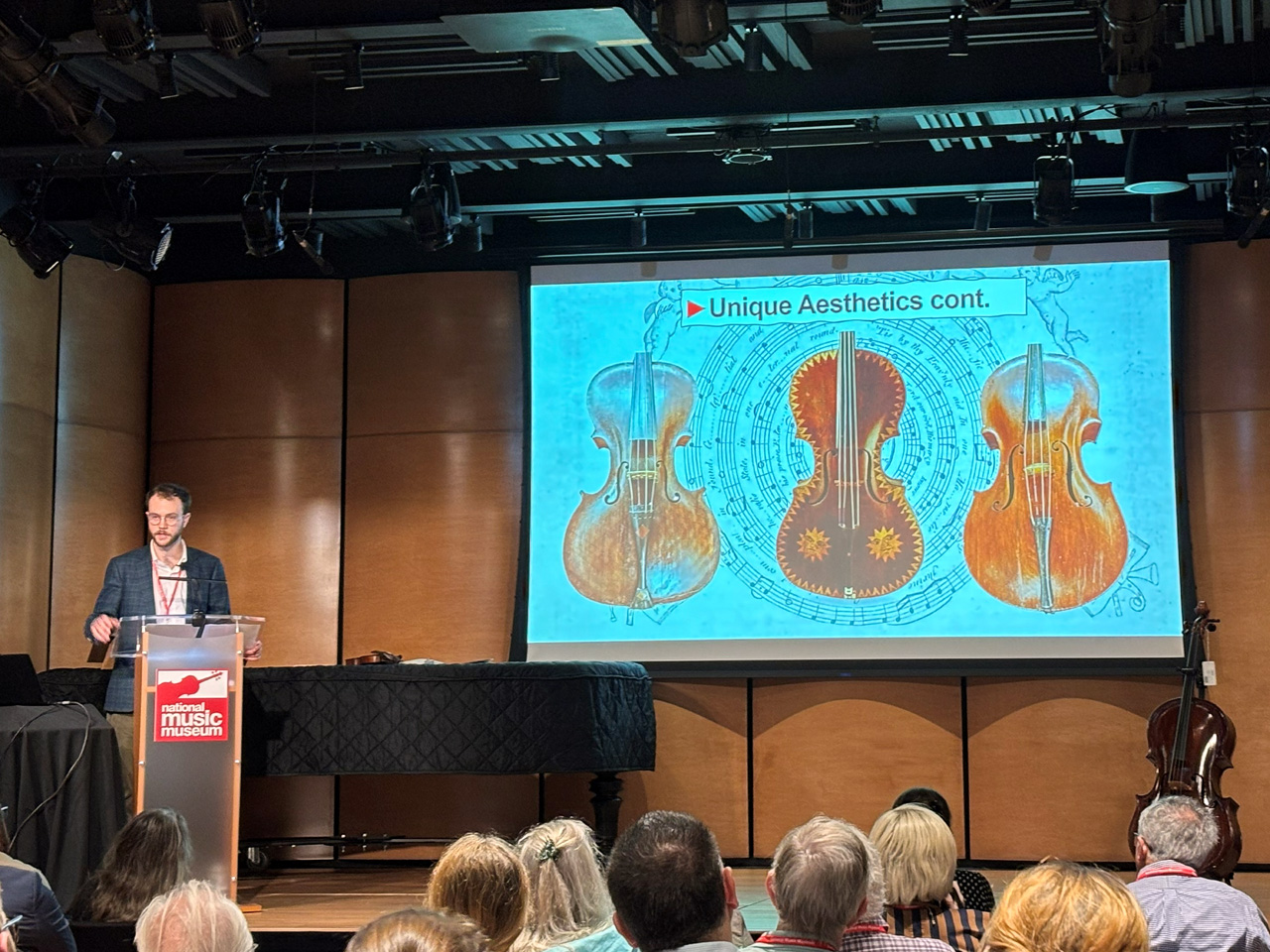
Back at AMIS, Boston BMFA’s Nate Steele gave a great intro to the fabled “church basses” I’ve heard former curator Darcy talk about for years. Turns out that they’re rather more like ‘cellos than basses, but really their own specific thing, and by “specific,” I mean appearing in all manner of shapes and sizes for the sometimes crude “American bass viol.”
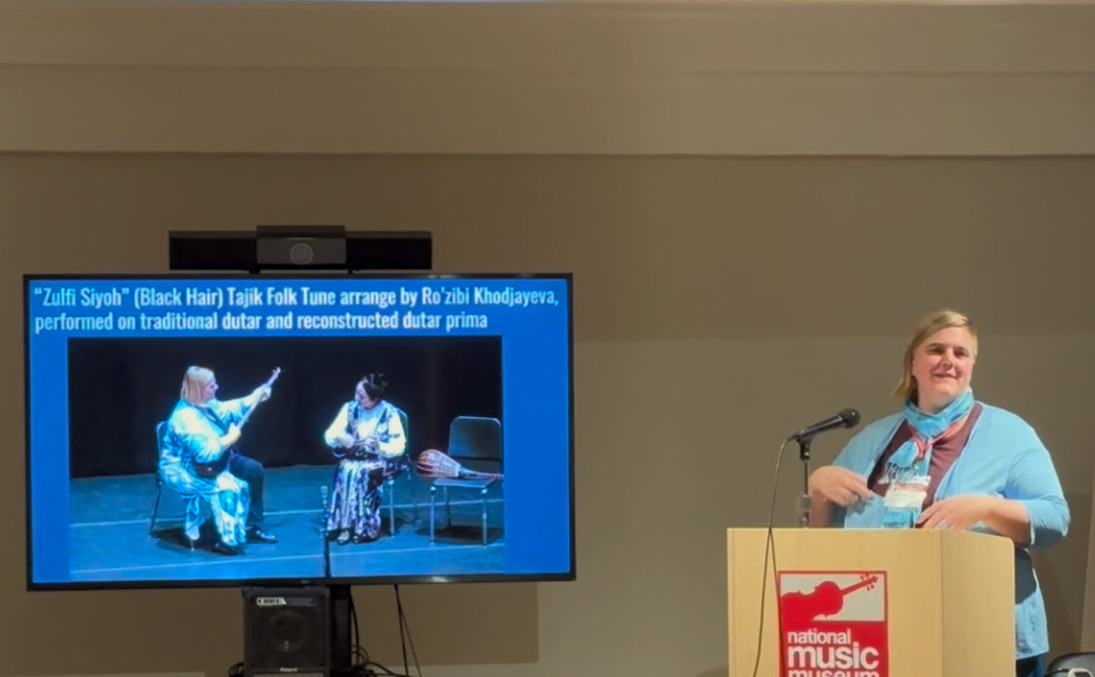
I love it when presenters combine performance in their papers. Tanya Merchant actually included hers via an onscreen video, where the UC Santa Cruz ethnomusicologist did some impressive dutar playing (doing a sort of rasgueado strumming in the right hand while simultaneously doing complex trills in the left hand) – quite a lot for just two strings!
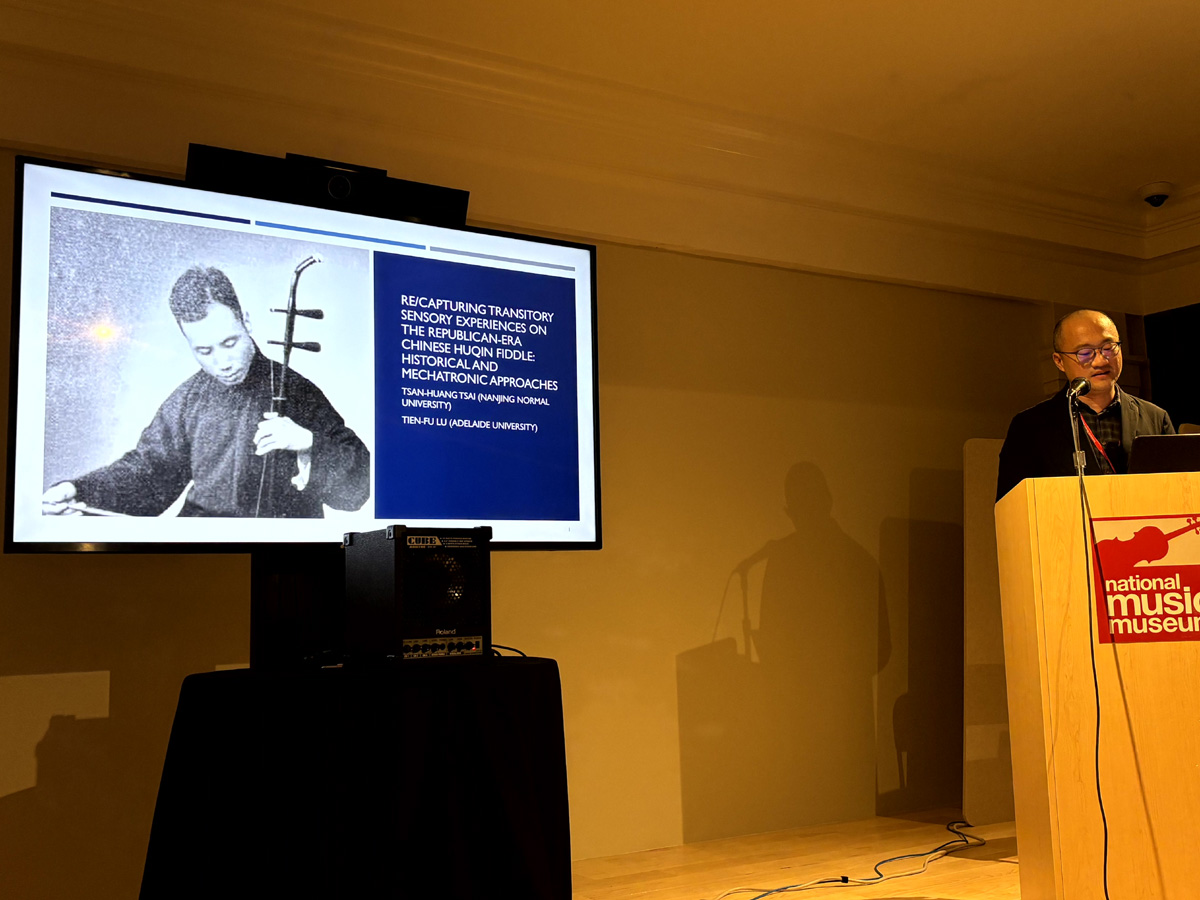
Tsan-Huang Tsai, with an in-depth presentation on the Huqin Fiddle, both historical and high tech (“Historical and Mechatronic Approaches). “Mechatronics”?! Yes. I imagined something like a dystopian “erhu assembly line,” but was way off the mark. Some musicians actually used the concept to employ sensors to convert their body movements and precise finger activities into “digital formats including the use of force sensors and inertial measurement units” – then applying “computer science methods, such as image processing, signal processing, sensor data fusion and machine learning-based algorithms” to “determine how players adapted to different instruments.” It worked!
Yes, these guys are serious about this stuff. But man, wouldn’t you love to strap all this equipment onto Stephen Bennett and hand him all of our different harp guitars to see how he does it?!
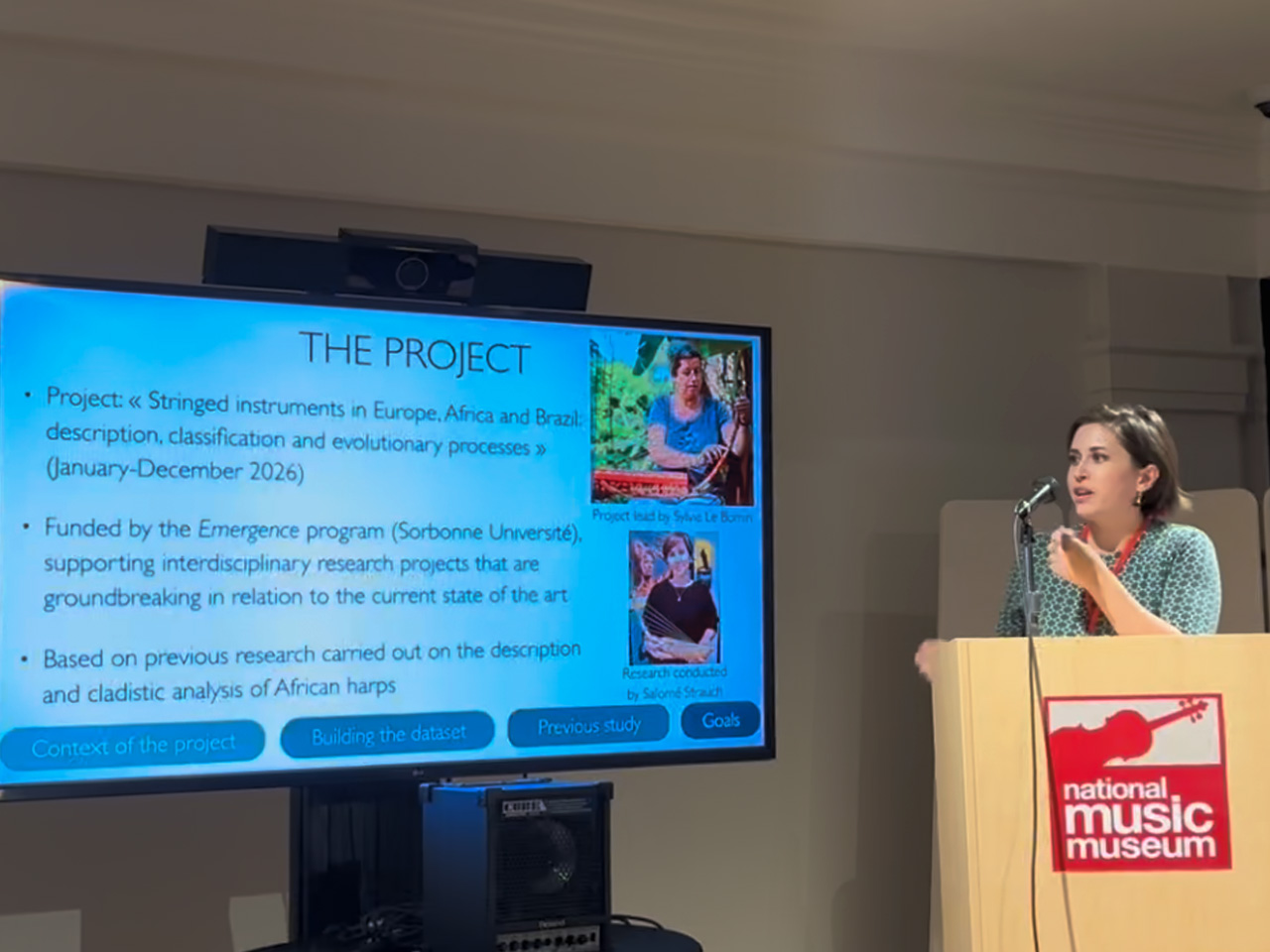
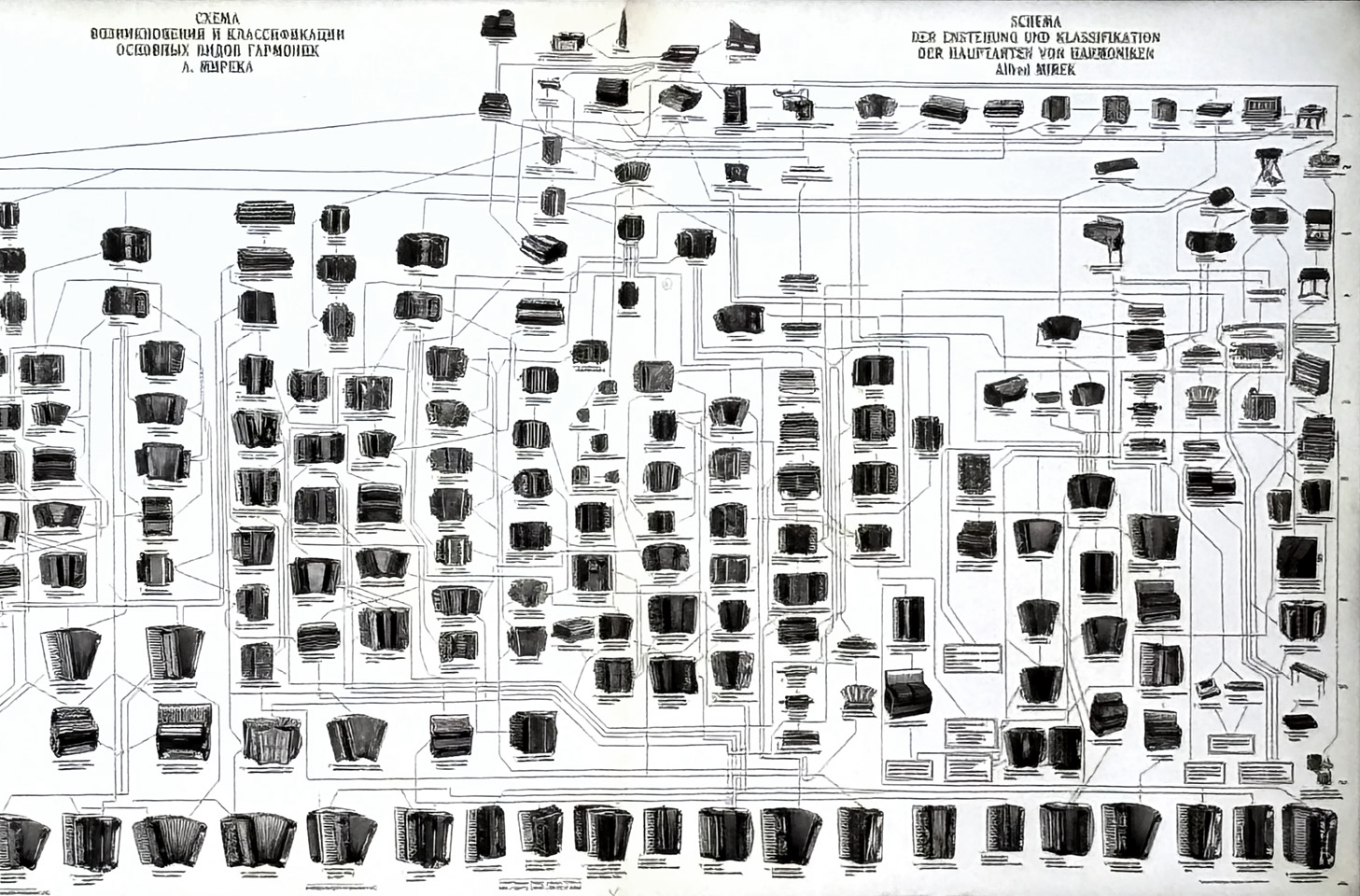
Our heads still spinning, Salomé Strauch from Paris next boggled our minds with a new evolutionary classification system for musical instruments. She and her colleagues are “developing an interdisciplinary methodology involving organology, ethnomusicology, cladistics, databases and AI.” OK, I’M an Organologist (with Grove Dictionary credits), a home-made Ethnomusicologist (per my professional EM pal Martin Pleass), and know Cladistics from my zoology days and hundred dinosaur books…I’LL bite. Mentally plugging in my entire harp guitars database into my imaginary model, I got stuck on the very first “Scherr harp guitar” right off the bat! On the plus side, looks like I won’t be re-doing my site any time soon…
Salome gave me additional homework when she later sent me her detailed African harps study (in English and French, no less), which I had bravely asked for. She is something else.
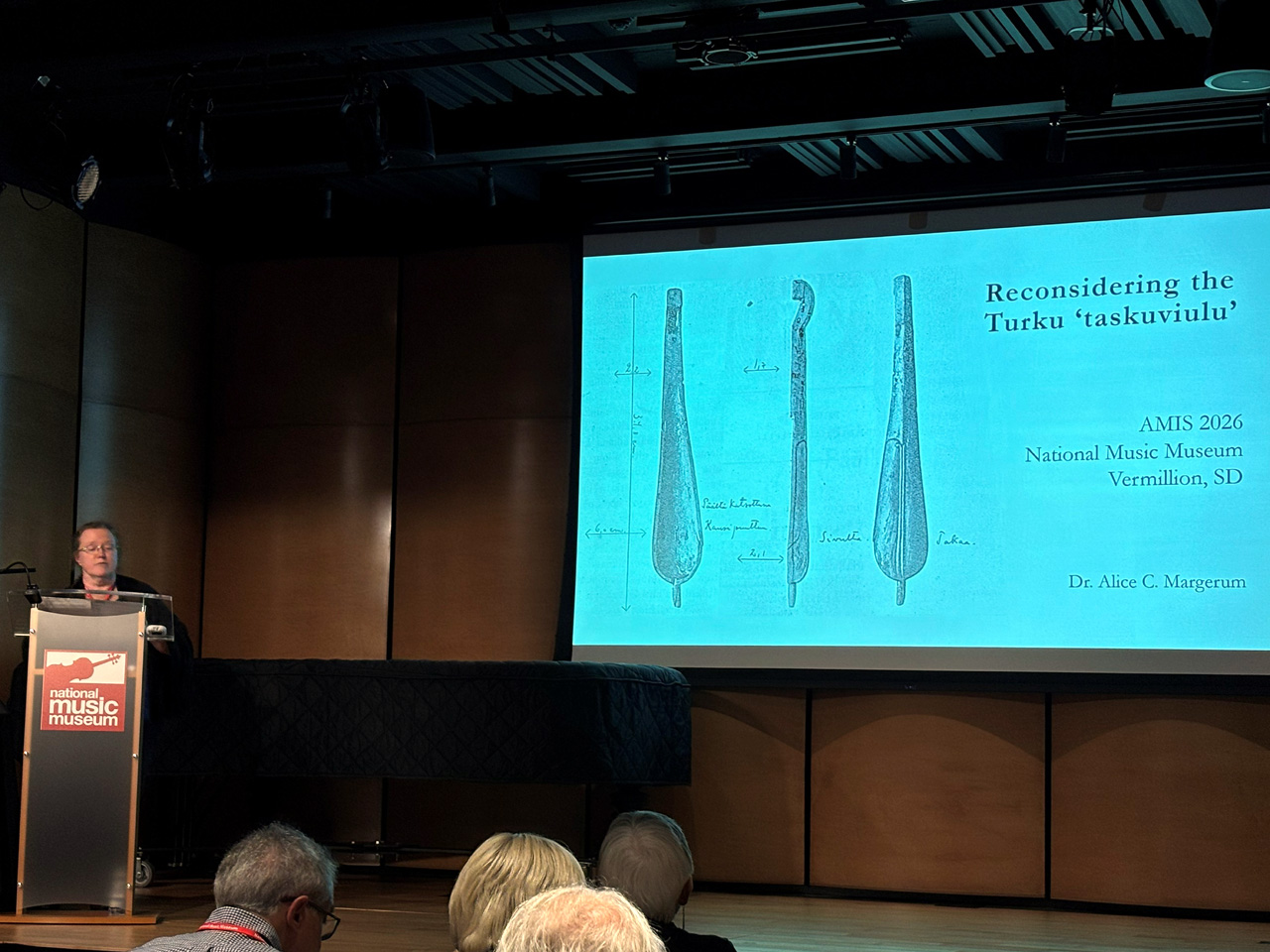
Something else again is Alice Margerum, whom I met when she gave a paper at the Historical Harp Society convention last year. Here she was again, taking an old scrap of hewn wood from some under-the-radar archeological dig and figuring out what/when/why it was, then how to build a working, playing reconstruction. This one was the Turku “taskuviulu,” a tiny medieval Finnish “pocket violin” (with faint decoration remnants she compared to a “thong bikini”). Tricky, and incredibly nerdy, stuff.
We’re nearing the end of our last day, so papers tend to get more entertaining, but no less more legitimate.
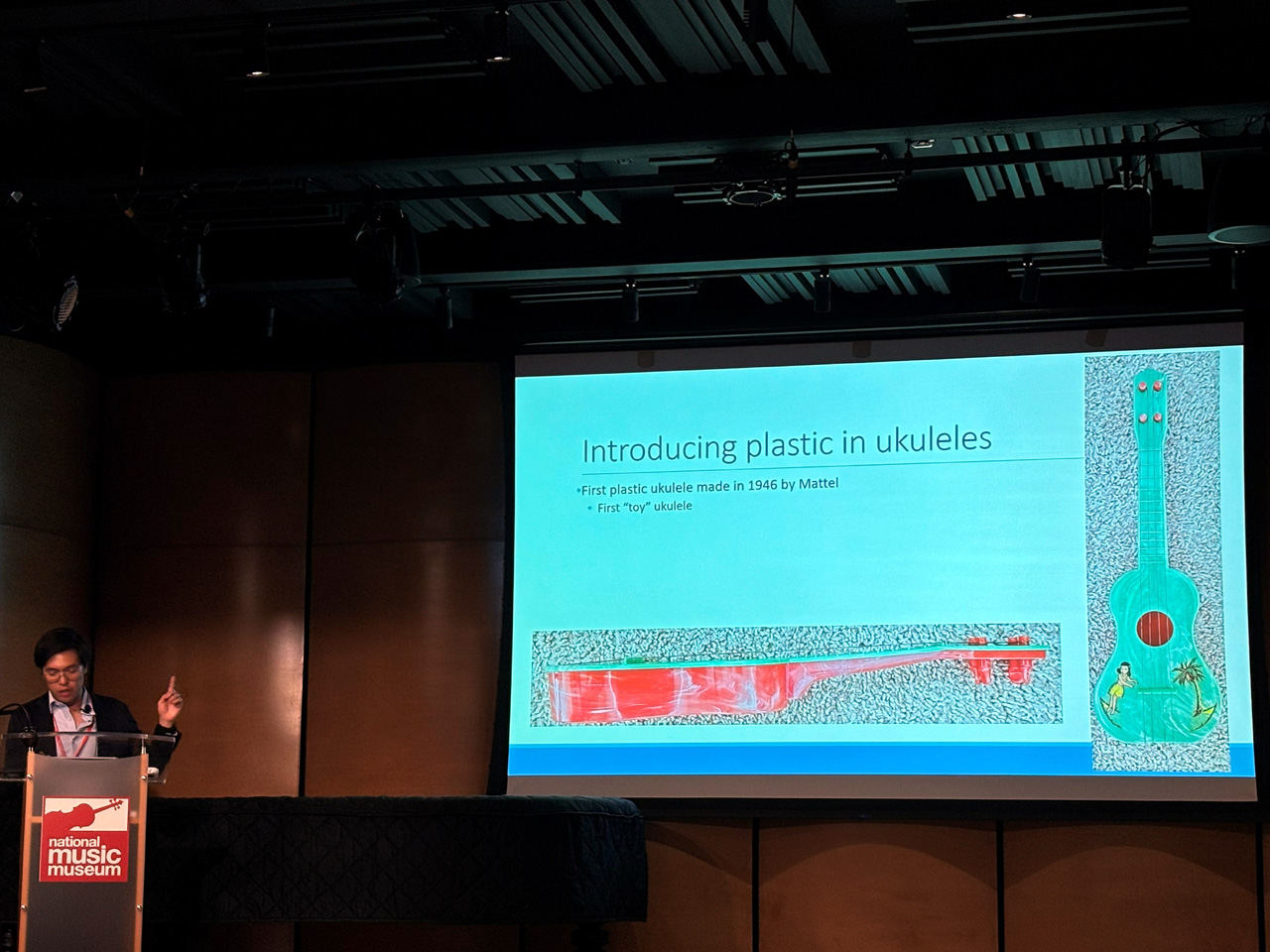
Austin Young studies ukulele, musicology and ethnomusicology in (naturally) Kentucky, and took the history of the toy plastic uke very seriously (including sound clips). No, most do not even pretend to intonate, so why even try? Did he succeed in convincing us to “visualize the toy ukulele as a musical instrument with a real purpose?” Does “my dog have fleas?” The answer to both, of course, is – yes!
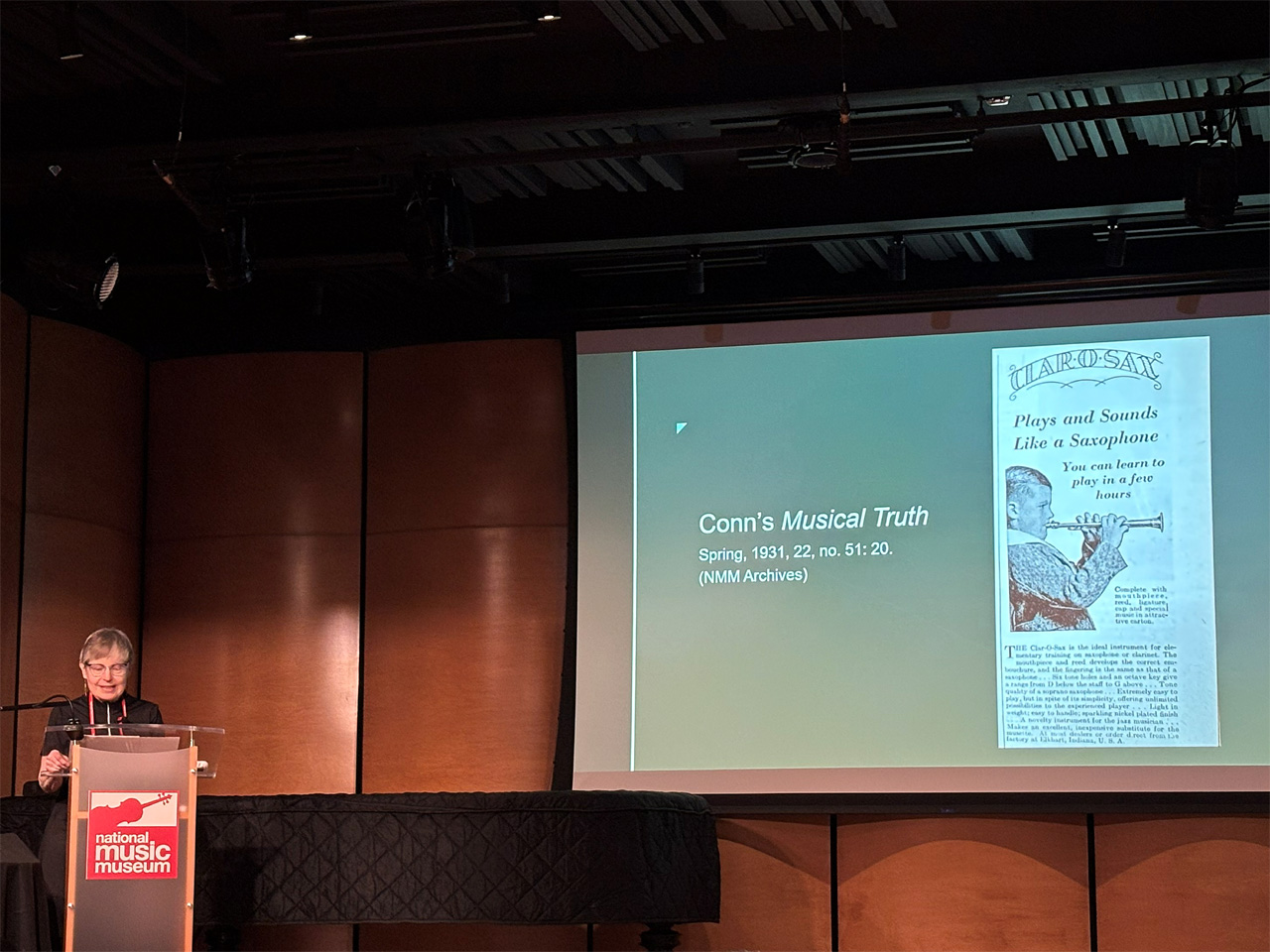
Only slightly more musical but way more obscure were the “Single-Reed Instruments for Children,” as described by Deborah Check Reeves. Fascinating intro-toy-tools for kids, I’d never heard of any of these…and am now scouring eBay for examples – and good luck!
Our big dinner banquet is next, but first, keyboards!
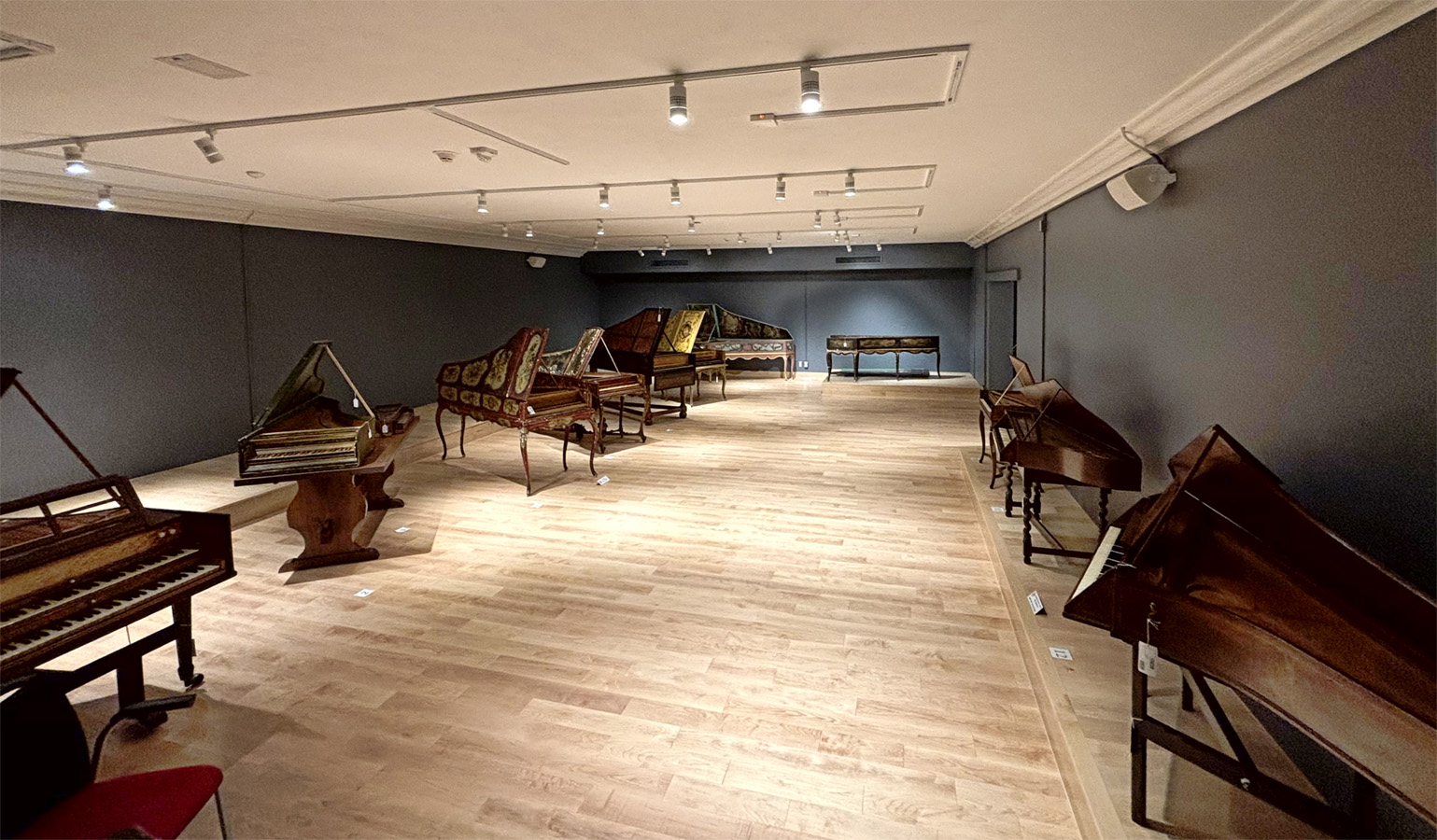
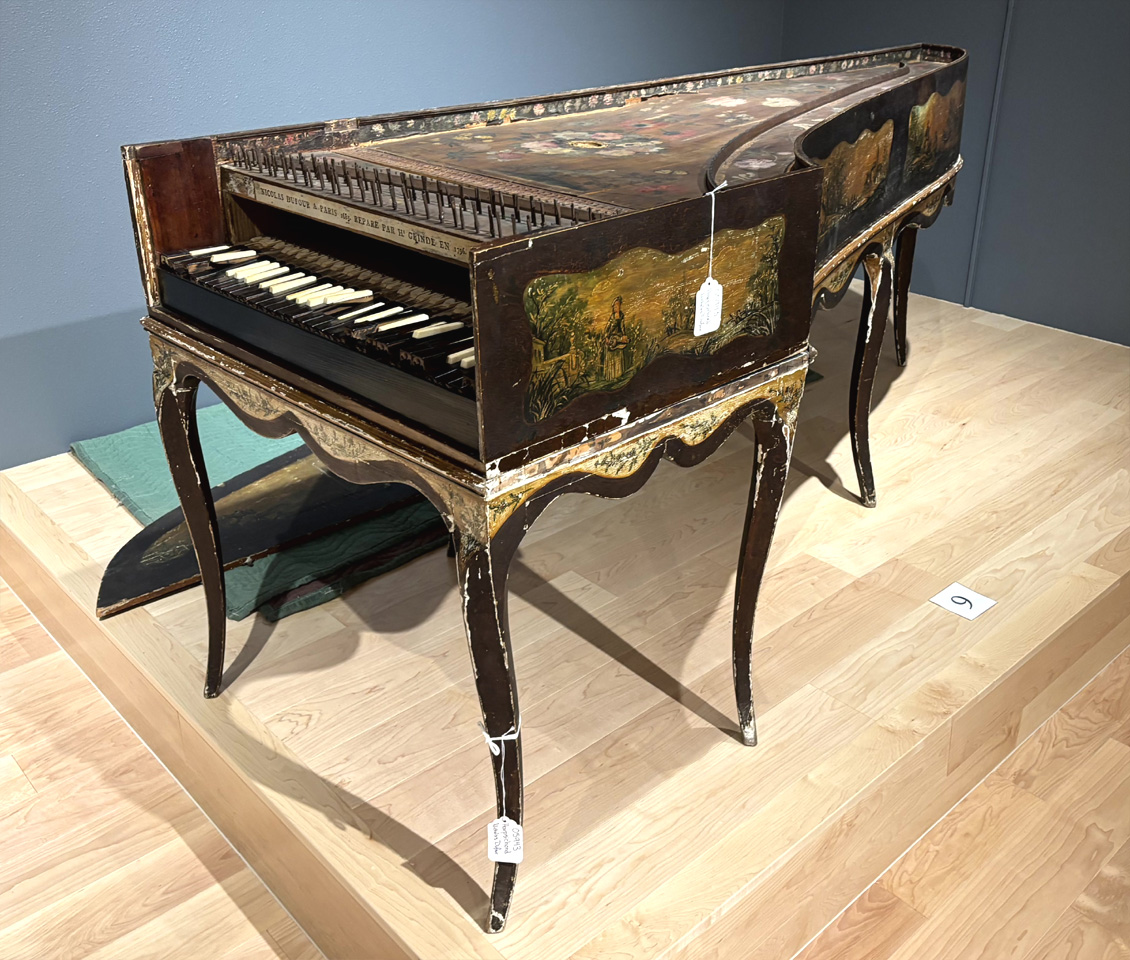
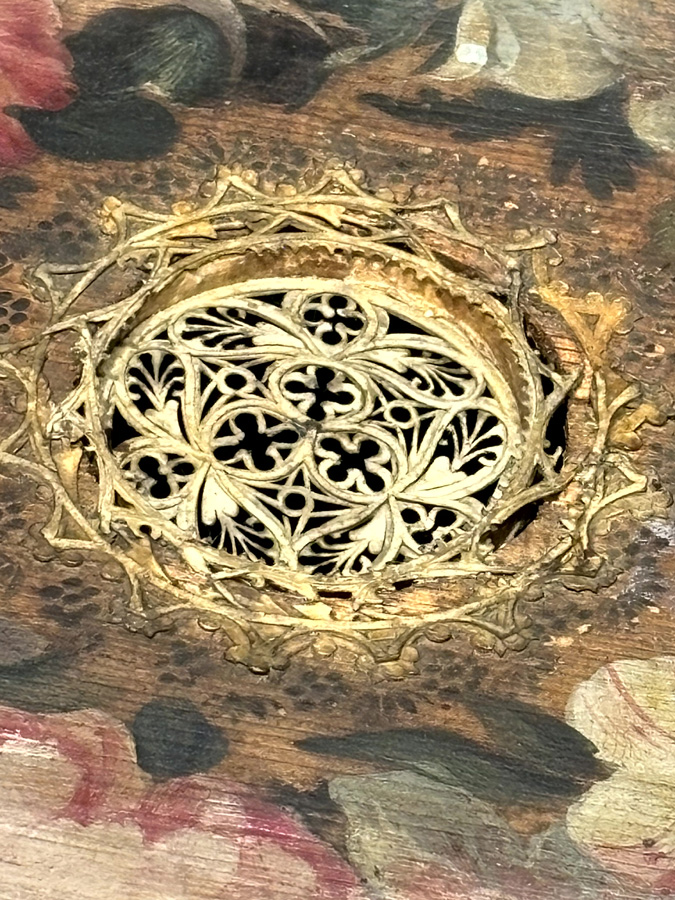
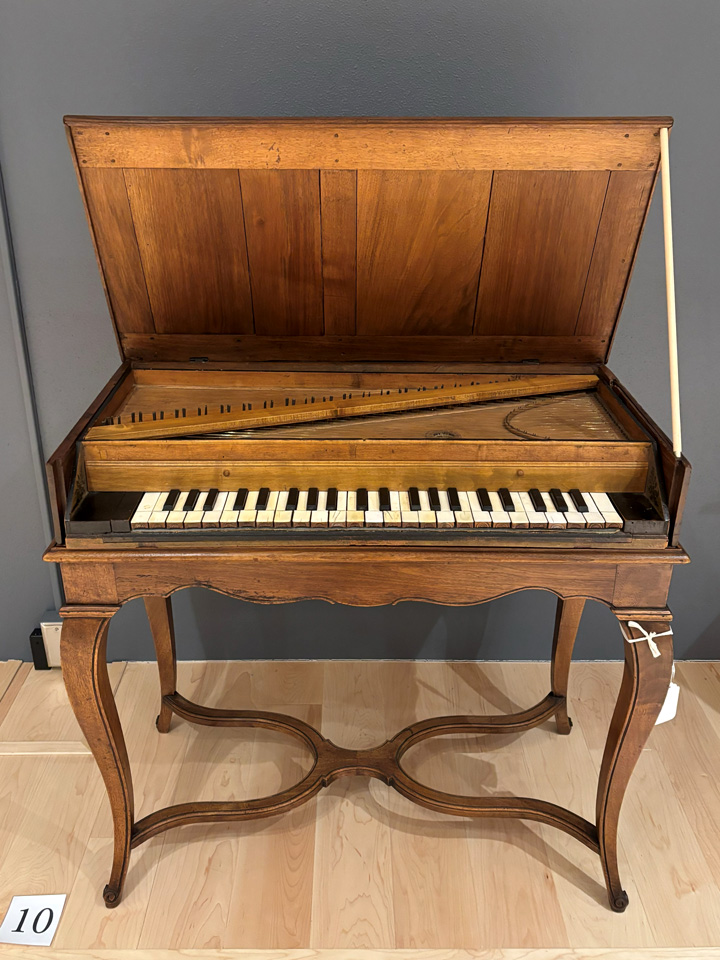
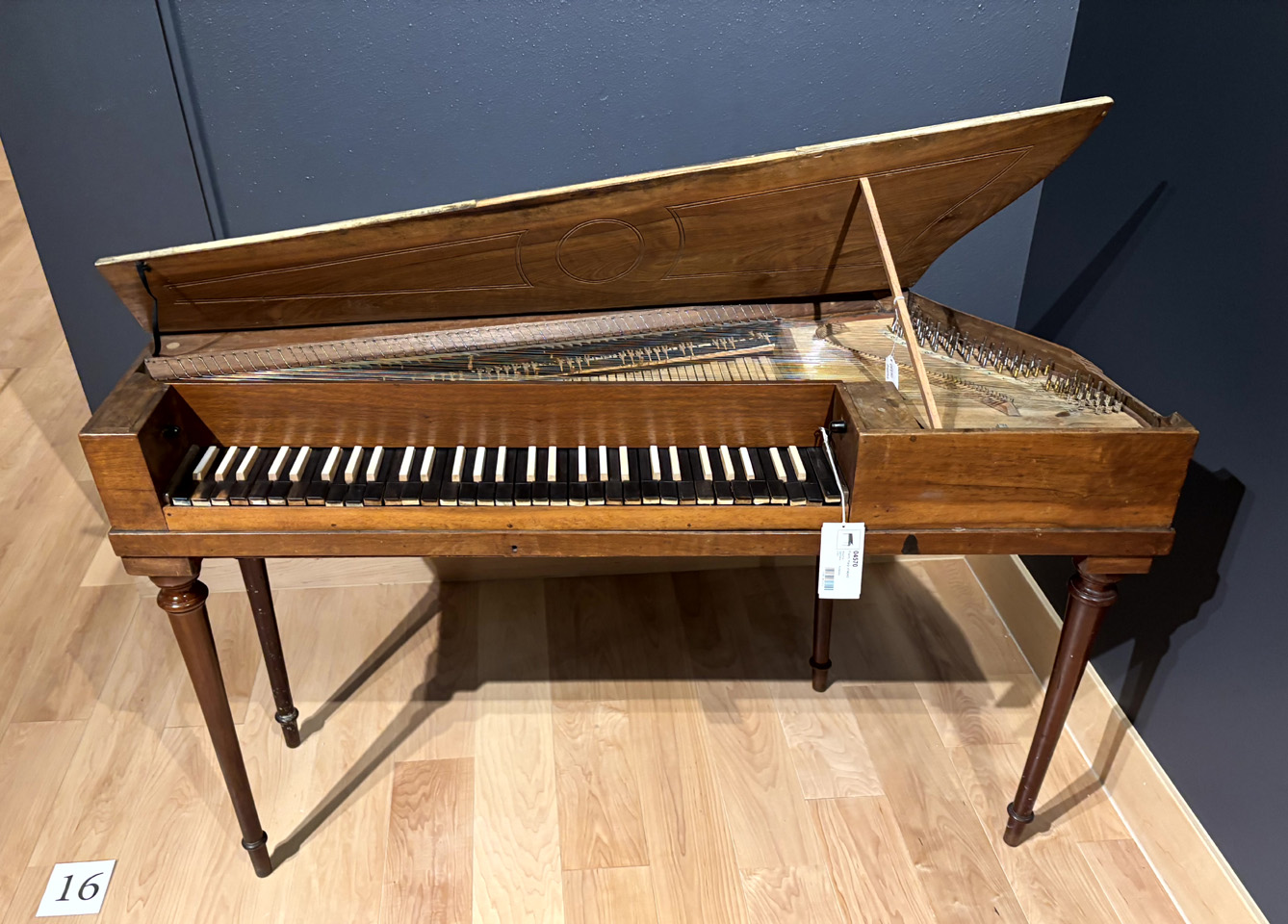
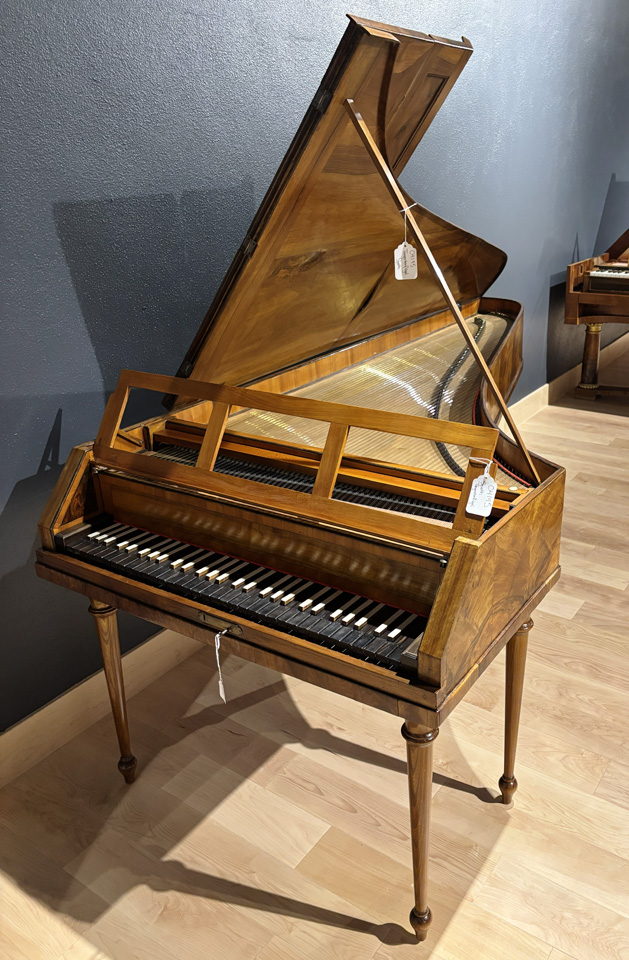
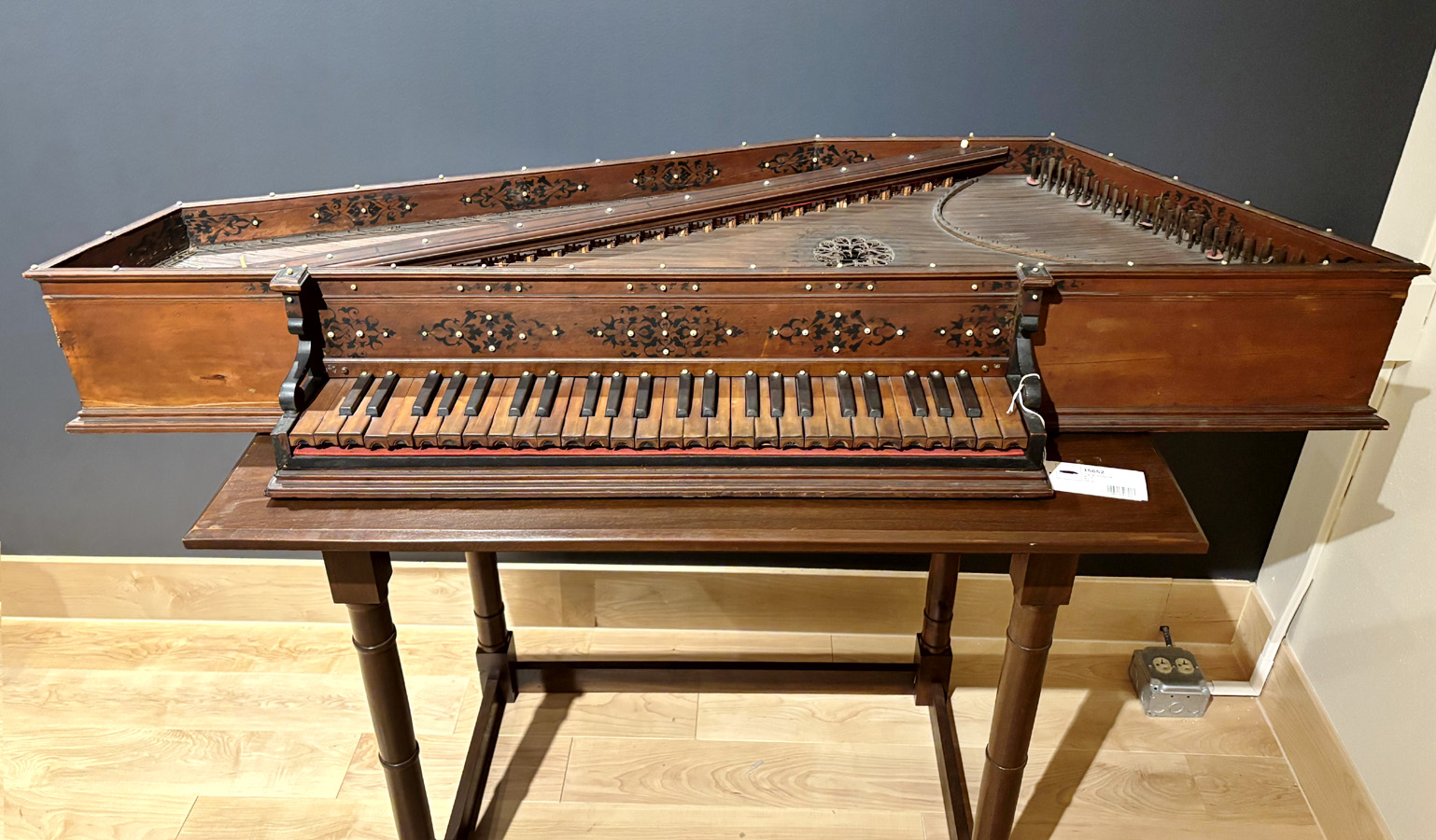
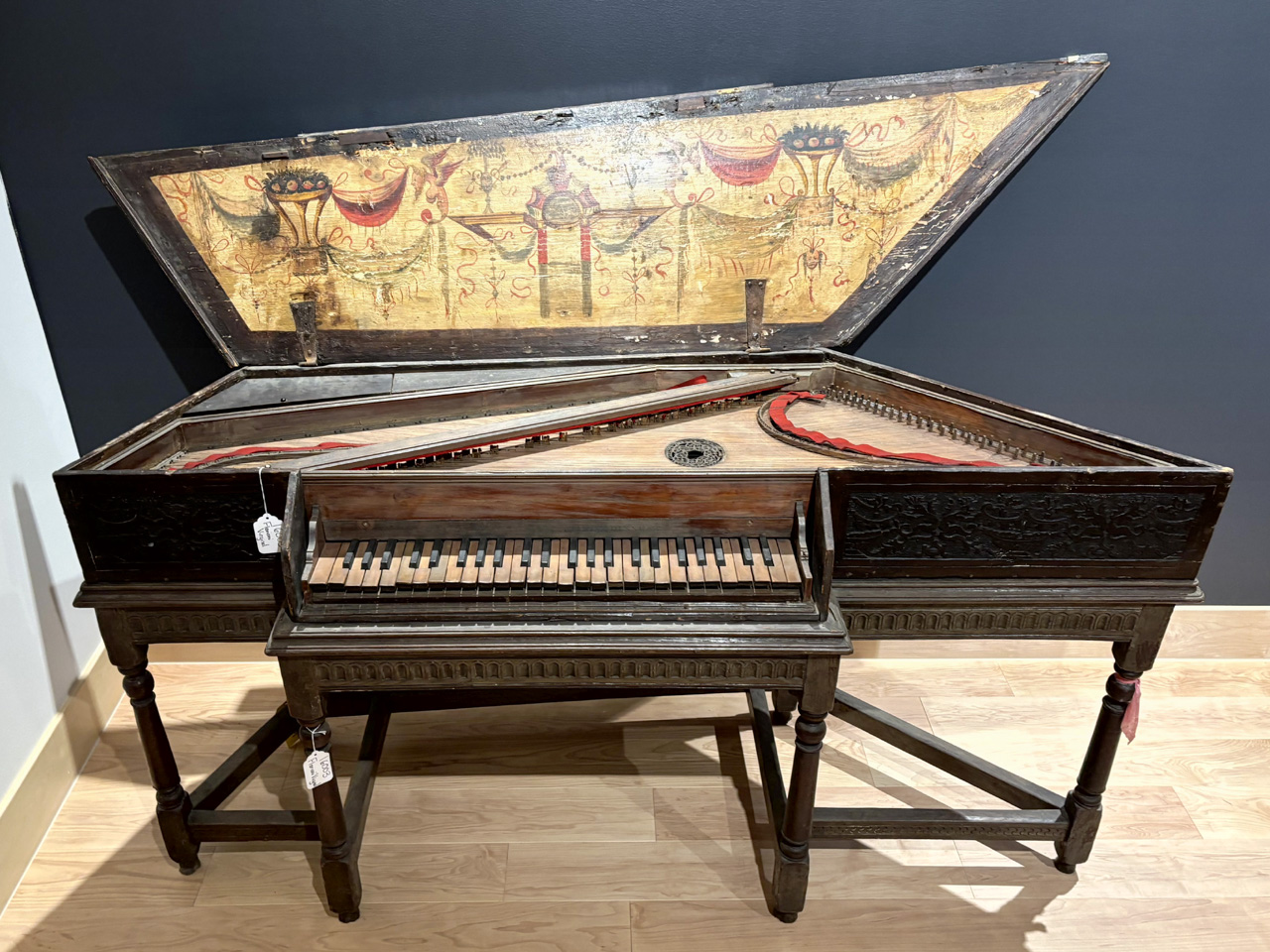
The second floor galleries have yet to be completed, and several huge rooms were locked up due to storing the museum’s valuable keyboard collection. We could only stare through the grates like waifs in a Dickens story…until they unlocked them for a “supervised visit” (understandable; most of us are children). These next photos may be overkill, but how often does one get to be up and close and personal with such treasures?! You can locate any of these on the NMM web site for info, so in random order:
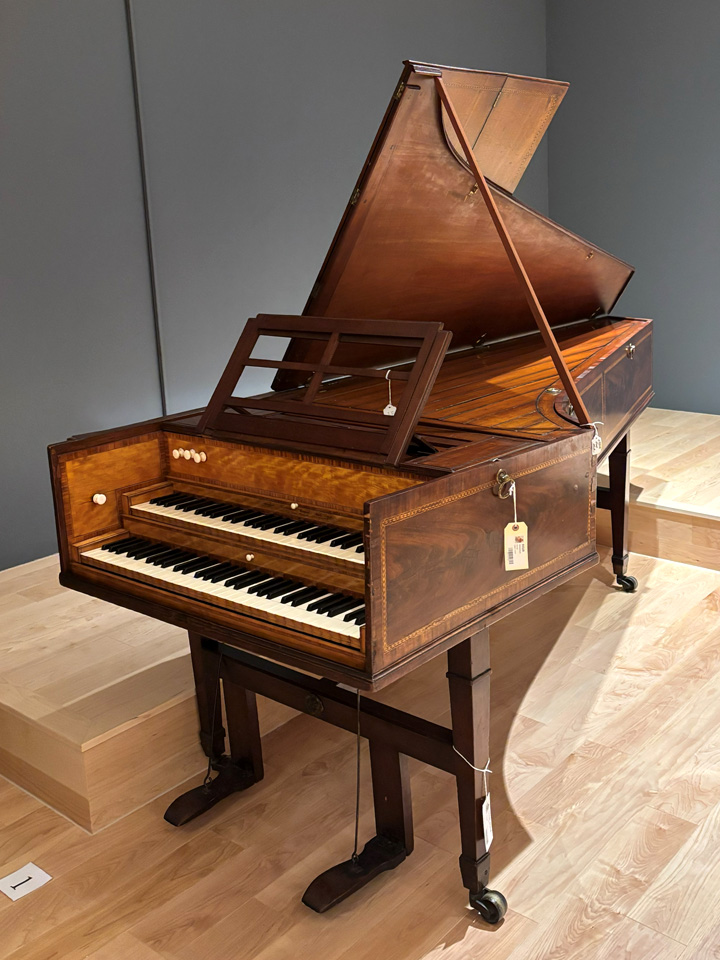
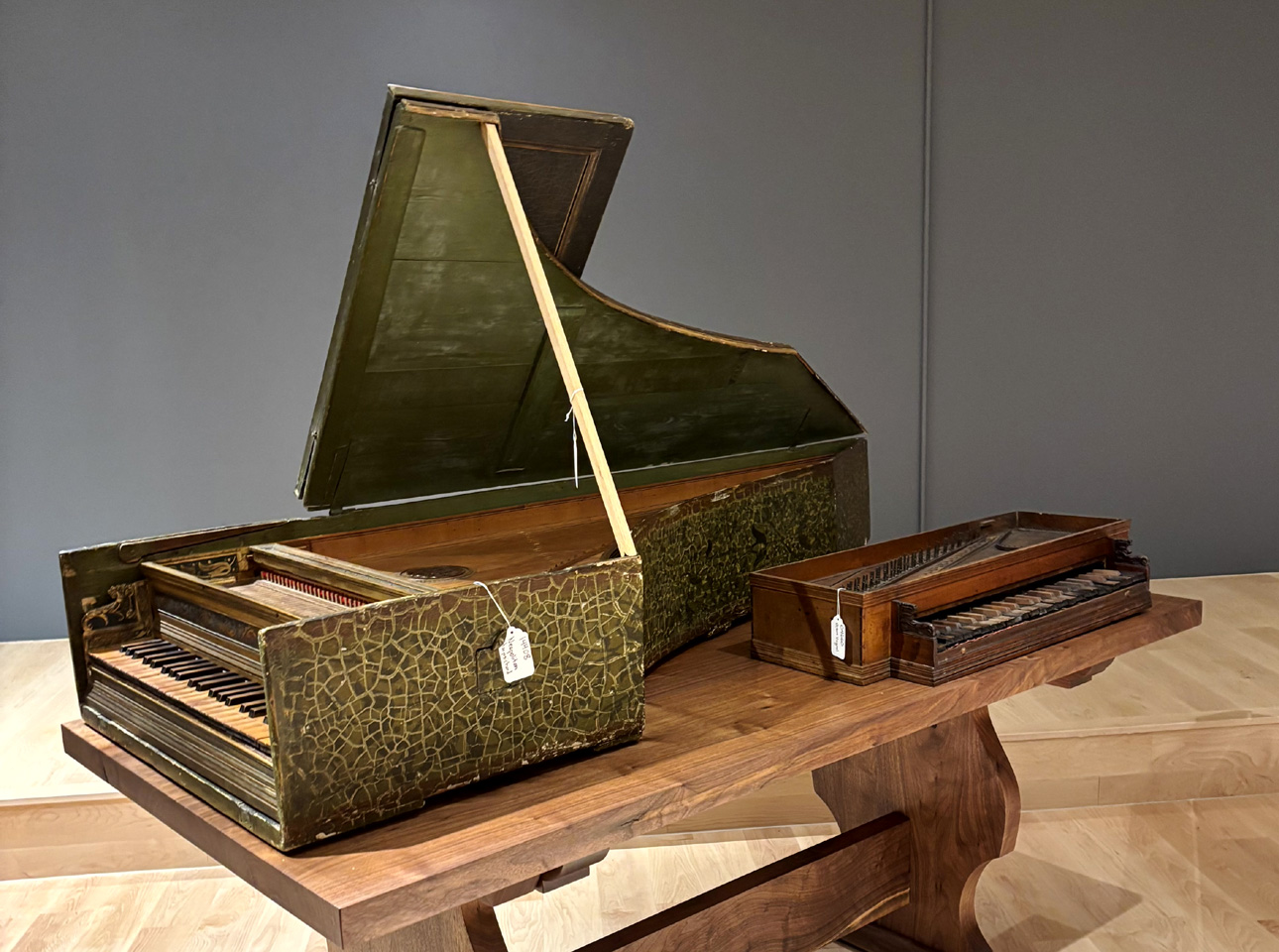
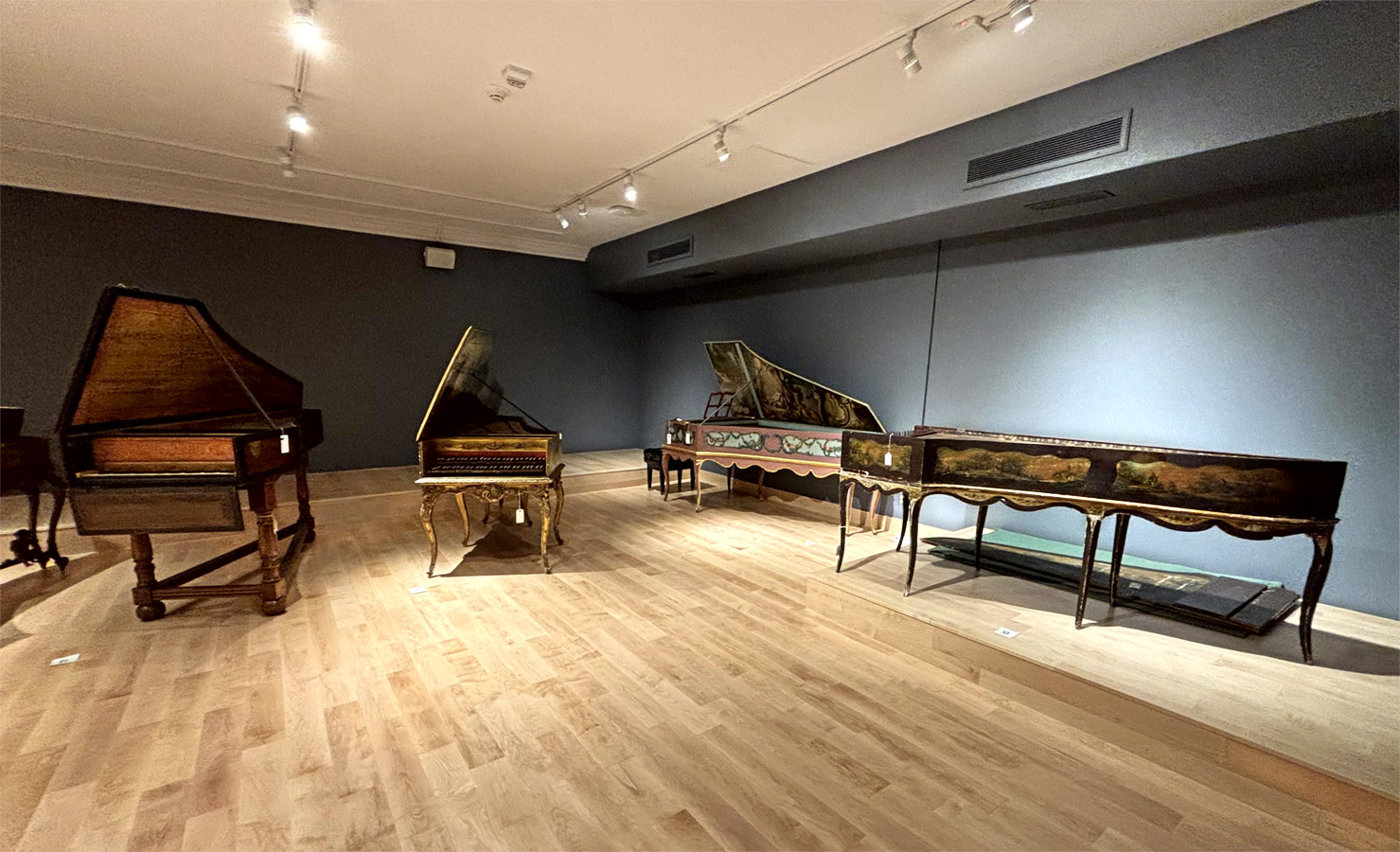
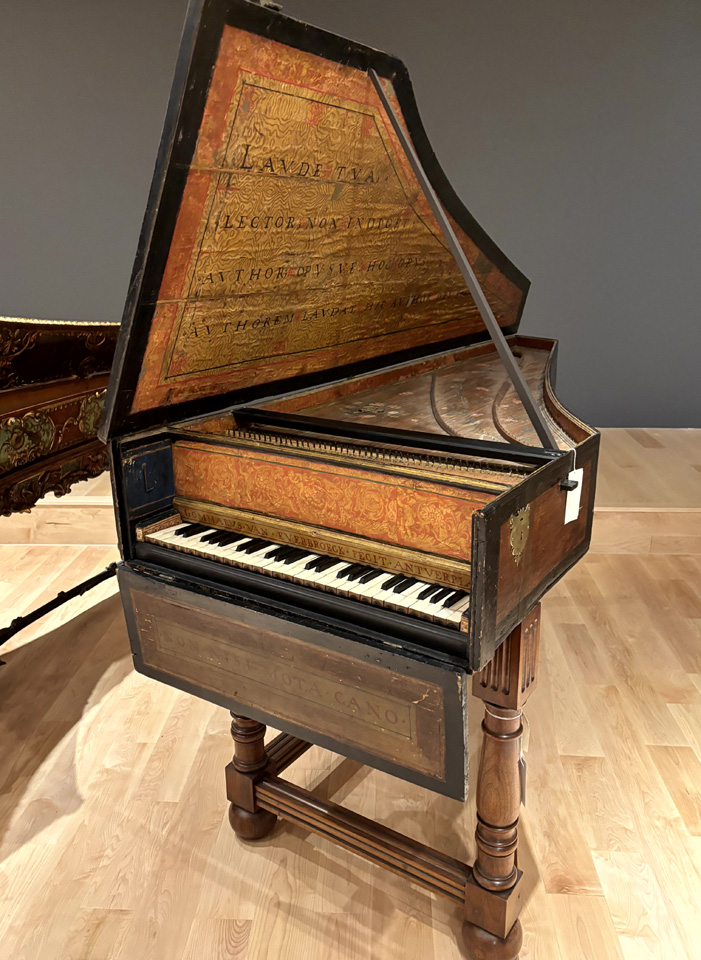
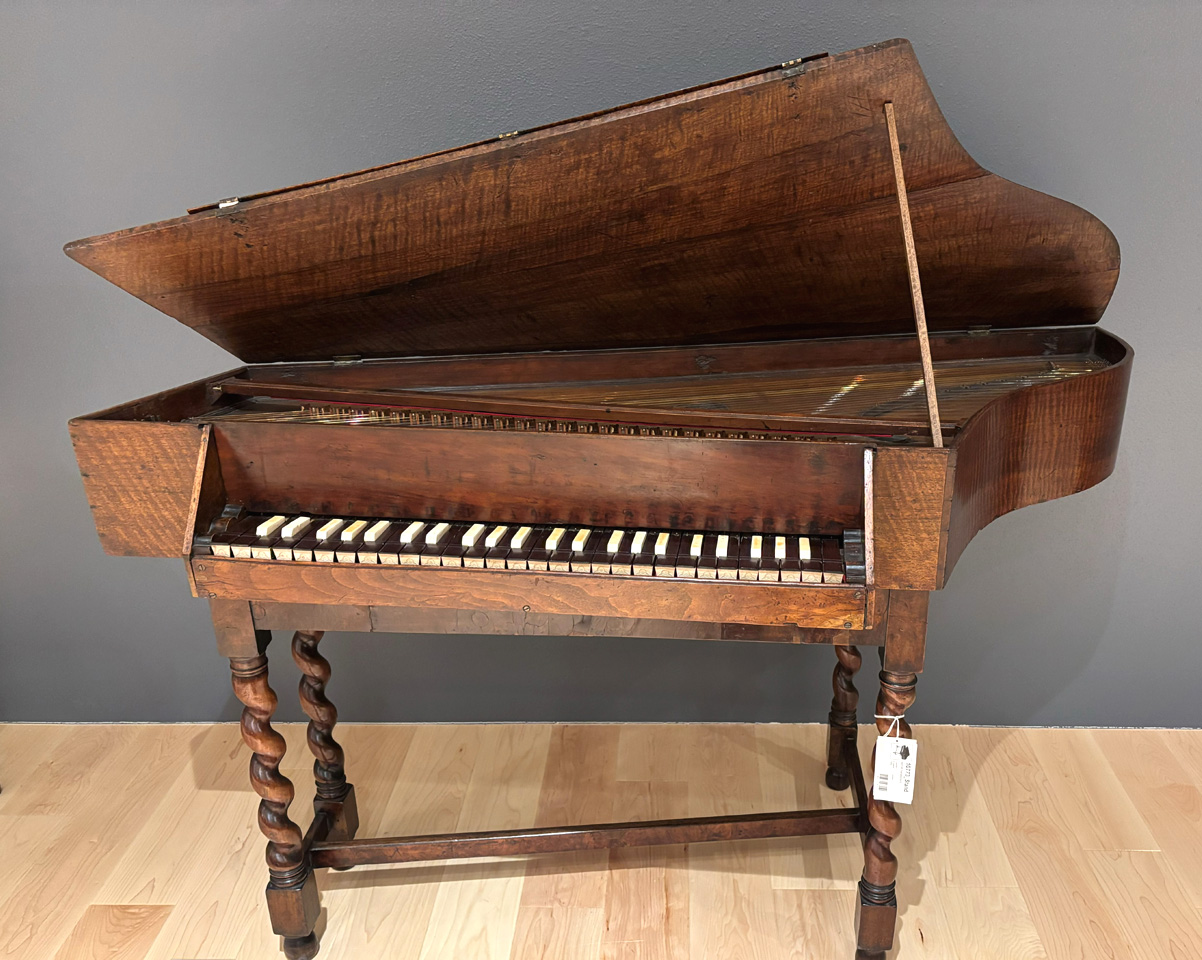
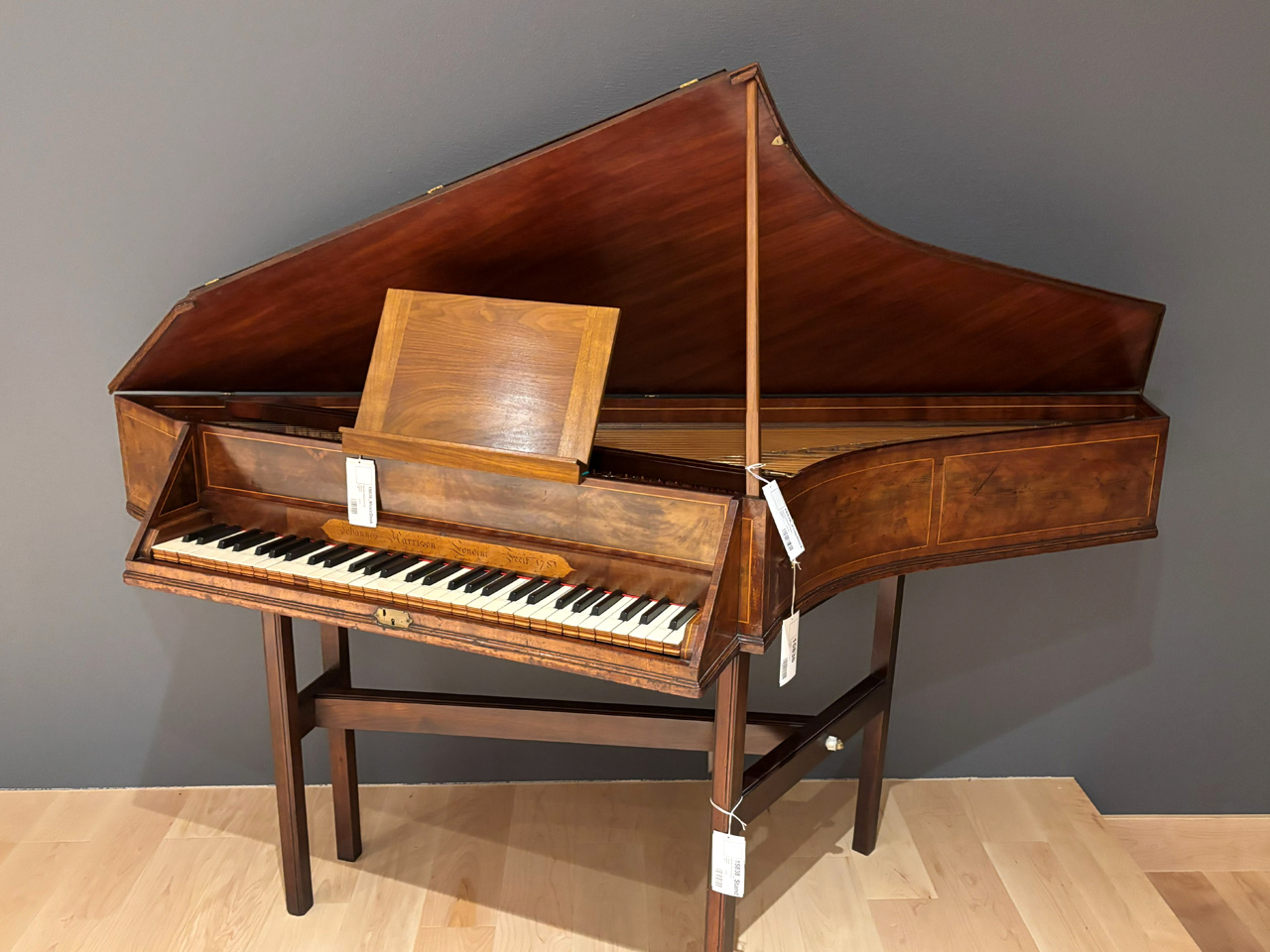
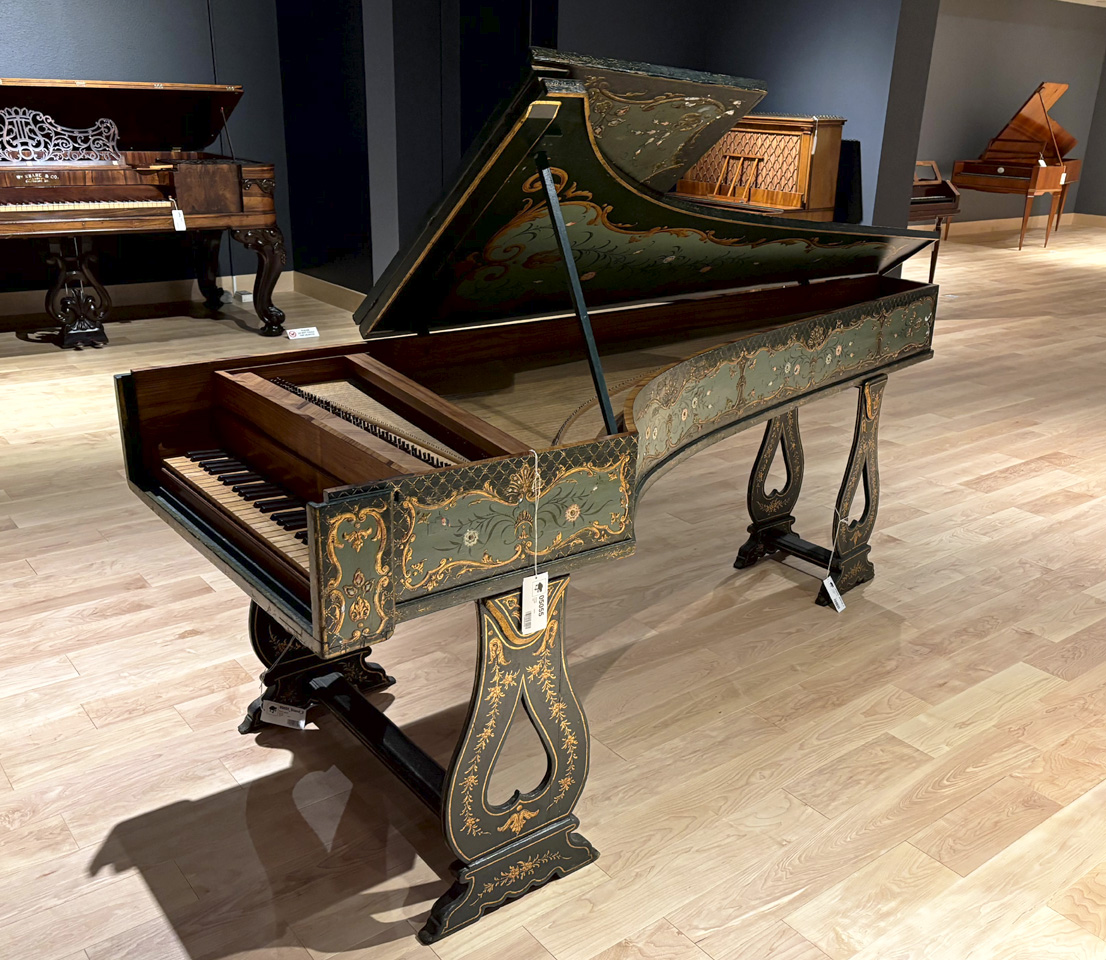
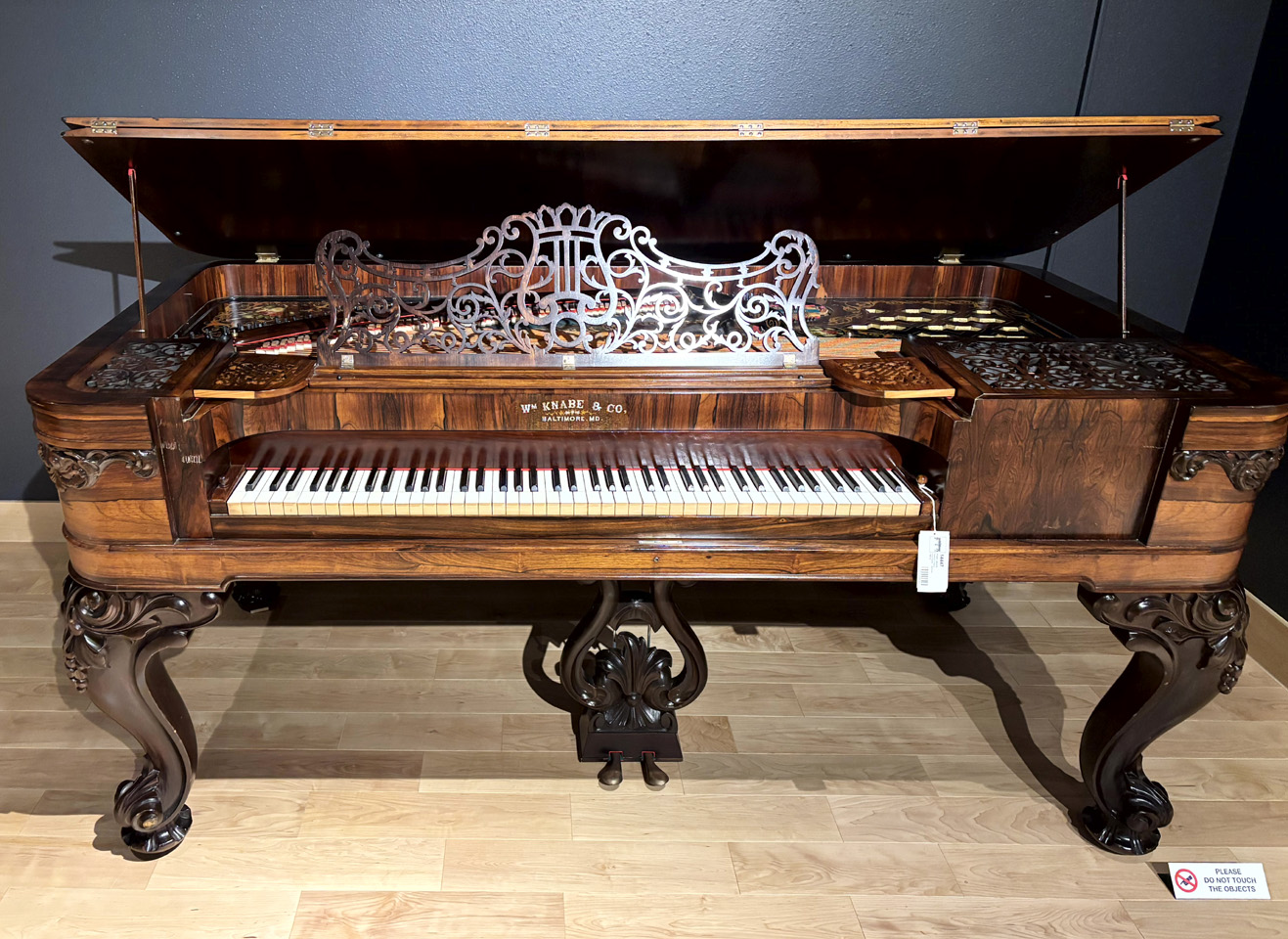
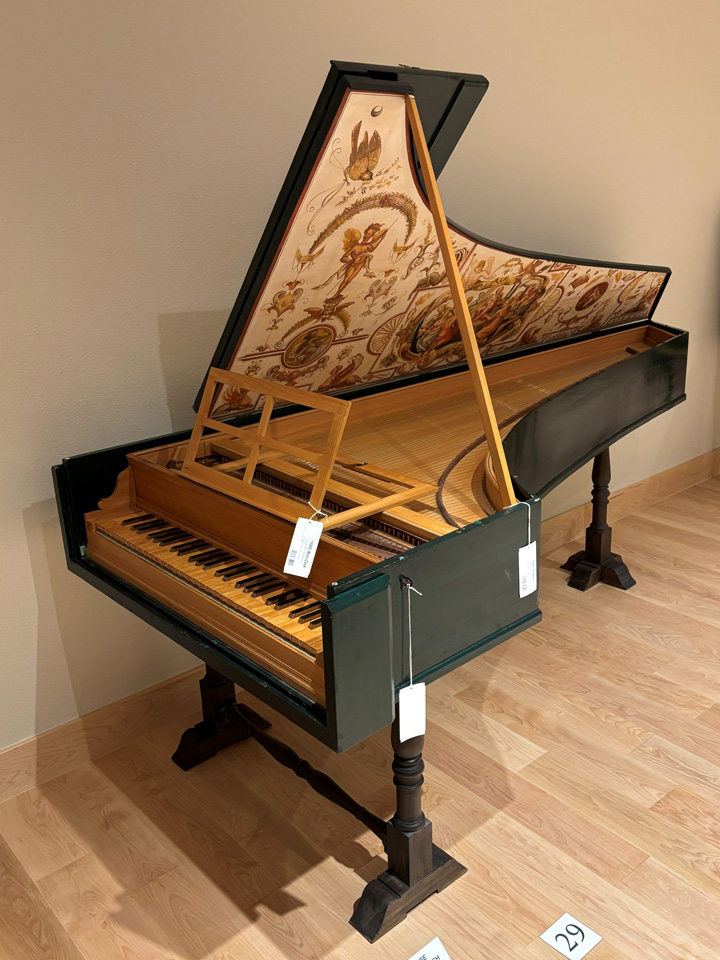
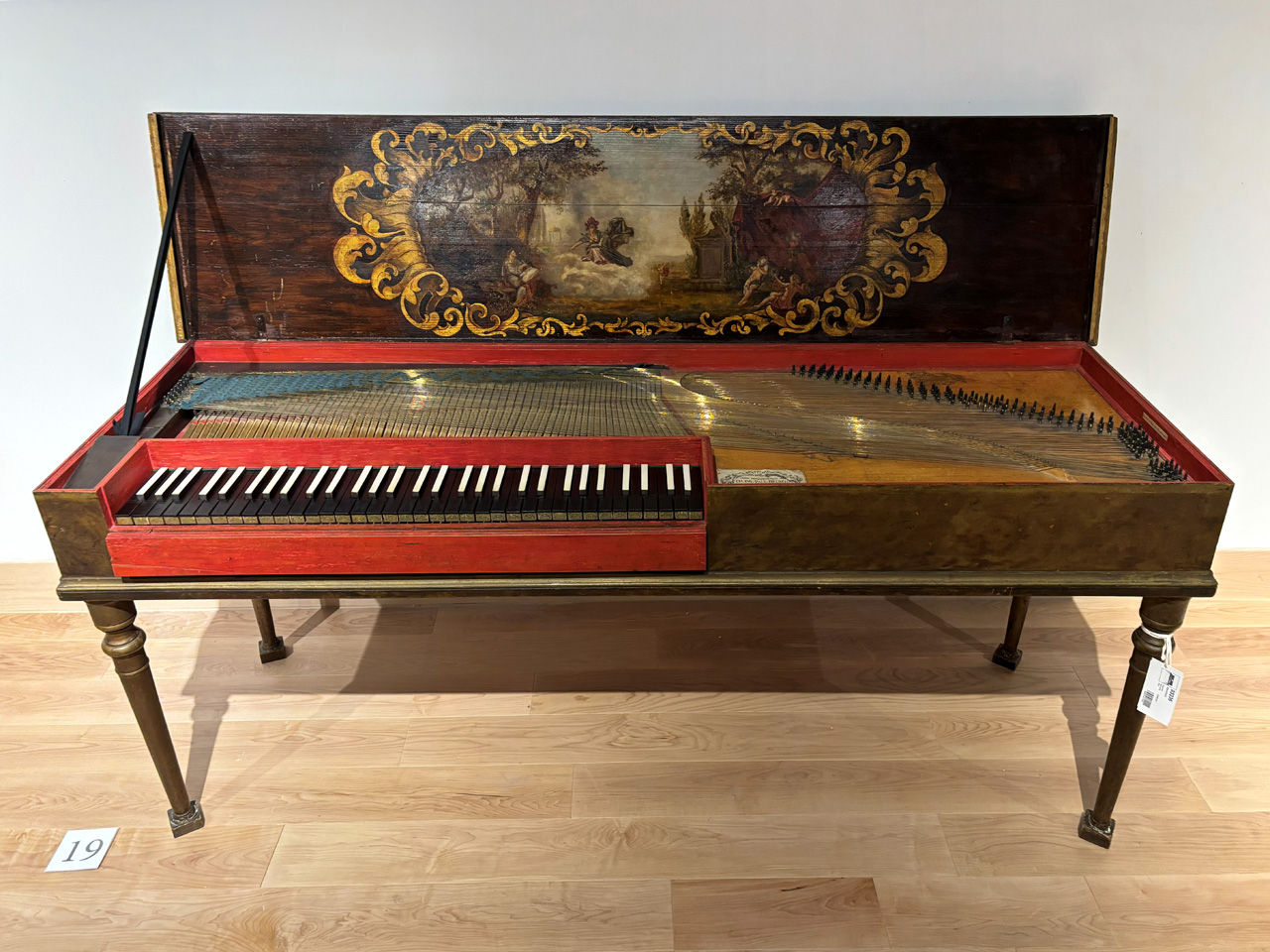
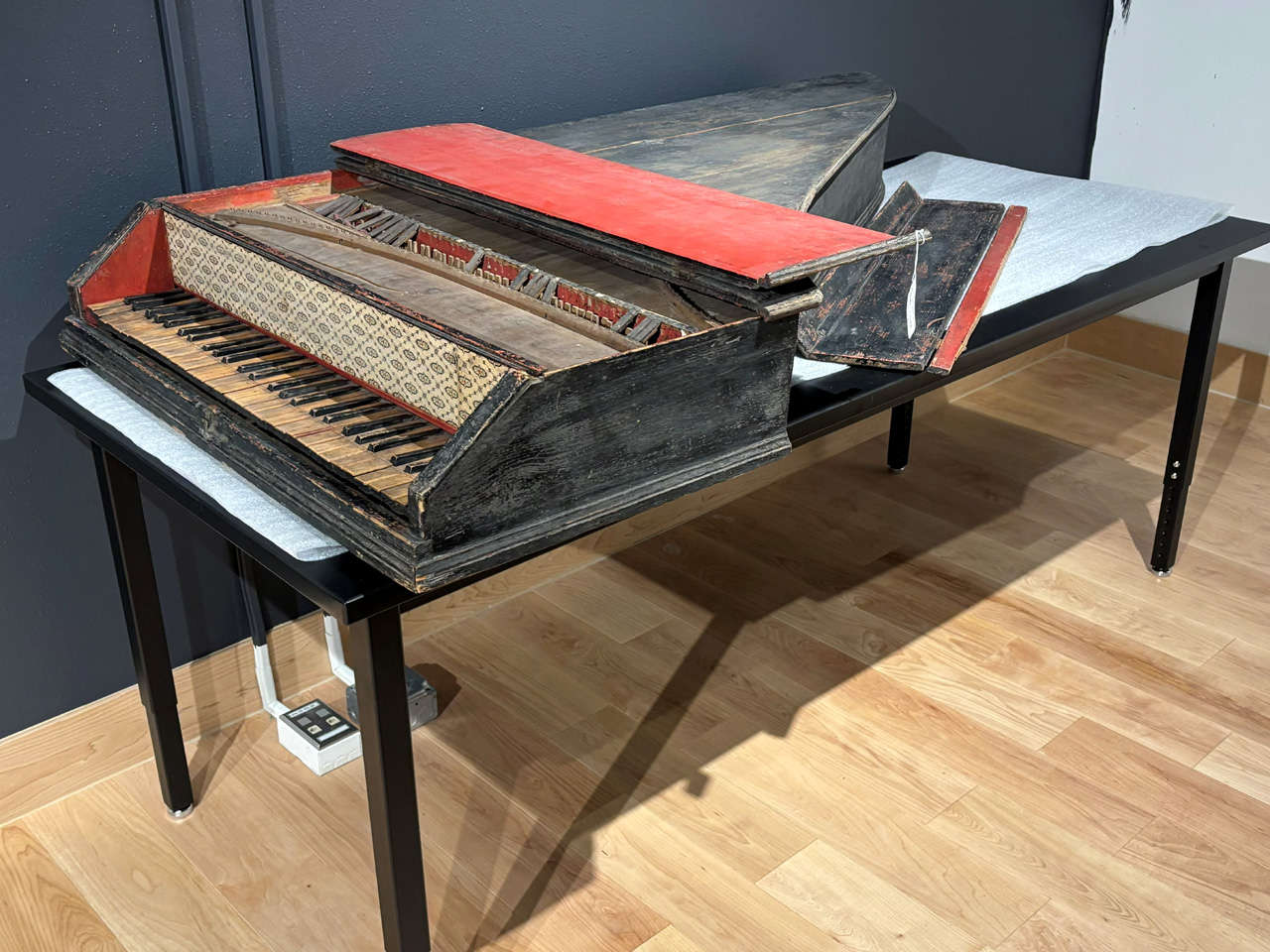
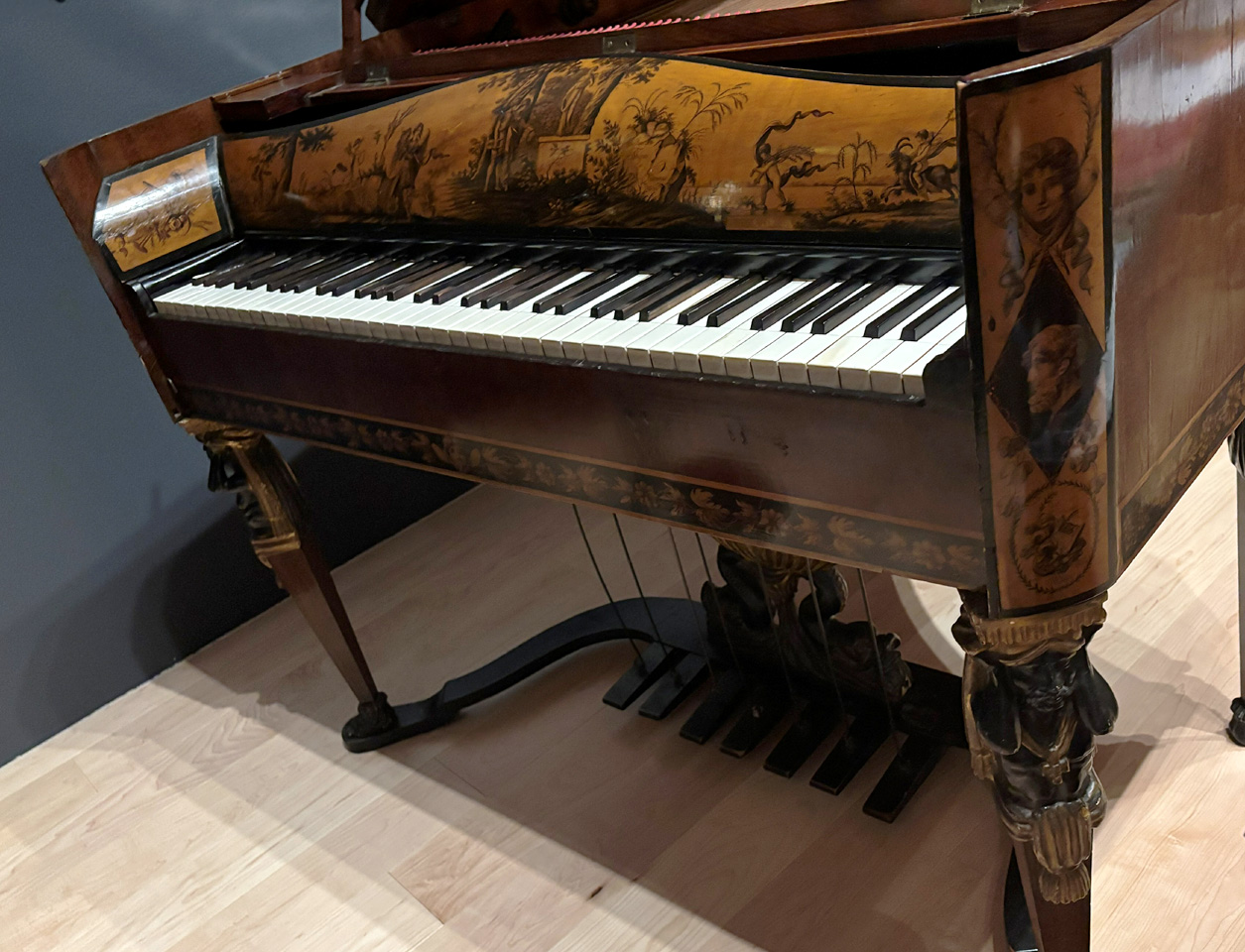
Our instrument investigations complete, let’s visit with some old and new friends!
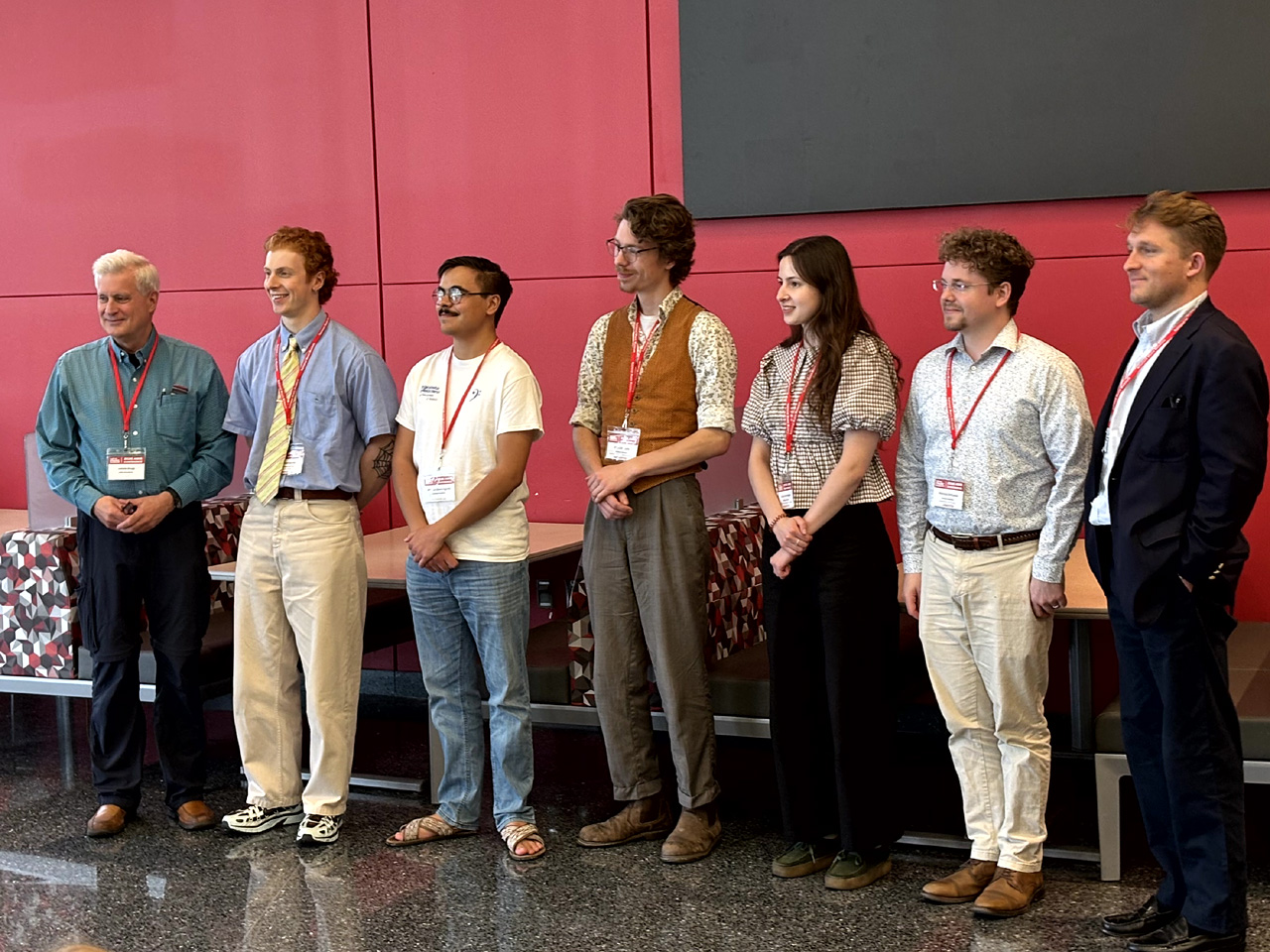
At the banquet, AMIS president Jim Kopp celebrates this year’s Gribbon Scholars (students awarded a travel stipend), including Milan Barbé (Ghent), Martin Dominguez (Mexico), Gijs Clement (Ghent), Lotte Vertenten (Ghent), Patrick Dittamo (Chicago), Chet Stussy (Santa Barbera). Not shown: Blake Proehl (Ghent), Fayrouz Osman and Austin Young (seen earlier)
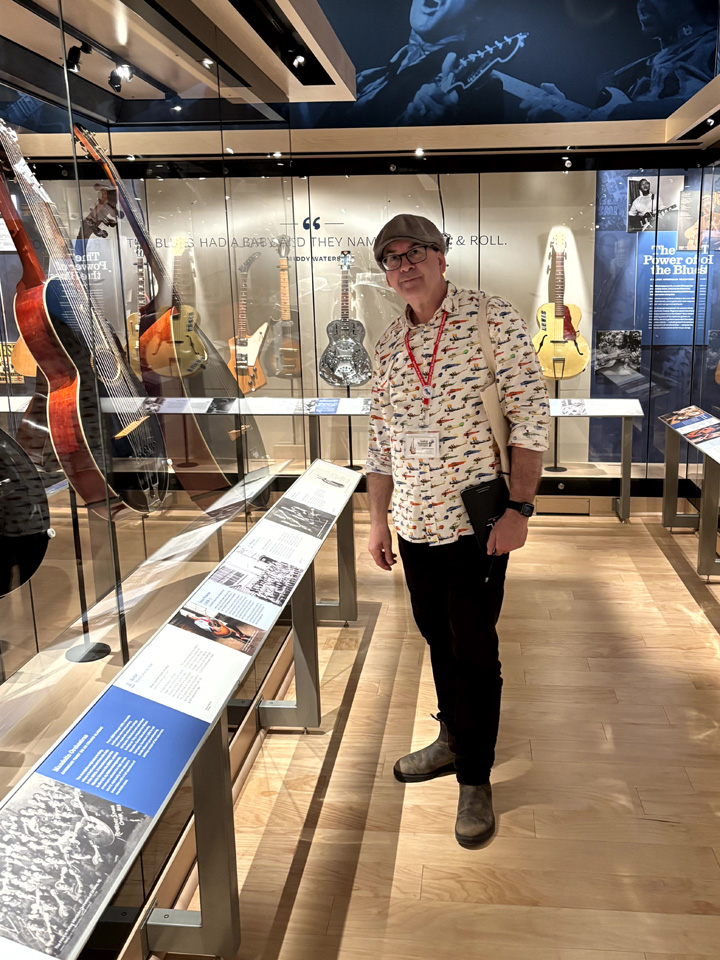
You may remember and recognize Wilson Schünemann from my FB posts and blogs – he’s the one creating the Concord, Mass Guitar Museum of New England. This is his second AMIS, as he learns what it takes to build and maintain a full-fledged museum!
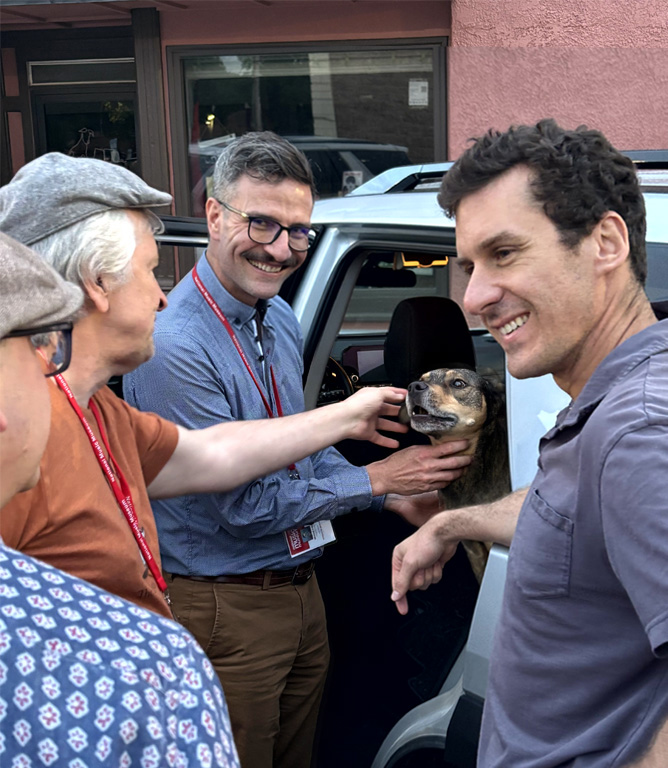
On the right is Andrew Mullane’s business partner Tucker (and his travel companion inside the car). Michael Suing (NMM Collections Deputy Director) and I are smitten, while Wilson chats offscreen.
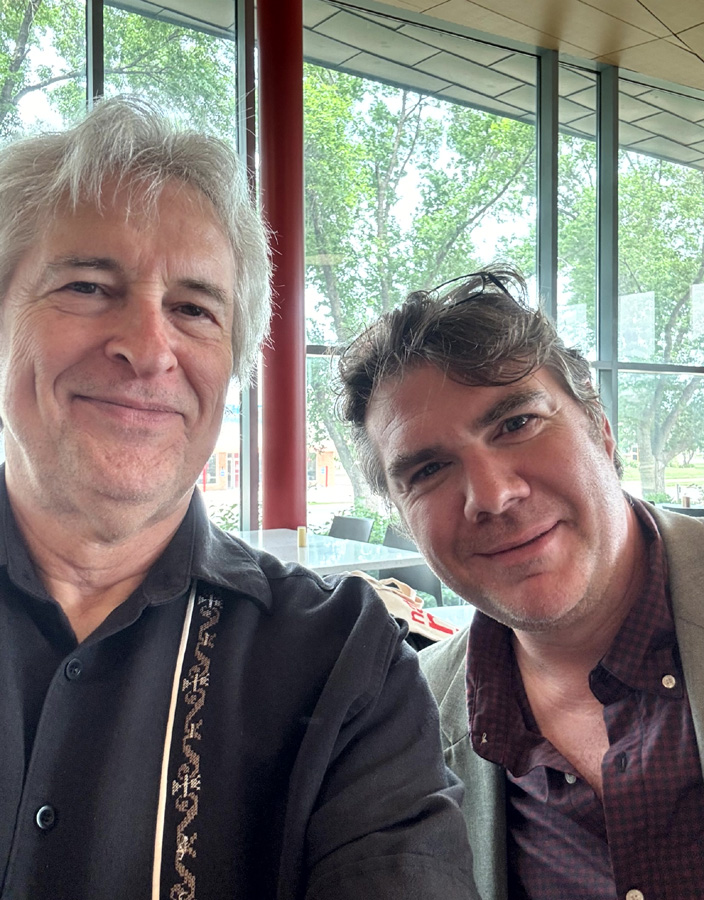
Anyone recognize this guy? He does seem to stay off the radar while he continues to conquer the world. It’s new pal Dustin Miller, from Chatham County, NC (currently in Nashville). Fascinating to talk to, even though he’s always miles ahead as he philosophically talks guitars, history and business (microchipping billionaire client’s guitar collections just as a start) with total recall. He and his wife run 79°West, an “innovation hub” in Chatham Park, but in reality, his wife is now doing everything while Dustin takes a (wife-approved) 3-year sabbatical to do worldwide research for his upcoming book on Martin guitars, which I expect will be groundbreaking and quite different than anything we’ve seen so far. (As just one “small” example of the depth of his research, he has read – and retained – my entire Harpguitars.net web site just to absorb any of its relevant early American guitar tidbits of history or commonality. He brings up esoteric topics I’ve written about and already forgotten!) Dustin had never been to an AMIS (had never heard of it) but flew in to meet all the “guitar guys (and gal)” at the urging of mutual friend Daniel Wheeldon (they had just met at the Banjo Gathering).
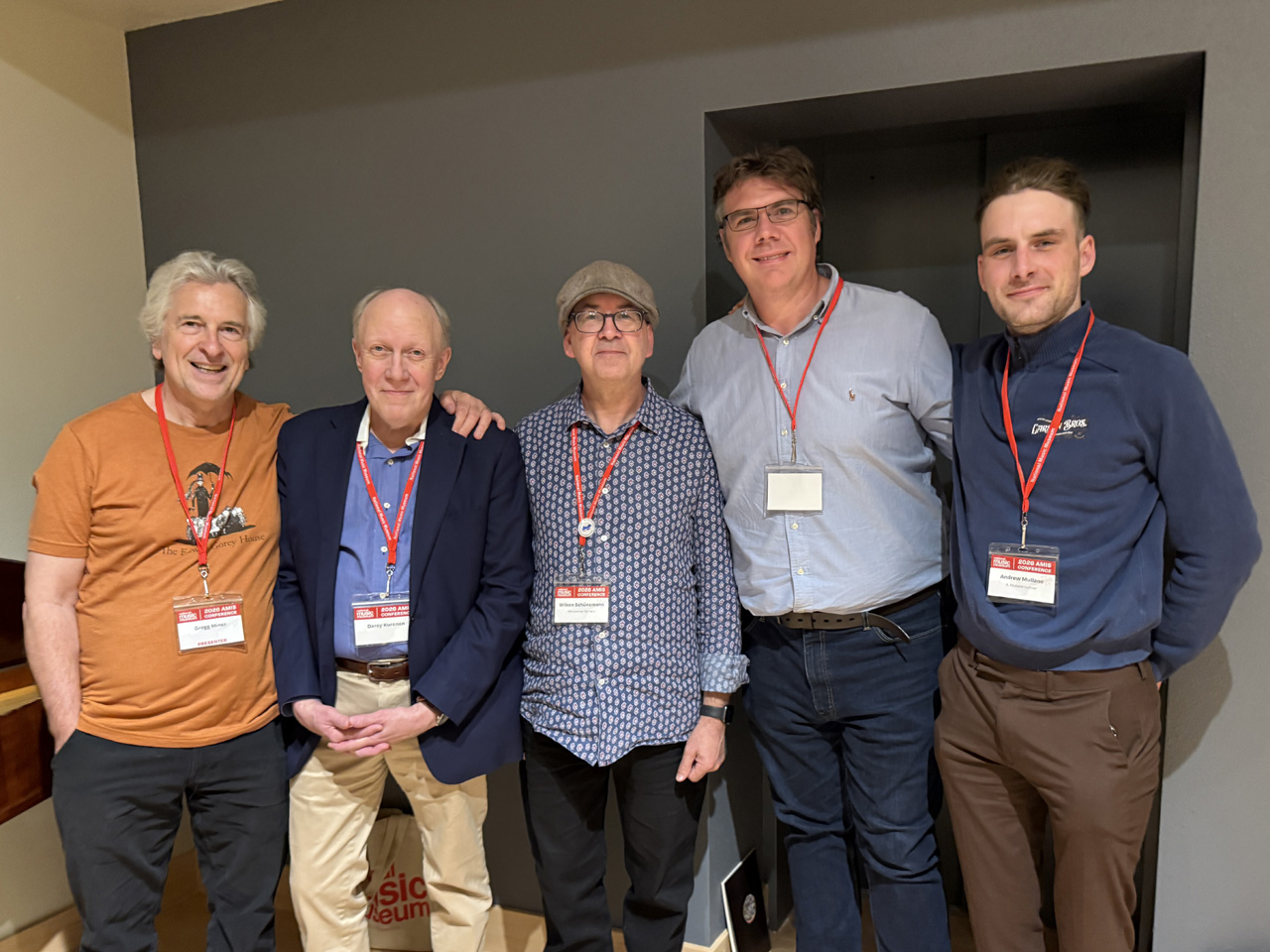
Some of the “guitar guys”: Myself, Darcy Kuronen (a guitar guy from doing “Dangerous Curves” at the BMFA), Wilson Schünemann (the Klein/Kauffman web site besides his upcoming museum), Dustin Miller, and Andrew Mullane (Renaissance man at Victor Guitar in Denver, CO)
Missing from our group pic are NMM Conservator Darryl Martin and Curator Arian Sheets, Matthew Hill, plus various other guitar and lute experts.
And apparently, I’ve come to the end of my story.
This was a very good AMIS year, even though we spent no time in the surrounding area or town (other than drinking, and heavily, at that). When we go back to the NMM in ten years, we are promised that the second floor will be done; and perhaps I’ll stay after to poke around in the new conservation wing and holding archives. Meanwhile, good papers, good conversations, good friends (my peeps!), cool instruments. Thanks to Director Dwight Vaught, Michael, Darryl and Arian, and the entire staff! (shout out to Sarah Miserak and Ash Micheel).
And would you believe that next year’s AMIS is going to be in Oaxaca?!

“like waifs in a Dickens story” is a great metaphor. Thanks for sharing.