

This is the last in a series of my “AMIS Trip Report,” where I wrote about some of the people and events of the 2024 Meeting of the American Musical Instrument Society and some of the instruments at the Phoenix Musical Instrument Museum, which hosted AMIS. You can start the series here if you missed it.
In the last post, I highlighted the MIM’s “Acoustic America” exhibit, and included a few extra tidbits about David Grisman, the collector (as opposed to player)!
This final post will be something very different, as I ask (in my updated PDF), “Harp Guitar” Labeling: Have I Created a Monster? (An Exercise in Context and Perspective)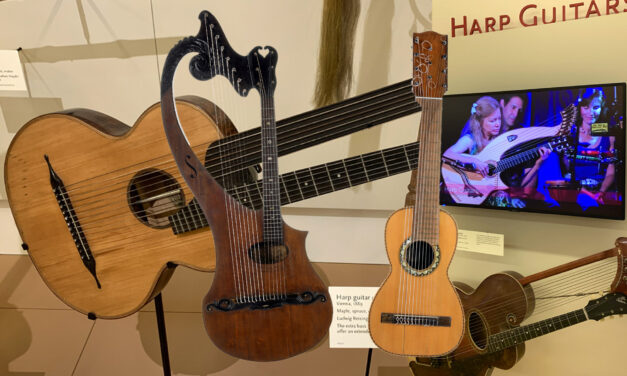


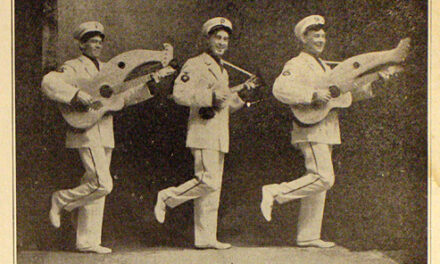
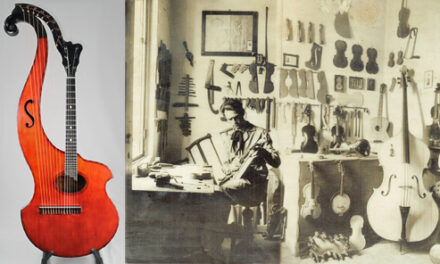
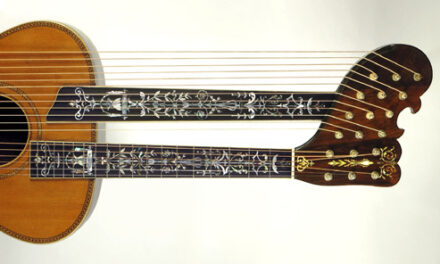

Confirmation and a bit more on the Reisinger and similar Viennese instruments from expert Stefan Hackl:
Dear Gregg, the labeling of guitars with extra bass strings is indeed not easy. There’s no official terminology. Zuth in his handbook from 1926 writes about „Bassgitarren.“ „Schrammelgitarre“ here means only the 13-string Viennese variant. In 1927, Jakob Ortner released a curriculum for the Akademie, which included also playing the „Kontra- oder Schrammelgitarre“. So, these terms were established in the 1920s.
I think „Kontragitarre“ is a kind of abbreviation of „Kontrabass-Gitarre“, which was already in use since the end of the 19th century.
There’s another theory which says the „kontra“ means the offbeat chords in the accompaniment. I hope it’s a bit clearer now.
-Stefan
Gregg, a fascinating and interesting piece of history and research.