Introduction
by Gregg Miner This story is yet another wonderful rare glimpse into the lives, careers and instruments of forgotten harp guitar players and luthiers. It is made possible by the secondary story: the friendship of the author with the last surviving member of the Giulietti "harp guitar dynasty," a little-known family of father and two sons, all of whom either built or played harp guitars during the long heyday of the Italian "flying basses guitars." Both sons Armando and Giulio became musicians who followed in their father Tullio's footsteps as, respectively, a guitar builder and a guitar player. As was common for Italian guitarists of the early 20th century, instruments with floating sub-bass string were popular and the Giulietti clan embraced them as well, in both hollow arm and theorboed variants. We are indebted to Roger Belloni for so meticulously organizing his memories and sharing his photographs to preserve and share this untold harp guitar story. Some of the more interesting revelations to me were:
I would also like to specifically thank Marco Bazzotti, Antonello Saccu and Franco Ghisalberti for sharing additional Giulietti material with us, and Marco for the important Italian translation. |
||||||||
| Tullio
Giulietti Tullio
Giulietti
was born in
These
entries are interesting though limited and flawed. |
Tullio
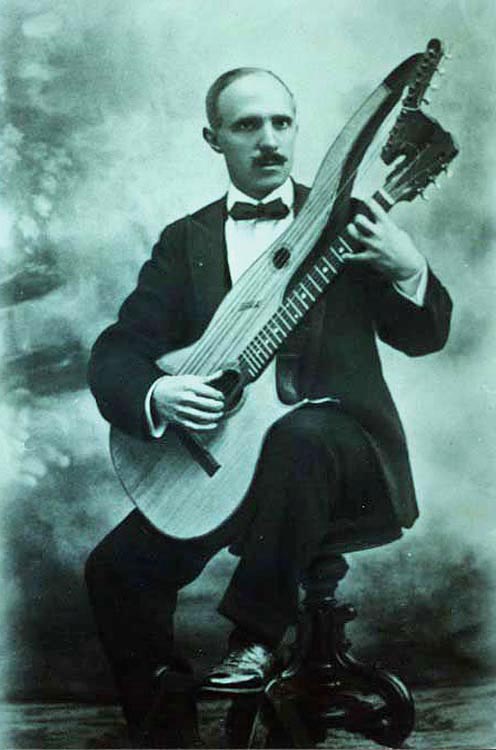
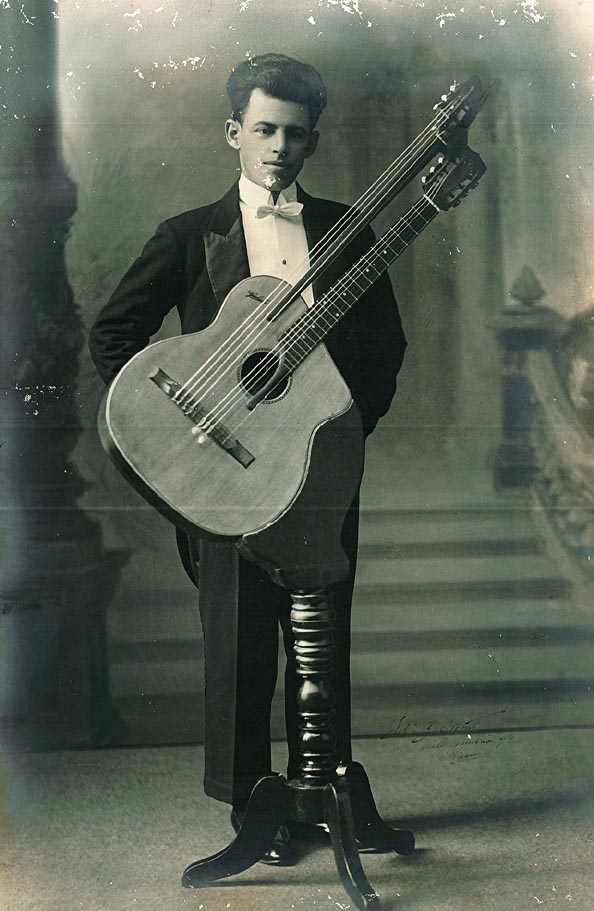
Giulietti, circa 1918, with his personal harp guitar, |
 |
Tullio is buried in the Milan Cemetery at Piazzale Cimitero Maggiore, 20156 Milano MI, the vault located at "Reparto 34 Ossiario 1928 IV fila inferiore" |
|
|
Armando
Giulietti
Armando
Giulietti was born in Rome
in 1903. He
started working in his father’s workshop at an early age and built a
guitar entirely by himself at the age of 16. He
also became a cello professor, teaching and performing mostly in opera
productions as first soloist. Many
stories regarding himself and his father were related to me personally
after we were introduced by mutual friends in the early 1970's.
His memory was excellent until the last year of his life (1990) and the anecdotes
were detailed and rich. As an example, here's why we have no recordings of Tullio's music (this story also explains why the members of this family were highly thought of but handled with care as they had a charming but almost Django-like personality). Tullio was scheduled to make records for the prestigious Fonit Cetra label but while the first track was being recorded someone shut a window and ruined the take. Tullio patiently resumed the session but this time somebody slammed a door. At this point he just stood up saying "That's enough, I don't need this aggravation or your records" and stormed out depriving us of a glimpse into his musical world! |
|
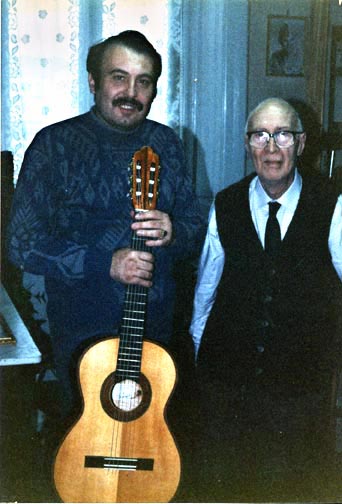
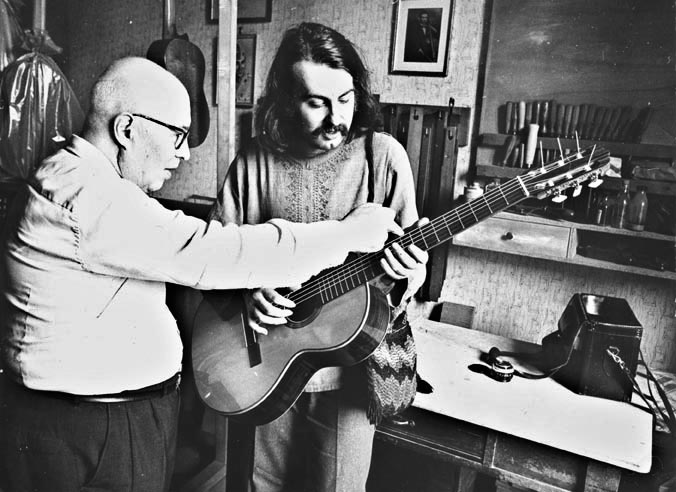
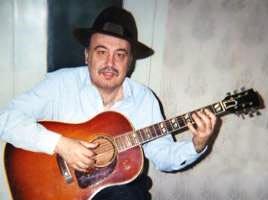
Left: Armando Giulietti with the author in 1989 |
| Giulietti
Harp Guitars |
|
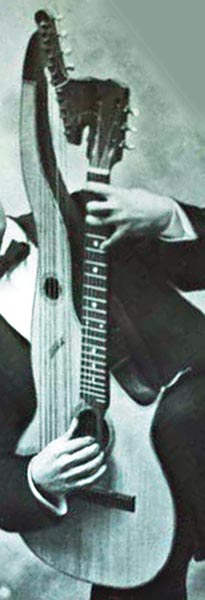 |
Both father and son made multi-bass instruments which were known as “guitars with flying (or floating) basses.” As late as the mid 30’s the guitarist Primo Silvestri wrote an article for the magazine "Il Plettro" explaining that many classical and baroque pieces could not be played effectively on a regular six string. He brought as an example the Bach prelude for lute (played in A minor like Maccaferri) and advocated the use of a D# and a B in the bass to really bring the work to life, blaming the desire to "imitate the Spaniards" as one of the reasons for resisting the use of an extended low range. Tullio played the guitar he was pictured with, strung with silk core basses and light steel trebles. The instrument and the portrait both date back to about 1918 and the unusual cutaway/knee rest seems unique. As a final surprise, Armando swore to me that this portrait (the original was very large) is a pen and ink drawing done by one of Tullio' satisfied customers from a photograph. It's hard to believe, but Armando was a meticulous, precise and reliable person! |
| Tullio’s
son Giulio played a
hollow arm instrument
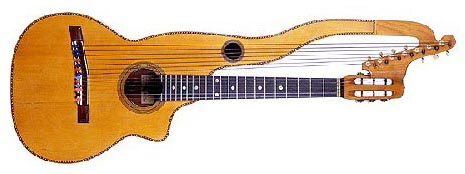
similar to his father's that was built by Armando (probably like the one
in the
Monzino collection,
shown below).
Giulio
recorded with it and I saw the 78's but never heard them. In
the post war years Armando concentrated almost exclusively on
Torres-style guitars and was awarded first prize with the highest honors
at the |
|
|
|
Left: Another 7-bass hollow arm harp guitar, this one built in 1938 for Monzino & Sons. Instruments of both Tullio and Armando were sold through the Monzino shop in Milan. |
|
Below: Two advertisements from guitar magazines, courtesy of Marco Bazzotti, and a Armando's letterhead on a note to the author |
|
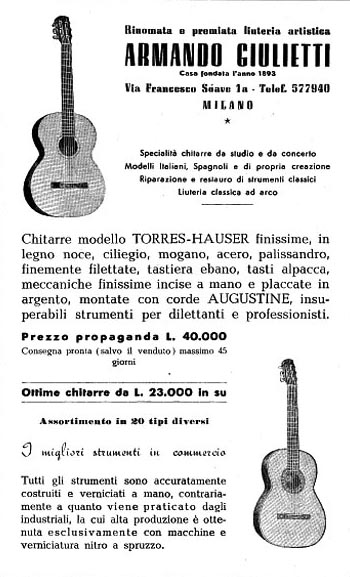 From l'Arte Chitarristica,1948 |
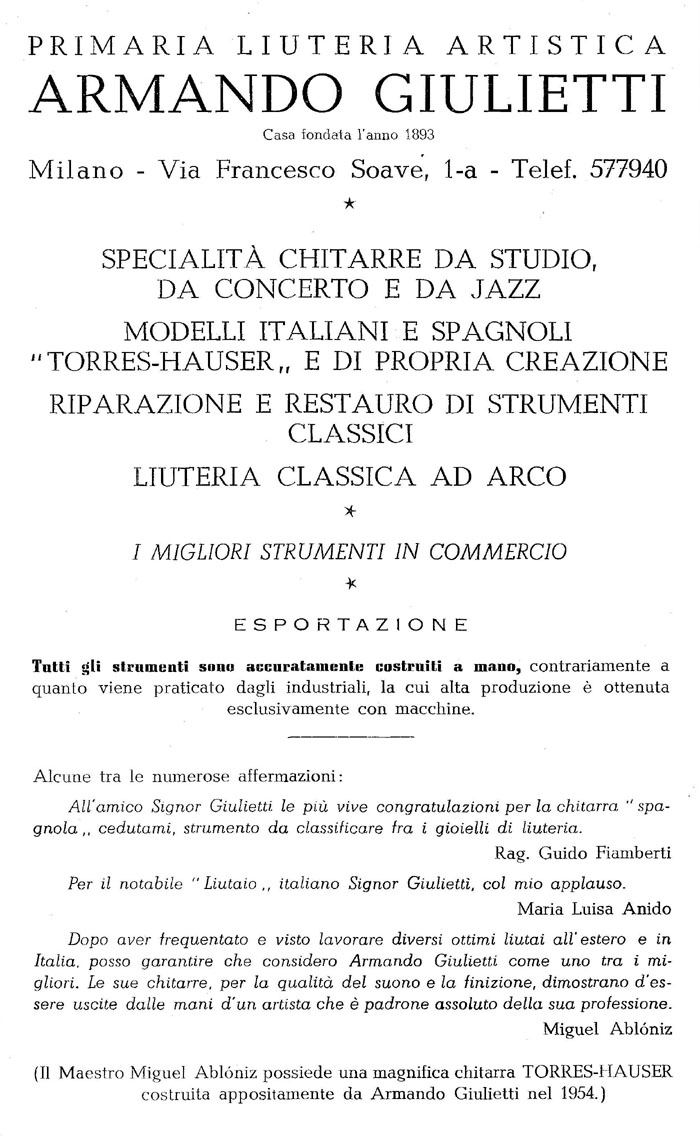 |
Excerpt translations:
For the notable Italian “liuther” Mr. Giulietti, with my applause Maria Luisa Anido
[…] I consider Amando Giulietti one of the best for sound quality & finishings, […] an artists who absolutely masters his profession.
Miguel Ablóniz
|
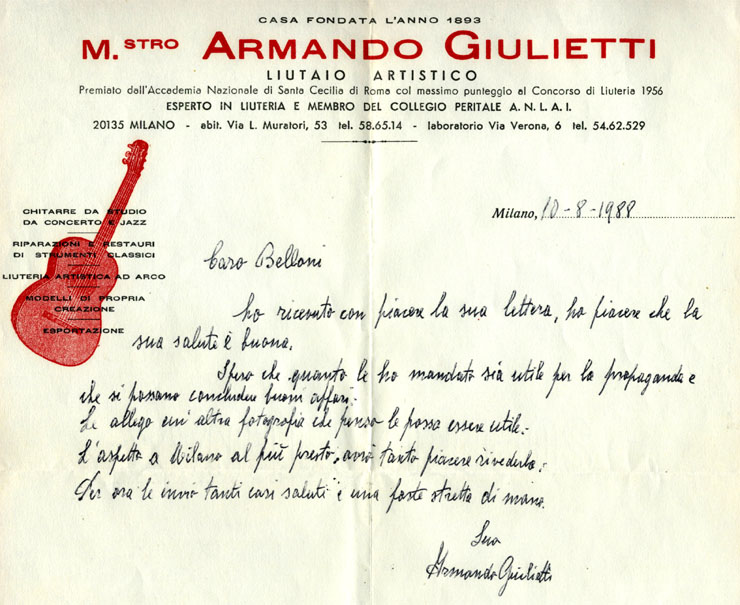 |
||
| My
Giulietti Guitars After
meeting Armando I ordered a folk guitar which he based on a modernized
Guadagnini pattern. I played it in |
The author in Armando's shop in 1975 |
|
During
my long stay in the |
|
|
|
The
harp guitars reached me after Armando's passing in peculiar ways. On
December 25, 1990 I had a dream about acquiring another one of his
instruments. I
called him the next day and promised to drop by with a magazine article
about him of which he was unaware. He
thanked me and said he had to lie
down as he was "slightly unwell."
I
later learned that he died just four hours later while relating to the
doctor in his inimitable fashion all his ailments and all the
remedies he had taken. I
was the last person outside the family to talk to him. A
few years went by and I semi-retired in my home town. One
day a student of mine told me about "one of those extra-bass
guitars you say you'd like to find" in a The instrument had numerous weather cracks, the extra peghead (for three basses) had been removed and two plugged holes in the left upper bout showed that it had been used as an electric. A new peghead was made, converting it into my dream 10-string! Just a year or so before this I almost ordered a similar instrument from a Mexican luthier, specifying a 10-string cutaway and going to a tonewood dealer looking for alpine spruce and pearwood because Giulietti spoke highly of this combination. Well, here was a double curve cutaway harp guitar and it had a pearwood body (and of skilled workmanship)! It already existed when I was seven years old and often went to a movie theater across the street from Armando's workshop in my old neighborhood! |
|
|
|

|
| Footnote Sometime
before I acquired the harp guitars, while I was still in Update, April, 2011: Rare Recordings by Giulio Giulietti discovered! See the Harpguitars.net Members Only Section to listen! |
|
|
ABOUT THE AUTHOR
|
A native of Milan, Italy, Roger Belloni began his professional career in Cambridge, England, where, after playing in all the local clubs, he appeared at the prestigious Folk Festival at the age of 19. He then managed his own club in Italy and toured extensively all over Europe until, during an engagement at the famous Jazzland in Vienna, Austria, he met renowned Bluesman John Jackson, who invited him to the U.S. Roger has performed at countless clubs and festivals and on radio and TV in the U.S., Italy, Switzerland and Mexico. Most notably, he was selected by Blues expert and Robert Johnson historian Steve La Vere to open the first San Diego Black Music Festival and by record collector Lou Curtiss to conduct a guitar workshop with Sam Chatmon, half-brother of legendary Charlie Patton. During his nearly 20 year stay in the U.S., Roger has been chiefly influenced by North Carolina guitarist Bill Bryant, a student of Blind Boy Fuller, and has also ventured into the Jazz idiom, playing with musicians of the caliber of Jimmie Noone, Jr. and sax great Eugene Porter (Benny Carter’s co-arranger). |
Additional Giulietti Harp Guitars by Gregg Miner
|
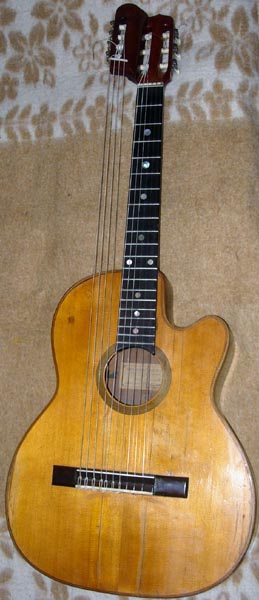
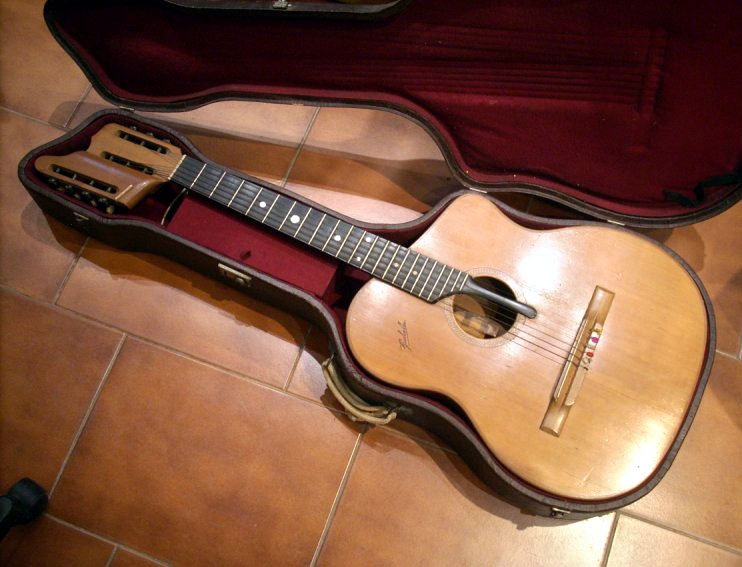
Since Roger wrote the above article in 2009, several new Giulietti harp guitars have been discovered. This 5-bass theorboed harp guitar built by Tullio for Monzino and Sons in January, 1919 is pretty modern-looking for a pre-Maccaferri guitar! Collection of Antonello Saccu, photo courtesy of Franco Ghisalberti |
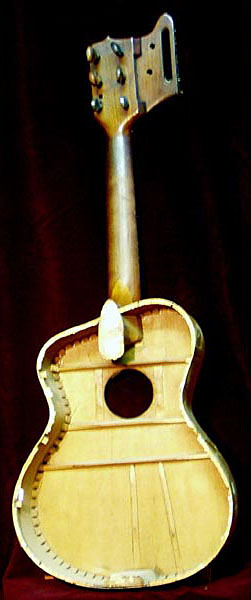 |
|
 |
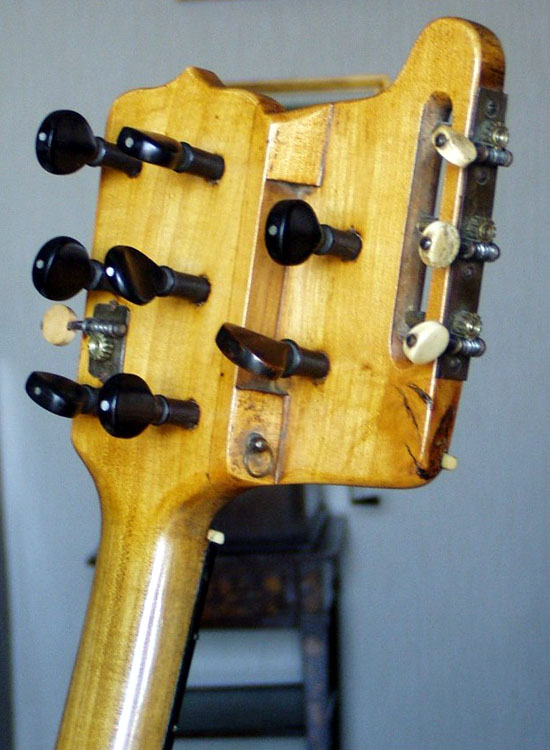
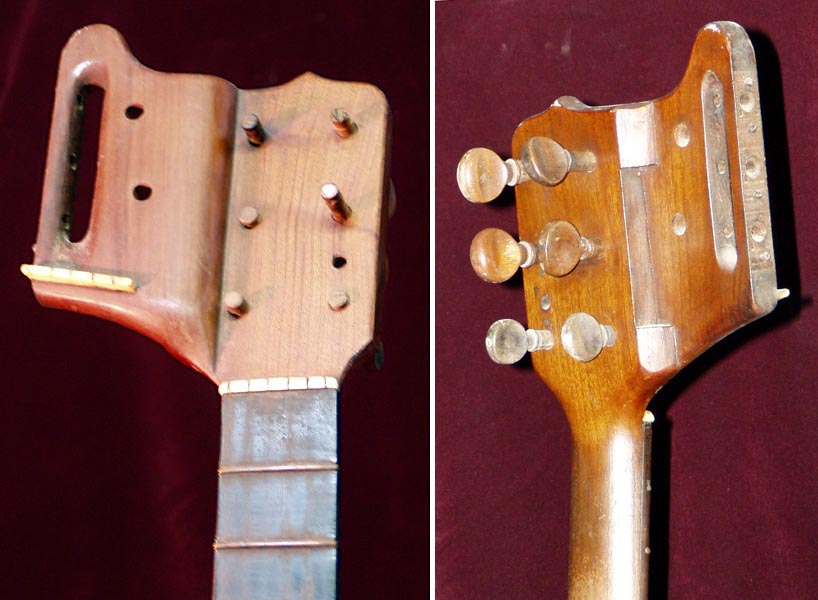 The extension seems to have utilized two friction pegs and three side tuners. All original? |
|
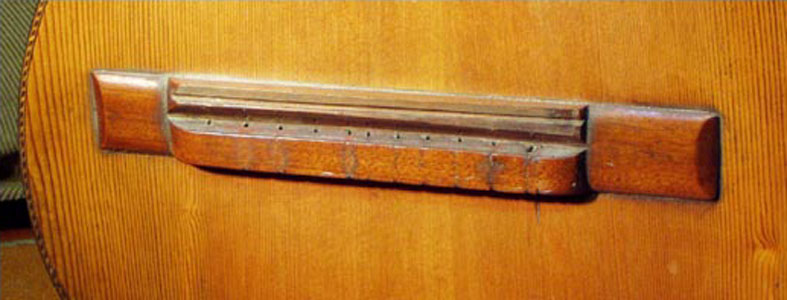 |
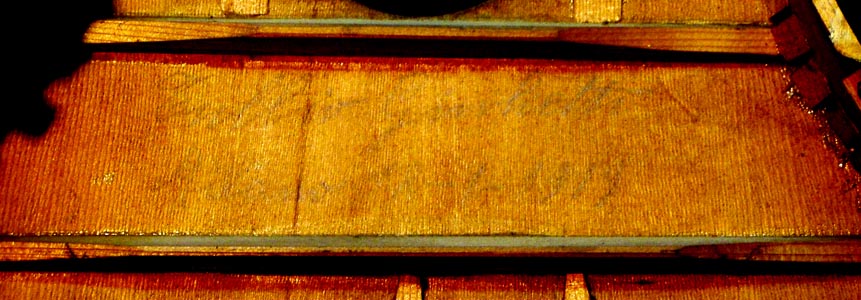 Signature of "Tullio Giulietti" |
|
|
|
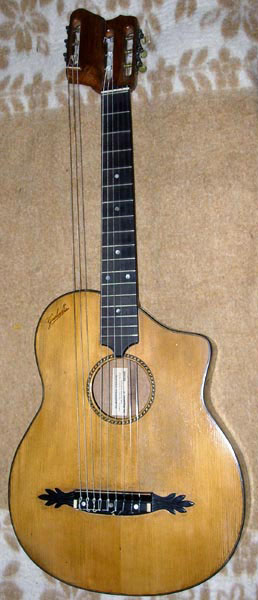
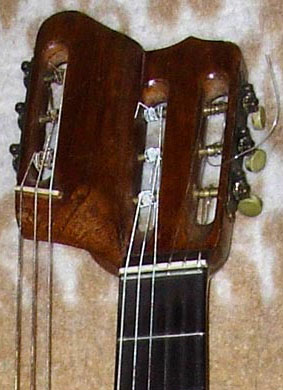
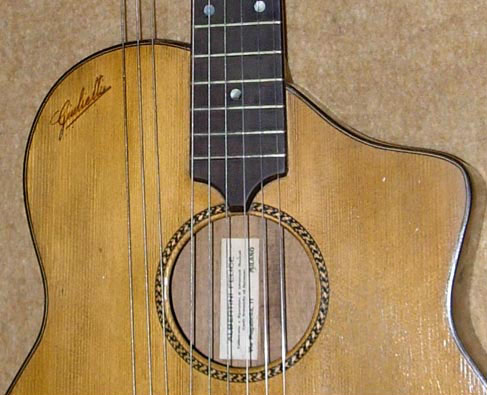
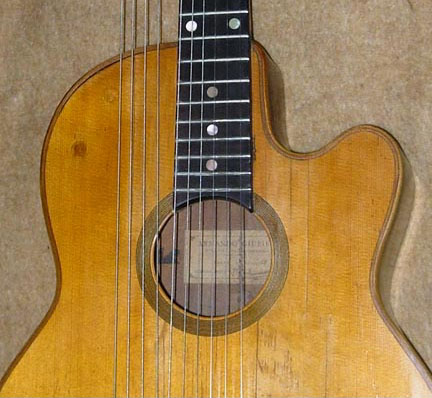
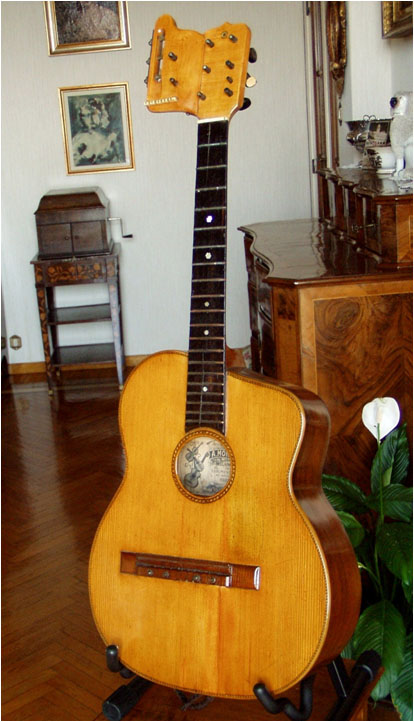
This 4-bass instrument marked on the soundboard with the
Giulietti signature is similarly modern. Note the unusual
fingerboard extension, also seen on Tullio's instrument above and
Pietro Taraffo's instrument below. What was its purpose?
From a private collection in Italy |
|
 |
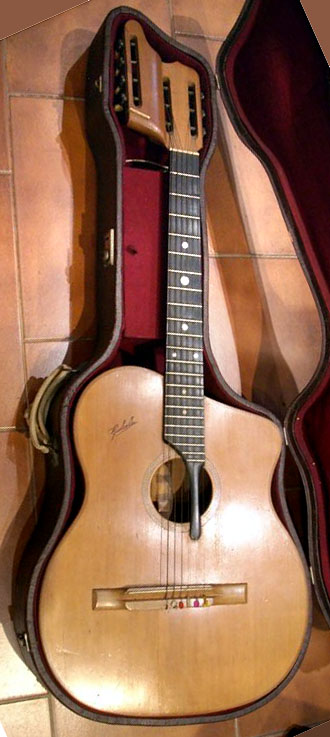
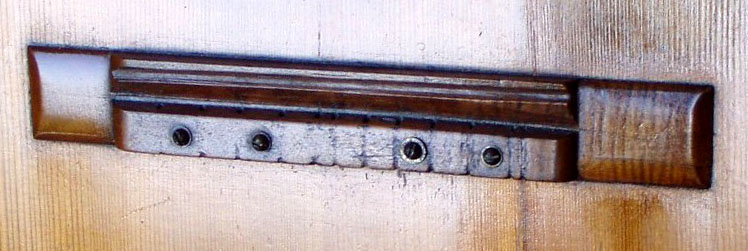
Manliuccio Gabba submitted photos of this instrument to my Genovese collaborator, Franco Ghisalberti. It is marked “Tullio Giulietti, Milano 15/12/1918″. It is hard to know what is original on the bass extension, as there are 2 friction peg tuners that match the main head, plus 3 geared tuners for a total of 5 basses. On the other hand, it is not very different from Antonello Saccu's 5-bass specimen above! The bridge has 5 spots for the basses, but the bridge could be non-original. Someone also thought to be clever and added a 7th geared tuner to the main neck to double the high E string (with a pair, like a mandolin). You can see the slots in the bridge. |
 |
 |
||
 |
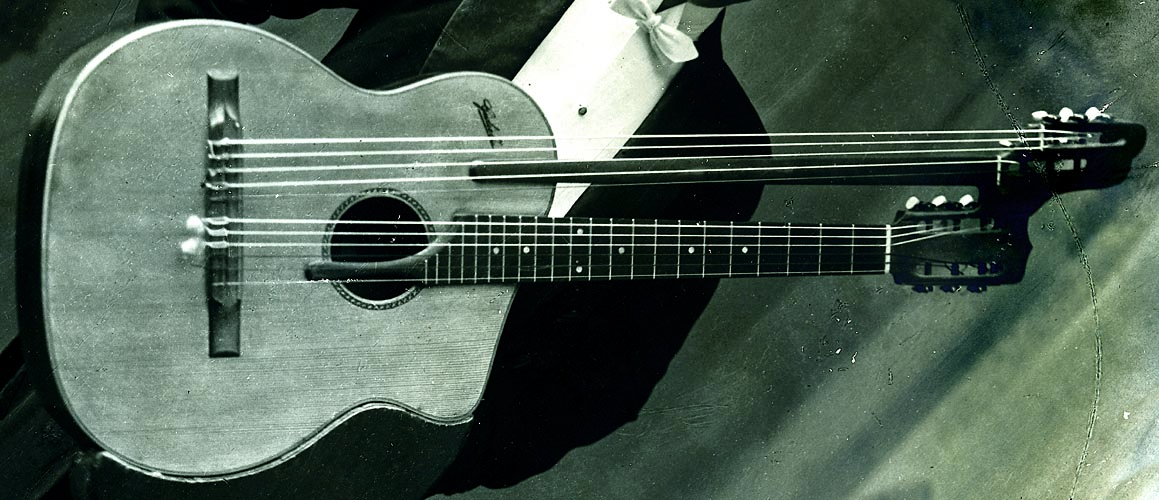
And finally: The Cagetti family (owner of Rinaldo Taraffo’s Gazzo harp guitar and stand) kindly let Franco Ghisalberti scan this fantastic photo for us. It shows Pietro Taraffo with an interesting Giulietti harp guitar, unusual in having 6 bass strings, on 2 different levels - the head extension “stair-steps” to put 3 at a longer distance from the neck strings, and then 3 longer again. You can see that he had a missing string when the photo was taken. We have now seen Pietro with 3 different harp guitars – 1 by Gazzo, and 2 by much better makers – Mozzani and Giulietti. Perhaps he was more of a connoisseur than his more famous brother, as he wasn’t playing his own solo shows in huge halls? |
 |
|
If you enjoyed this article, or found it
useful for research, please consider making a donation to The
Harp Guitar Foundation,
|
|
|
|
All Site Contents Copyright © Gregg Miner,2004-2020. All Rights Reserved. Copyright and Fair Use of material and use of images: See Copyright and Fair Use policy. |