|
Co-featured Harp Guitar of the Month |
|
|
Lacôte / Coste Heptacorde, 18(5)5 by Bernhard Kresse All images copyright Bernhard Kresse
|
|
|
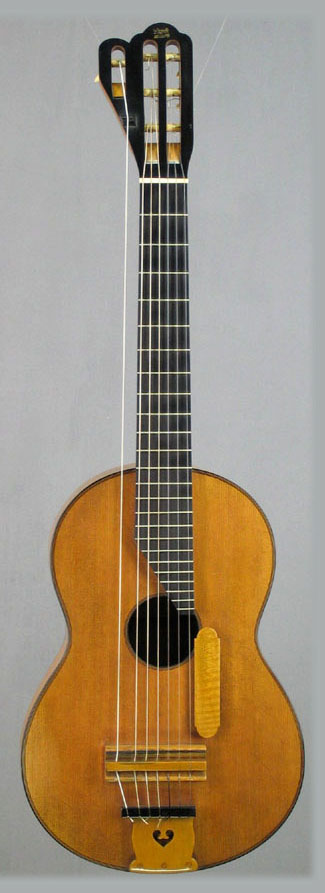
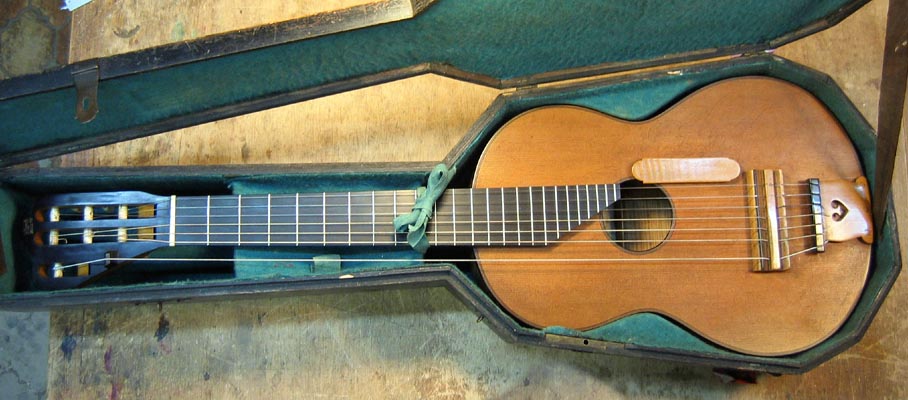
I bought this instrument in a violin auction in Cologne in 2001. The provenance is unknown to me, as the auction house did not want to arrange a connection between me and the seller. The guitar was in a wooden box that fit exactly the shape of its body so my guess is that this is the original case (Fig. 1).
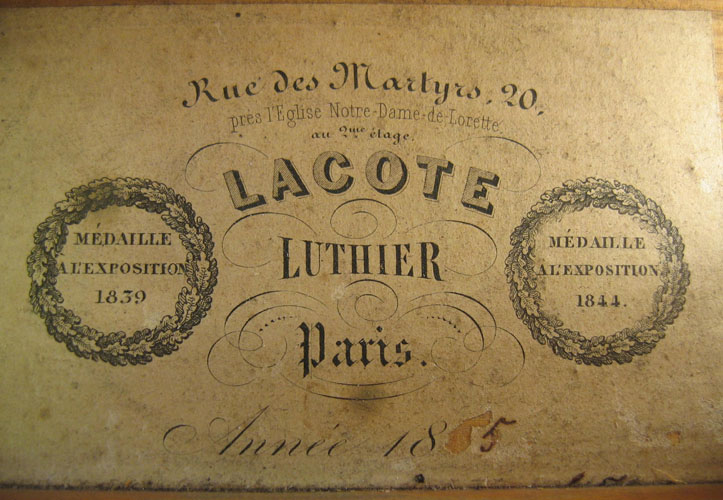
The label says “Rue de martyrs- Lacôte – Paris – l'annee 18( )5.” The third number is scratched, but I think (according to Bruno Marlat) it must be a 5 so the date of origin must be “1855“ (Fig. 2).
|
|

|
Here are some facts and measurements of the guitar:
|
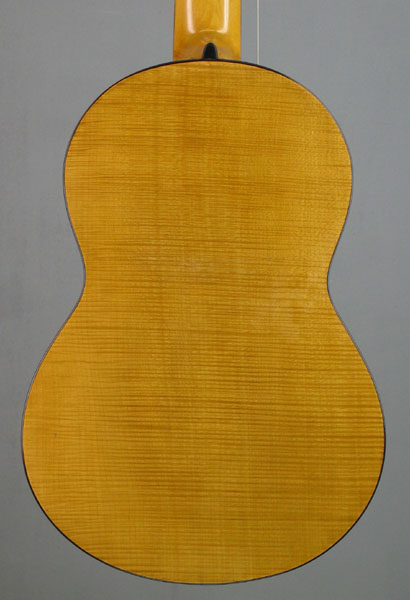
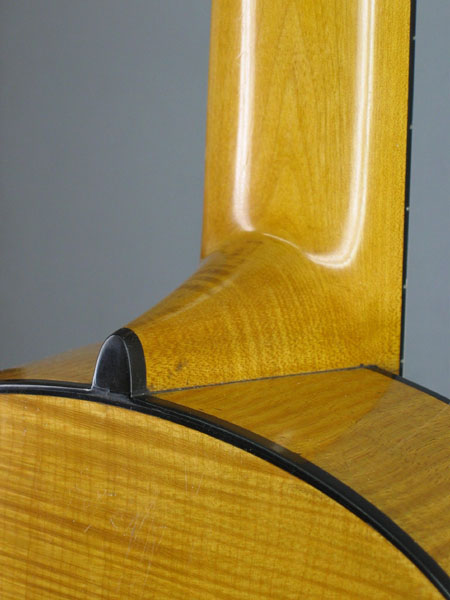
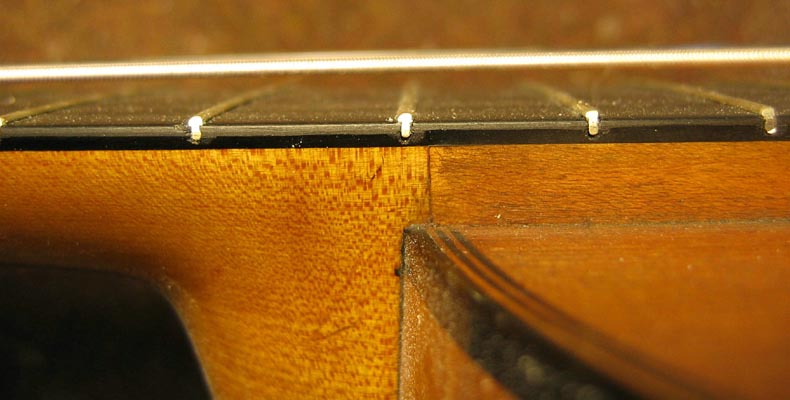
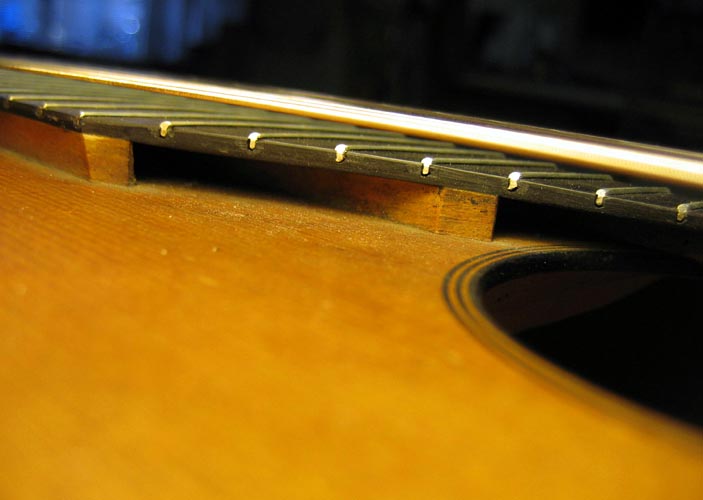
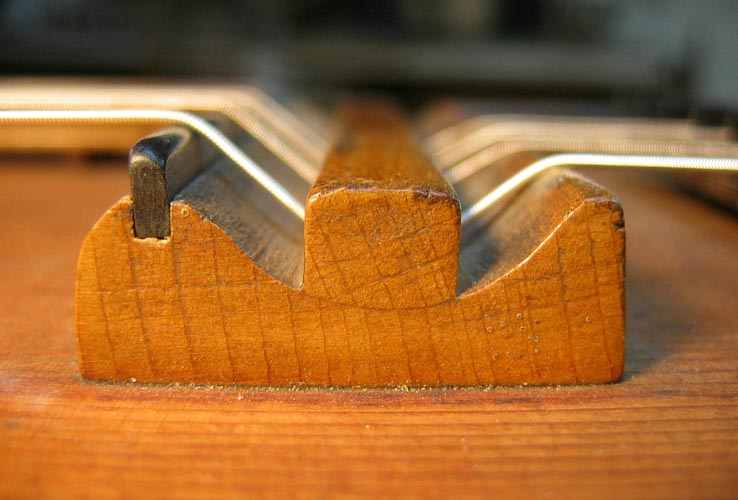

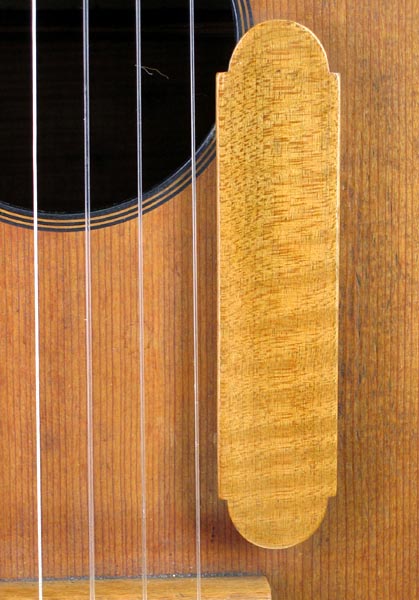
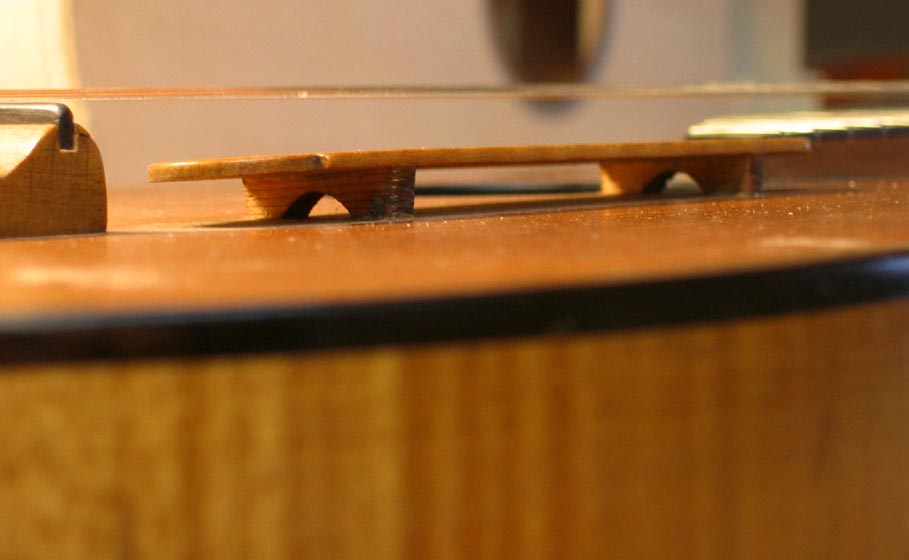

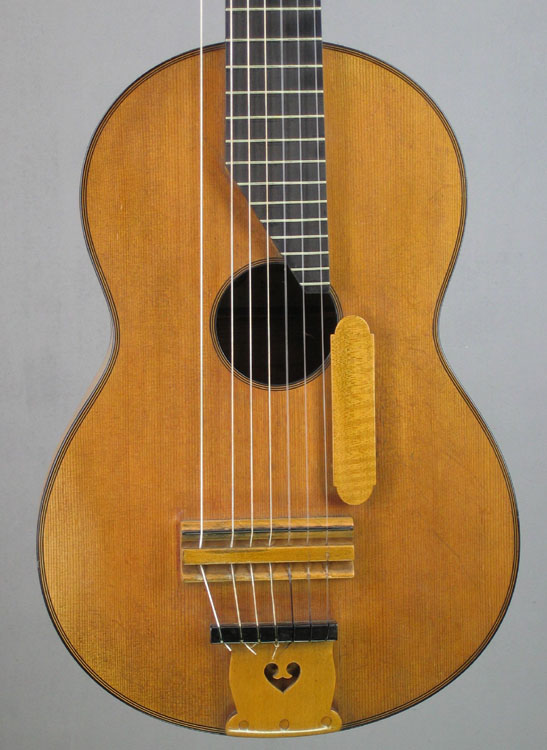
The condition of the guitar is perfect, so one doesn’t get the impression that this is a 150-year old instrument. Original varnish, saddles and silver frets (changed in 2002), with just two minor cracks, left and right of the tailpiece (repaired in 2002). There is no other damage and the instrument is absolutely free of any earlier repairs. No cracks, cleats, glue-drops, and no typical breakage or bumps where the bars meet the sides, caused by shrinkage. For me there is only one explanation for this extraordinary good condition: The maker of the instrument must have had an unusual supply of well-seasoned timber at his disposal and also a very good control of the climate conditions in his workshop.
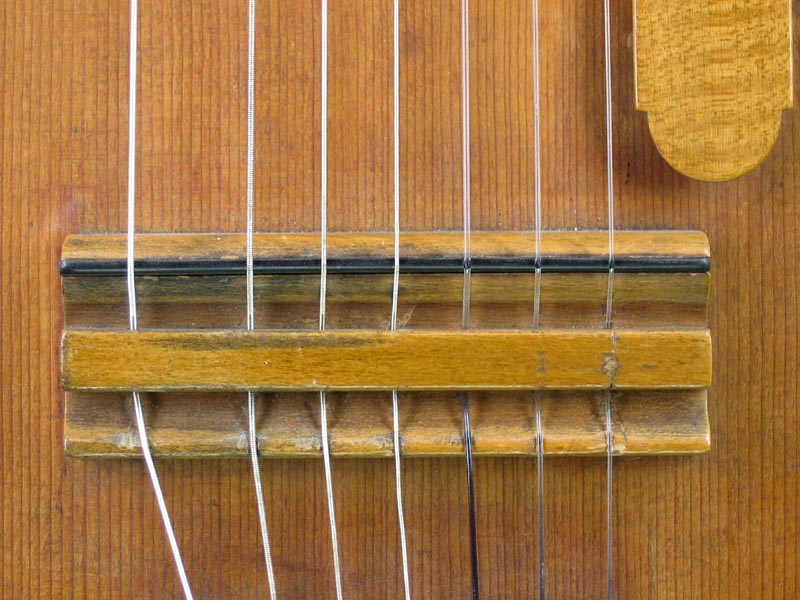
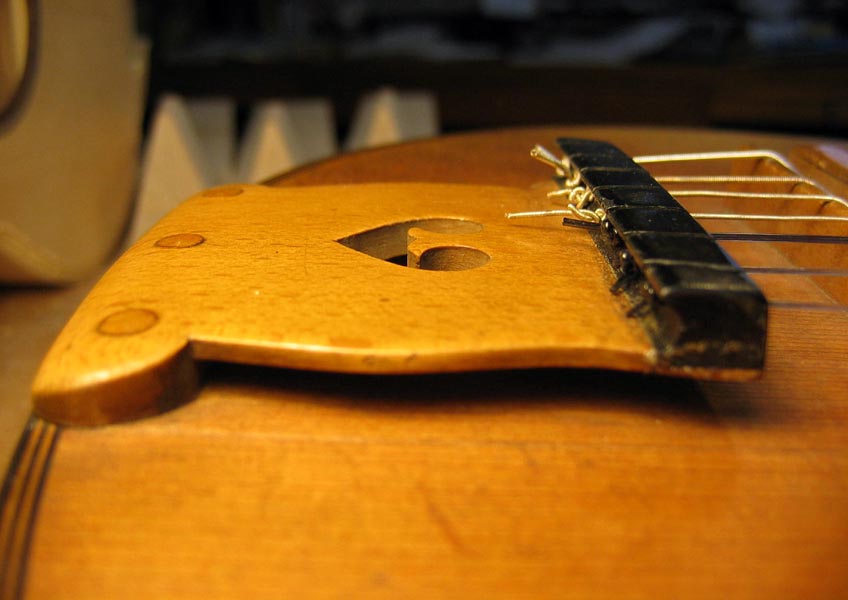
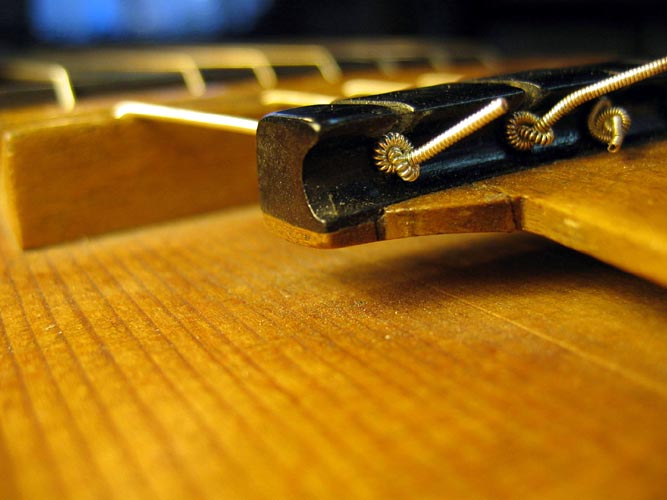
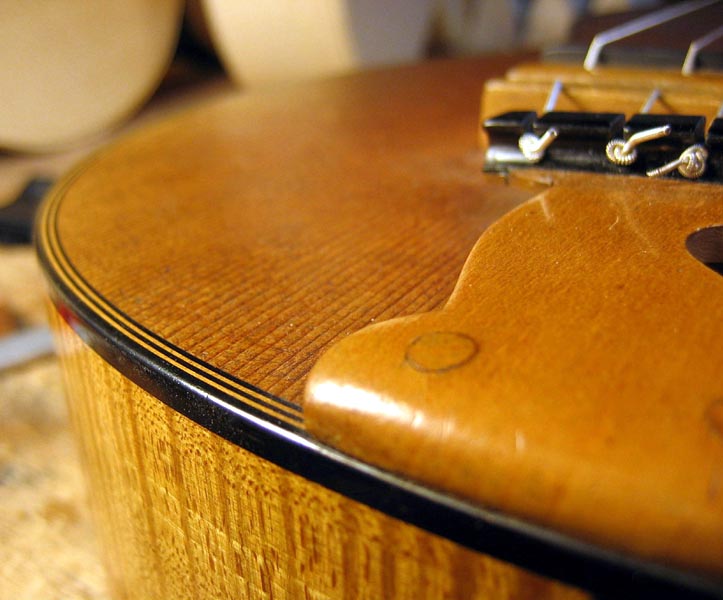
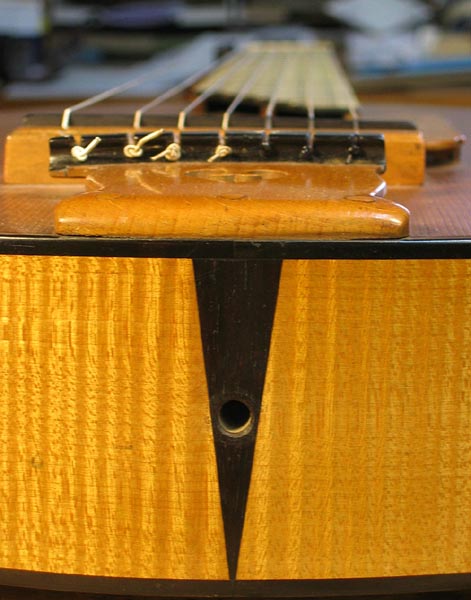
I knew about Lacôte Heptacordes from the Coste photographs; nevertheless I was a bit shocked when I saw this guitar for the first time on the day before the auction. It was hard to accept that this instrument was made by the same person who always strived for aesthetic perfection and elegance in his work. What about the fine ebony and ivory purflings and mother of pearl inlays or the beautiful designed bridge that we know from other Lacôte-instruments? Here it is replaced by a rough, square-shaped wooden block combined with a tailpiece that looks (let’s be polite)...a bit funny. To be honest, for me this all looked more like a mixture between a Hurdy-Gurdy and an orthopedic device than a guitar by Lacôte.
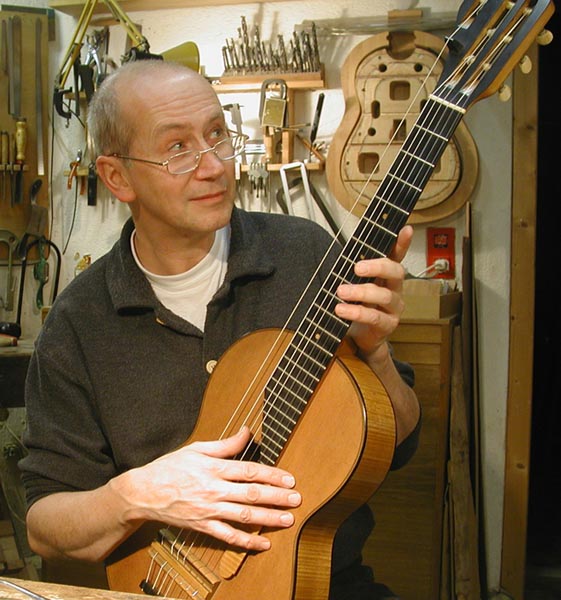
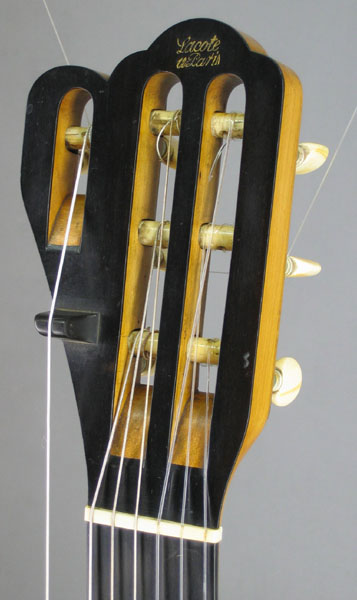
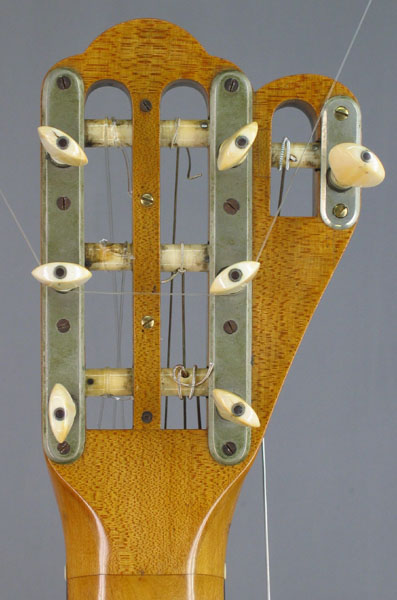
Looking closer at the guitar and thinking about the work of Coste I changed my opinion rapidly. There is no need to mention that everything on the instrument is executed with absolutely perfect craftsmanship - that’s natural for the work of Lacôte. The remarkable thing about the Heptacorde is that every detail seems to be pure function following Coste’s conception of acoustics, aesthetics and playing technique while leaving out any unnecessary details or decorations. This 1855 instrument seems to be the pure realization of all of Coste’s ideas, performed by Lacôte and in a condition like it just came out of the workshop - nothing changed, nothing added.
Napoléon Coste (1805-1883) with a slightly earlier Lacôte heptacorde. |
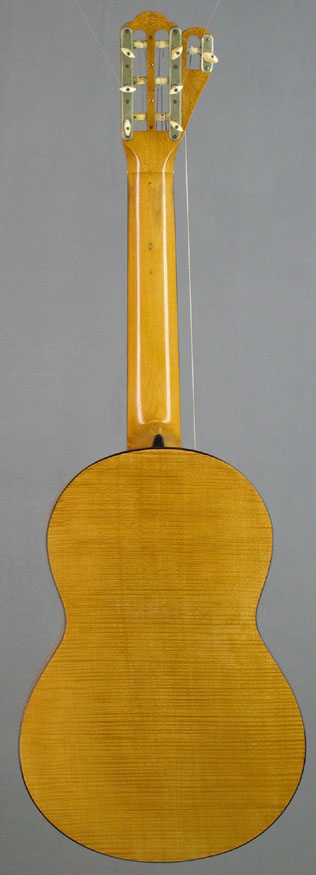


|
Listing once more the essential specifications of Coste’s Heptacorde:
|
|
Concerning the discussion that all the later heptacordes were modified I can say that this 1855 instrument was not modified. The table does not show any holes on the inside indicating the existence of an earlier pin-bridge.
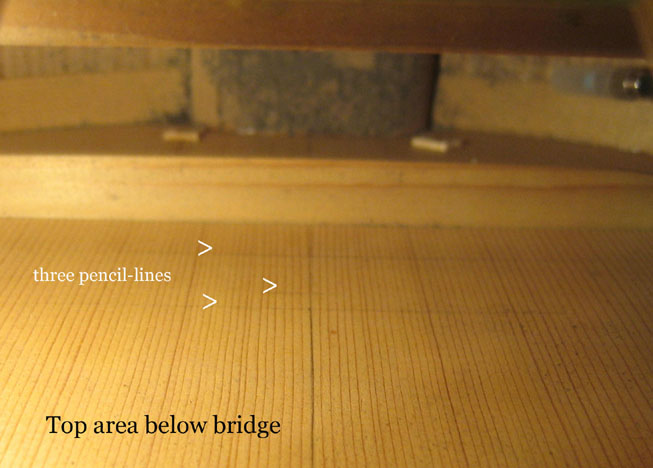
Three pencil-lines can be seen below the top, marking the positions of the upper and lower edge of the bridge as well as the position of the bridge-saddle, so the instrument was planned and constructed like it is now. Guitarmakers make these construction lines to find the right position for gluing the top bars. There remains the possibility that Lacôte did 80% of the work and left for Coste the making and installation of the bridge, tailpiece and finger rest. Possible but unlikely. These additional parts of the guitar are made with the same accuracy as the rest of the instrument. Further, the varnish doesn’t show any difference in color under fluorescent light. By the way, the construction of the neck and fingerboard, its final calculation of thickness, respecting the right angle and the difference of treble/bass side requires an early presence of the bridge during the construction process. All these things are done on this 1855 heptacorde in a perfect way. For me it would be interesting to know:
- Bernhard Kresse |