|
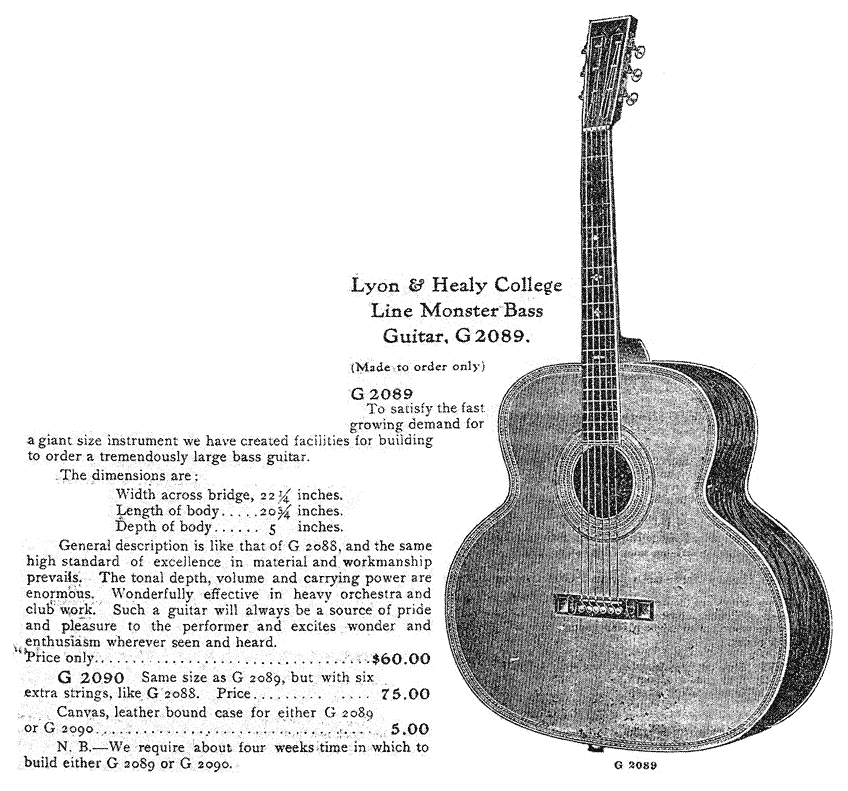
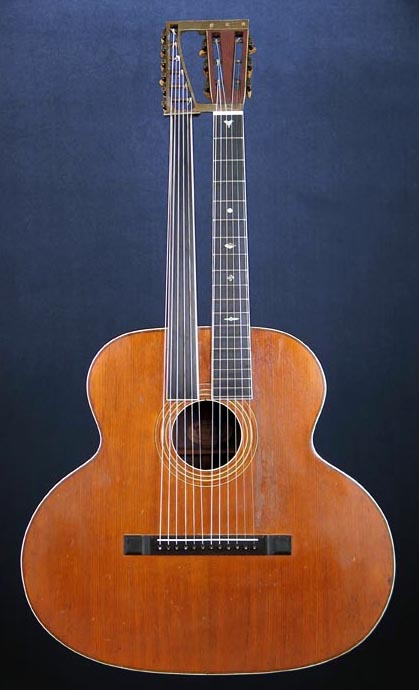
As to when, according to Washburn author John
Teagle, the "Monster Bass
Guitar" was introduced in 1908. I haven't been able to confirm
this, as the 1908 catalog doesn't include the model, and I'm not sure
where this information comes from. Teagle then mentions listings in only
the 1913 and 1917 catalogs. As I don't have access to the 1913 catalog,
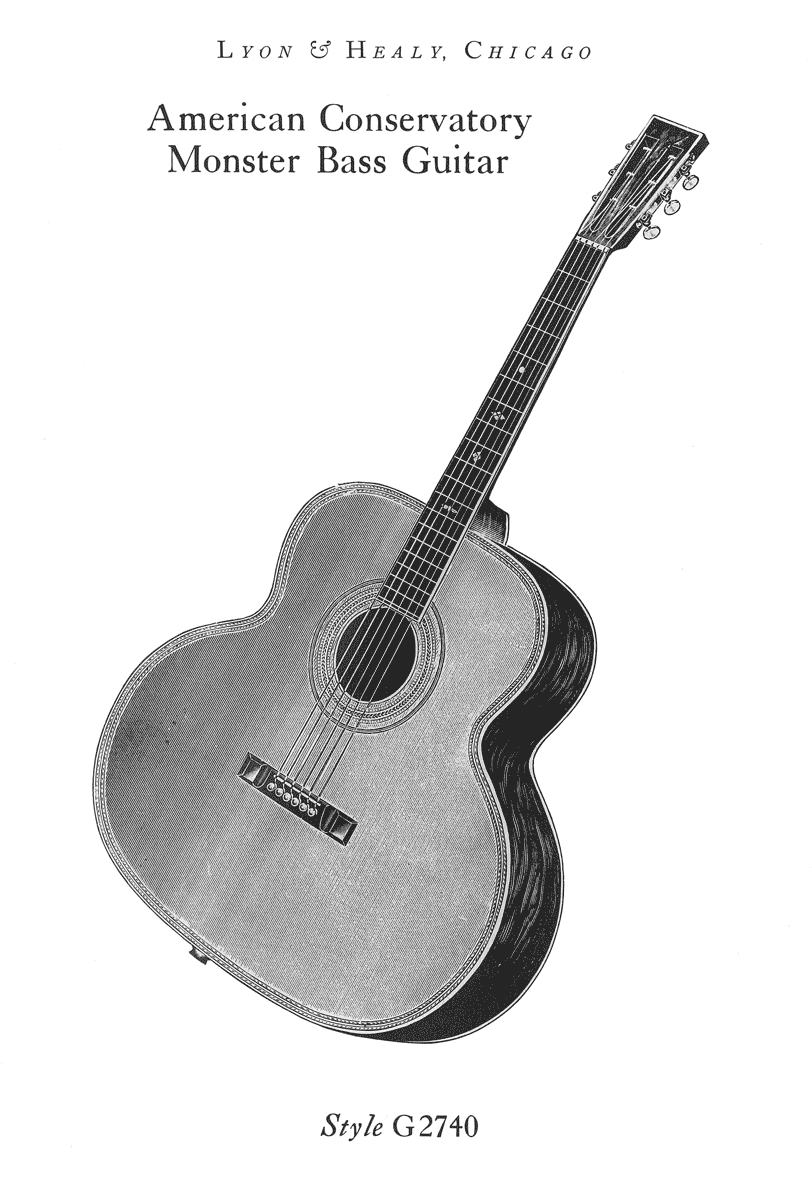
I am assuming that the definitive image above is from the 1913 catalog
(Teagle's book is frustratingly lax about captions and dates). The 1917
catalog image (perhaps the Monster Bass' only other appearance?) appears
below. While I have yet to find anyone with a complete series of
early Lyon & Healy catalogs, Washburn mandolin collector and
researcher Neil Russell was able to confirm other years that the MB was not
listed: 1904, 1908, 1910, 1912, 1919-20, 1920-21 and 1925. Thus, we are
left with only five (with a possible ten) years in which these bizarre
instruments could have been "special ordered."
The MBG appears (for only the
second and last
time?) in the 1917 catalog, with no text or specs whatsoever. While the
illustration title is correct, the Style number is a catalog
error, and belongs to the
16-1/4"" wide "Lakeside Bass Guitar."
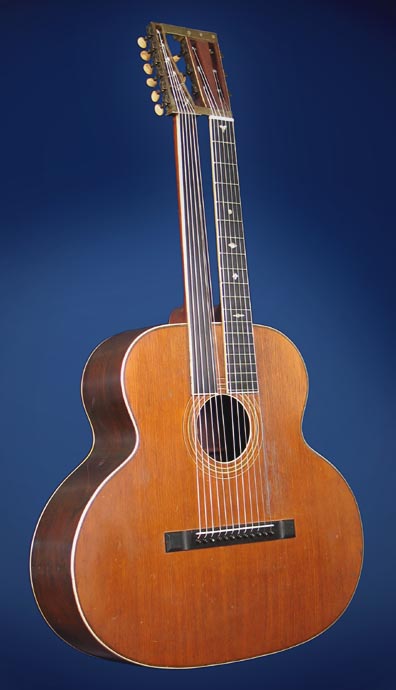
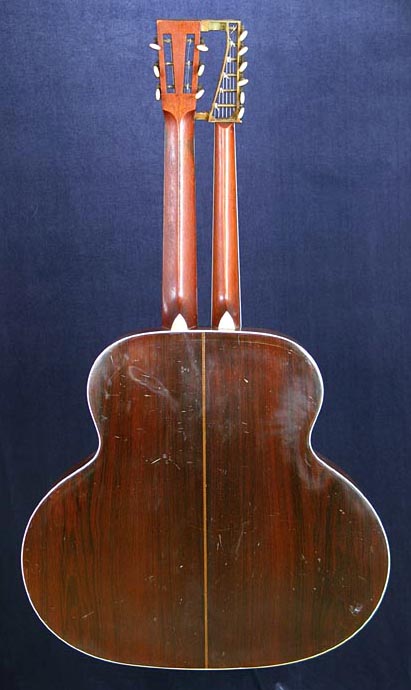
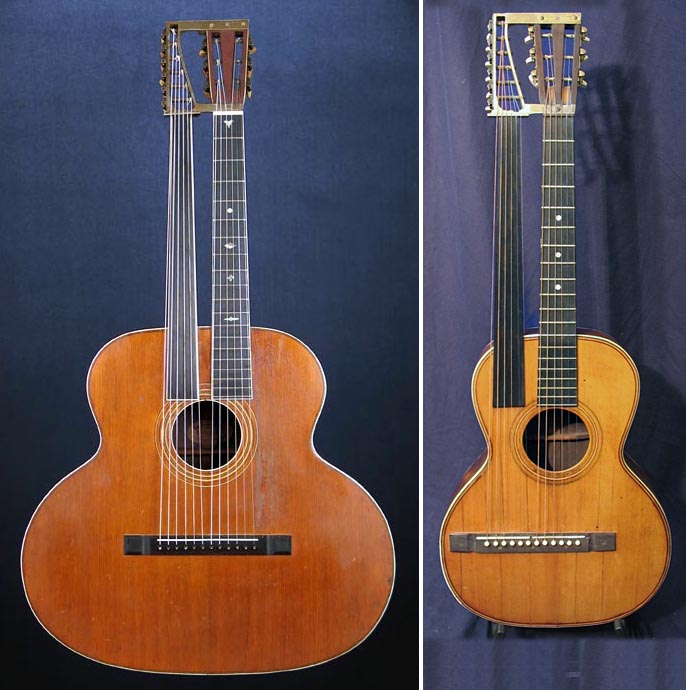
Only the 6-string
version - Style G 2089 was ever illustrated. The "College
Line" in the name refers to one of several Lyon & Healy brand
names, denoting grade of quality. The College Line brand was obviously a
higher grade series, as they all featured Brazilian rosewood sides and
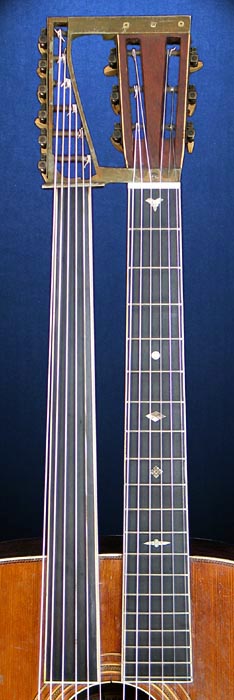
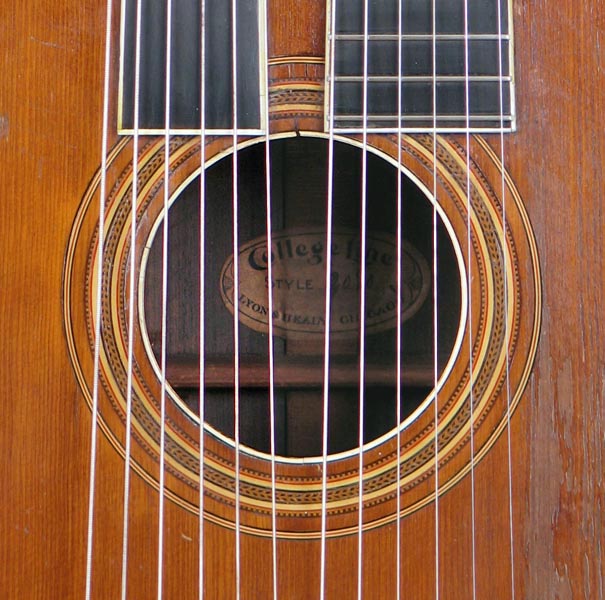
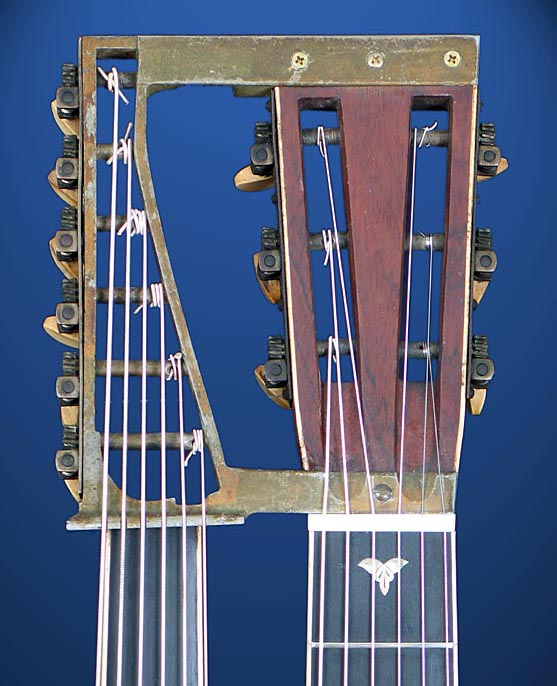
backs (described in another catalog), and very fancy binding. The harp guitar version is Style G
2090, and is not referred to as a "harp guitar" (few of Lyon
& Healy's harp guitars were), but simply as "same size as G
2089, but with six extra strings." Ergo, both versions were
"bass guitars" - a very misleading term, and clearly a
Lyon & Healy marketing "gimic" - probably meant to refer
to the loud, booming bass tone - not the bass strings of the harp guitar
version (the 6-string not having them) nor the tuning (with a roughly
26" scale length, they were undoubtedly tuned to standard guitar
pitch).
This then explains the "why." From
the 1890's (when steel string guitars were introduced, along with harp guitars and other
acoustic innovations) to the 1930's (when resonator guitars exploded
onto the market), makers
were always striving for louder, richer toned instruments to project in
a variety of situations - from small groups to orchestras to the
vaudeville stage. Lyon & Healy appears to have wanted to "just get
the whole debate over with" by creating this instrument - making it ridiculously
large, and giving it a no-bones-about-it intimidating name to match the
overkill of the design. In their own words (from the catalog description
topt):
|
"To satisfy the growing demand for a giant
size instrument we have created facilities for building to order
a tremendously large bass guitar. The tonal depth, volume and carrying power are enormous.
Wonderfully effective in heavy orchestra and club work. Such a
guitar will always be a source of pride and pleasure to the
performer and excites wonder and enthusiasm wherever seen and
heard."
|
Note the comment about "creating
facilities" to build these instruments. Was this just "custom
shop" space in Lyon & Healy's factory, or were they
out-sourced? As
with many of the better-made Chicago instruments (and an increasing
number of discovered harp guitars) the Larson brothers have been
suggested as possible builders. In any event, they were advertised as
"Made to order only" - requiring
"about four weeks time in which to build either G 2089 or G
2090."
|